
Squirrel vs Chipmunk: Rodent Comparison
Squirrels and chipmunks are quick, bright-eyed rodents with sharp claws, strong teeth, and a talent for hiding food. Chipmunks are actually members of the squirrel family, but they are usually smaller and more ground-dwelling than typical tree squirrels. Their bold back stripes, cheek pouches, and underground burrows provide the easiest identification clues.
About Squirrel
- Type Mammal
- Diet Omnivore
- Group Rodent
- Known for Bushy tail, tree climbing, jumping, food caching, and quick movement
- Special skill Leaping between branches and using the bushy tail for balance, warmth, and communication
About Chipmunk
- Type Mammal
- Diet Omnivore
- Group Ground Squirrel
- Known for Back stripes, expandable cheek pouches, burrows, quick dashes, and seed collecting
- Special skill Carrying large amounts of food in expandable cheek pouches and storing it inside underground chambers
Squirrel vs Chipmunk: Quick Answer
Typical tree squirrels are larger, usually have long bushy tails, and spend much of their time climbing. Chipmunks are smaller squirrel relatives with dark and pale stripes along the face and back, expandable cheek pouches, and underground burrows. Both are rodents, and both have babies called kits or pups.
Where Do They Fit?
Follow the branches to see how Squirrel and Chipmunk are classified and related.
Squirrel vs Chipmunk: Quick Comparison
| Feature | Squirrel | Chipmunk |
|---|---|---|
| Animal type | Mammal | Mammal |
| Animal group | Rodent in the squirrel family | Ground squirrel in the squirrel family |
| Known for | Bushy tail, climbing, leaping, and food caching | Back stripes, cheek pouches, burrows, and seed collecting |
| Main habitat | Forests, parks, grasslands, gardens, and urban areas | Forests, woodland edges, rocky slopes, gardens, and parks |
| Where found | Most continents except Australia and Antarctica | North America and Asia |
| Diet | Mostly plant foods plus some animal foods | Seeds, nuts, fruit, fungi, insects, and other small foods |
| Baby name | Kit or pup | Kit or pup |
| Tail | Usually long and very bushy | Smaller and less bushy |
| Body markings | Often plain, mottled, or lightly patterned | Bold dark and pale stripes on the face and back |
| Special skill | Leaping and balancing in trees | Carrying food in expandable cheek pouches |
How Are Squirrels and Chipmunks Alike?
- Both squirrels and chipmunks are mammals in the rodent order.
- Both belong to the squirrel family, Sciuridae.
- Both have ever-growing front incisors used for gnawing.
- Both eat seeds, nuts, fruit, fungi, insects, and other available foods.
- Both hide food for later and have babies called kits or pups.
How Are Squirrels and Chipmunks Different?
- Typical tree squirrels are larger, while chipmunks are smaller and more compact.
- Squirrels usually have long, extremely bushy tails, while chipmunk tails are shorter and less fluffy.
- Chipmunks have bold stripes across the face and back, while most familiar tree squirrels do not.
- Chipmunks have expandable cheek pouches, while tree squirrels carry food mainly in the mouth.
- Tree squirrels spend more time in branches, while chipmunks usually live and store food in underground burrows.
Squirrel vs Chipmunk Showdown
Rodent showdown: The squirrel wins for typical size, speed, and strength, especially when the comparison uses familiar tree squirrels. The chipmunk takes stealth because its stripes and burrow entrances help it disappear among leaves, logs, and rocks. Social life and swimming are ties because behavior varies among species. The chipmunk wins our weirdest-fact prize for cheek pouches that can expand dramatically while carrying food.
Fun Squirrel vs Chipmunk Facts
A Chipmunk Is a Squirrel Relative
Chipmunks belong to the squirrel family, Sciuridae, alongside tree squirrels, ground squirrels, marmots, and prairie dogs. They are classified within the ground-squirrel branch rather than forming a completely unrelated rodent group.
Bushy Tail vs Striped Back
A tree squirrel’s long fluffy tail helps with balance, warmth, shade, and communication. A chipmunk is better recognized by the alternating dark and pale stripes that run along its face and back.
Tree Nest vs Underground Burrow
Many tree squirrels build leafy nests called dreys or use tree cavities. Chipmunks dig burrows containing sleeping chambers, food-storage rooms, escape tunnels, and hidden entrances.
Both Hide Food
Squirrels and chipmunks cache food for seasons when meals are harder to find. Some squirrels bury items in many separate places, while chipmunks may carry food back to large storage chambers inside a burrow.
Chipmunk Cheeks Can Become Enormous
Expandable cheek pouches allow a chipmunk to transport several seeds or nuts during one trip. The pouches stretch along the sides of the head and may make the cheeks look almost as wide as the body.
Squirrel vs Chipmunk Quiz
- Which animal usually has the larger bushier tail? Answer: Squirrel.
- Which animal has bold stripes on its face and back? Answer: Chipmunk.
- Are chipmunks members of the squirrel family? Answer: Yes.
- Which animal carries food in expandable cheek pouches? Answer: Chipmunk.
- What are baby squirrels and chipmunks called? Answer: Kits or pups.
Squirrel vs Chipmunk FAQ
What is the easiest way to tell a squirrel from a chipmunk?
Chipmunks are usually smaller and have bold dark and pale stripes along the face and back. Familiar tree squirrels are larger and have much bushier tails.
Is a chipmunk a type of squirrel?
Yes. Chipmunks belong to the squirrel family and are part of the ground-squirrel branch.
Which is bigger, a squirrel or a chipmunk?
Typical tree squirrels are larger than chipmunks, although squirrel is a broad name covering species of many sizes.
Do squirrels and chipmunks live together?
Yes. Their ranges overlap in many forests, parks, gardens, and woodland edges, but they often use different nesting spaces and feeding areas.
Do squirrels and chipmunks hibernate?
Most tree squirrels remain active during winter. Some chipmunks enter torpor for periods, waking occasionally to eat food stored in their burrows rather than sleeping continuously through the entire season.
Animal Words to Know
- Rodent: A mammal with continuously growing front incisors used for gnawing.
- Sciuridae: The squirrel family, including tree squirrels, chipmunks, ground squirrels, marmots, and prairie dogs.
- Cache: Food hidden or stored for later use.
- Drey: A leafy nest built by a tree squirrel.
- Torpor: A temporary state in which body activity and temperature decrease to save energy.
Squirrel and Chipmunk Identification Activity
Squirrel and Chipmunk Identification Activity
Draw a tree squirrel and an eastern chipmunk in the same woodland. Give the squirrel a large bushy tail and a leafy nest high in a tree. Give the chipmunk face and back stripes, full cheek pouches, and an underground burrow. Label tail, stripes, cheek pouches, nest, and burrow.
Meet Each Animal
Want the full fact file? Here are quick highlights from each animal’s own facts page.
Squirrel Fact Highlight
From the full animal facts page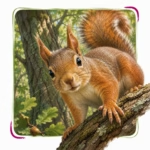
Chipmunk Fact Highlight
From the full animal facts page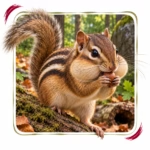
More Animal Comparisons
Pick another animal matchup and keep exploring. Compare appearances, habitats, diets, abilities, and surprising differences.


Make an Animal Story
Turn this squirrel vs chipmunk comparison into a nutty woodland adventure with our free Animal Story Generator.
Source notes: References used for this comparison. See more See less
Try Another Matchup
Explore this comparison →