
Swift vs Swallow: Living Migratory Aerial Bird Species Comparison
Common swifts and barn swallows are unrelated aerial specialists that arrive in Britain for summer, catch insects in flight, migrate to Africa, and have pointed wings plus forked tails. A swift is almost entirely dark, has longer boomerang-shaped wings, screams around rooftops, rarely lands away from its nest, and uses hidden building cavities. A swallow has a blue back, red throat, pale belly, long tail streamers, twittering song, and readily perches on wires while tending an open mud cup in a barn or shed.
About Swift
- Type Bird
- Diet Aerial insectivore; catches flying insects and drifting spiders, including flies, aphids, beetles, ants, wasps, moths, and airborne spiderlings
- Group Common Swift (Apus apus; Family Apodidae)
- Known for Dark sooty-brown aerial bird that looks black against the sky, with tiny pale throat patch, bullet-shaped head, very short neck, long narrow scythe-like wings, short forked tail that can close to a point, tiny gripping feet, and an extremely streamlined silhouette
- Special skill Remaining airborne for extraordinary periods while feeding, drinking, mating, gathering nest material, migrating, and even sleeping on the wing
About Swallow
- Type Bird
- Diet Aerial insectivore; flies, beetles, true bugs, ants, wasps, moths, mosquitoes, midges, and other small flying insects caught in agile low-level flight
- Group Barn Swallow (Hirundo rustica; Family Hirundinidae)
- Known for Small colorful aerial bird with glossy blue-black head and back, chestnut-red forehead and throat, dark chest band, cream underparts, broad triangular wings, and deeply forked tail ending in long thin streamers on adults
- Special skill Combining agile low flight, wide mouth, visual tracking, long forked steering tail, perching feet, and mud-building behavior to exploit farms and watersides
Swift vs Swallow: Quick Answer
A common swift looks like a dark flying crescent with very long narrow wings, a short forked tail, and a high screaming call. It spends nearly all its life airborne and nests inside roof or wall gaps. A barn swallow is more colorful, with a glossy blue back, red throat, pale underside, and deeply forked tail with long streamers. It often perches on wires and builds an open cup from mud. Despite their similar lifestyles, they are not close relatives.
Where Do They Fit?
Follow the branches to see how Swift and Swallow are classified and related.
Swift vs Swallow: Quick Comparison
| Feature | Common Swift | Barn Swallow |
|---|---|---|
| Scientific name | Apus apus | Hirundo rustica |
| Family | Apodidae, the swifts | Hirundinidae, the swallows and martins |
| Plumage | Sooty brown, appearing almost black, with tiny pale throat | Glossy blue-black above, red throat, and pale underside |
| Wings | Very long, narrow, curved, and boomerang-like | Shorter, broader, pointed, and highly maneuverable |
| Tail | Short fork that can close into a point | Deep fork with long adult tail streamers |
| Call | High piercing scream | Musical twitter, trill, and chatter |
| Typical flight | High, extremely fast, sweeping around buildings and sky | Lower, darting, gliding, and turning over fields and water |
| Perching | Almost never sits on wires or branches | Frequently rests and gathers on wires, fences, and branches |
| Nest | Shallow nest hidden inside a cavity | Open mud-and-grass cup on a sheltered ledge or beam |
| UK conservation status | Red-listed after major decline | Green-listed, though numbers vary regionally |
How Are Swifts and Swallows Alike?
- Both are streamlined summer visitors that catch small insects in flight with a wide mouth.
- Both have pointed wings, forked tails, excellent vision, rapid reflexes, light bodies, and long migrations.
- Both breed across the Northern Hemisphere and many European populations spend winter in Africa.
- Both drink by skimming low over water and can collect food for chicks while remaining in flight.
- Both depend on abundant insects, safe nest sites, suitable weather, and connected migration routes.
How Are Swifts and Swallows Different?
- Swifts belong to Apodidae and swallows to Hirundinidae; their similar shapes evolved independently.
- A swift is nearly all dark with narrow crescent wings, while a swallow has blue, red, and cream plumage with broader wings.
- The swift has a short forked tail; the adult swallow has a deeply forked tail with long streamers.
- Swifts rarely land except at nest cavities, whereas swallows commonly perch on wires, fences, reeds, and branches.
- A swift hides a shallow nest inside a roof or wall gap; a swallow builds an open mud cup on a beam or ledge.
- Swifts give piercing screams and often fly high and fast; swallows twitter and usually hunt with low agile turns.
Swift vs Swallow Adaptation Showdown
Aerial adaptation showdown: Common swift wins body mass, level-flight speed, endurance, and aerial strength through its long narrow wings and near-continuous life in the sky. Barn swallow wins stealth and close-range maneuvering because it can skim low and turn sharply around vegetation, buildings, livestock, and water. Social skill is a tie because both gather and communicate in the air while maintaining pair and nest relationships. Swimming is a tie because neither swims; each drinks by touching the water briefly in flight. Swift wins weirdest fact for eating, drinking, mating, and sleeping without landing. These categories compare adaptations, not combat.
Fun Swift vs Swallow Facts
Swifts and Swallows Are Look-Alikes, Not Siblings
Swifts belong to Apodidae and are more closely aligned with hummingbirds than with swallows. Barn swallows belong to Hirundinidae among the perching birds. Both lineages independently evolved pointed wings, forked tails, wide mouths, and aerial insect hunting because similar problems can favor similar shapes, a process called convergent evolution.
A Swift Can Spend Months Without Landing
Tracking studies and direct observations show that common swifts can remain airborne for most of the nonbreeding season. They feed, drink, migrate, gather airborne material, and take short periods of sleep while flying. Breeding adults return to cavities to incubate eggs and feed chicks, so never landing is an exaggeration for their entire lives.
A Swallow Builds With Mud Pellets
A pair gathers wet mud in small beakfuls and mixes it with grass or other fibers, attaching pellet after pellet to a sheltered beam, ledge, or wall. The finished open cup is lined with soft material. Swallows can reuse and repair a sound nest, saving work during a later breeding season.
Young Swallows Lack Long Streamers
Adult barn swallows have a deep tail fork with slender outer feathers called streamers, often longer in males. Juveniles leave the nest with much shorter outer tail feathers, so their fork looks shallower. Color, call, perching, and flight style help identify a young swallow before its adult tail develops.
Swallows Do Not Hibernate Underwater
Before migration was understood, people in Europe sometimes believed swallows vanished into pond mud for winter. Ringing, observation, radar, and tracking now show that European barn swallows fly to Africa. They travel mainly by day, feeding along the route, and later return north to breed.
Swift vs Swallow Quiz
- Which bird has long boomerang-shaped wings? Answer: The common swift.
- Which bird has a red throat and pale underside? Answer: The barn swallow.
- Which bird commonly perches on wires? Answer: The barn swallow.
- What does a swallow use to build its cup nest? Answer: Mud pellets mixed with plant fibers.
- Are swifts and swallows close relatives? Answer: No; their similarities are convergent adaptations to life in the air.
Swift vs Swallow FAQ
How can you tell a swift from a swallow?
A swift is nearly all dark with very long crescent wings, a short tail, and screaming call. A swallow has a blue back, red throat, pale belly, long tail streamers, and twittering voice.
Which is faster, a swift or swallow?
The common swift is faster in level flight. The swallow is exceptionally agile at low altitude, so speed and maneuverability are different abilities.
Do swifts ever land?
Yes, mainly at their nesting cavities. They avoid ordinary perches and can spend most of the nonbreeding season continuously airborne.
Where do swifts and swallows nest?
Swifts hide inside roof, wall, cliff, or nest-box cavities. Barn swallows attach open mud cups to sheltered beams and ledges in barns, sheds, and similar structures.
Do both birds migrate to Africa?
European common swifts and barn swallows generally migrate to sub-Saharan Africa, although routes, destinations, timing, and distances vary by population.
Animal Words to Know
- Convergent evolution: The independent development of similar features in distantly related organisms facing similar challenges.
- Aerial insectivore: An animal that catches and eats insects while flying.
- Streamer: An elongated outer tail feather, especially noticeable on an adult barn swallow.
- Cavity nest: A nest hidden inside a hole or enclosed space.
- Migration: Regular seasonal movement between breeding and nonbreeding areas.
Swift and Swallow Sky Activity
Swift and Swallow Sky Activity
Draw a common swift and barn swallow in flight. Give the swift very long swept-back wings, a dark body, and a short forked tail beside a roof cavity. Give the swallow a blue back, reddish throat, broader wings, and a deeply forked tail beside a mud-cup nest and wire perch. Label wings, tail, nest, perch, flying insects, and migration.
Meet Each Animal
Want the full fact file? Here are quick highlights from each animal’s own facts page.
Swift Fact Highlight
From the full animal facts page
Swallow Fact Highlight
From the full animal facts page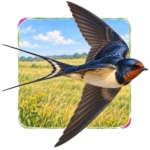
More Animal Comparisons
Pick another animal matchup and keep exploring. Compare appearances, habitats, diets, abilities, and surprising differences.






Make an Animal Story
Turn this swift vs swallow comparison into a summer sky-racing adventure with our free Animal Story Generator.
Source notes: References used for this comparison. See more See less
Try Another Matchup
Explore this comparison →