
Takin vs Musk Ox: Cold-Climate Caprine Comparison
A Himalayan takin and a musk ox can both look like shaggy mountain cattle, but neither is a true cow. Both belong to the goat-and-sheep branch of the bovid family. The takin uses steep forests and alpine meadows in Asia, while the musk ox lives on open Arctic tundra. Their coats, noses, hooves and herd tactics fit very different cold landscapes.
About Himalayan Takin
- Type Living
- Diet Herbivore
- Group Large caprine species (Budorcas taxicolor)
- Known for Bulky body, arched nose, oily coat and outward-sweeping horns
- Special skill Climbs steep wet mountains with broad split hooves and a water-shedding coat
About Musk Ox
- Type Living
- Diet Herbivore
- Group Arctic caprine species (Ovibos moschatus)
- Known for Ground-length guard hair, warm qiviut and group defence
- Special skill Survives Arctic cold with long guard hair and an insulating qiviut undercoat
Himalayan Takin vs Musk Ox: Quick Answer
Himalayan takin are massive Asian mountain caprines with broad noses, oily shaggy coats and horns that turn outward before sweeping back. Muskoxen are Arctic caprines with extremely long guard hair, soft qiviut underneath and coordinated herd defence. Their adult weights overlap, so size and strength are ties. The takin wins forest stealth and the weirdest built-in raincoat; the musk ox wins social defence.
Himalayan Takin vs Musk Ox: Quick Comparison
| Feature | Himalayan Takin | Musk Ox |
|---|---|---|
| Scientific name | Budorcas taxicolor | Ovibos moschatus |
| Animal group | Mountain caprine related to goats and sheep | Arctic caprine related to goats and sheep |
| Native range | Eastern Himalayan region of Asia | Arctic Canada and Greenland, with reintroduced Alaskan herds |
| Adult mass | About 150-400 kg in the older broad-species account | About 180-400 kg across adult sexes |
| Coat | Dense shaggy hair with oily skin secretions that shed water | Long dark guard hair over very soft insulating qiviut |
| Horns | Both sexes have ribbed horns that turn outward and sweep back or up | Both sexes have horns that drop beside the head and hook upward |
| Body clue | Large arched muzzle, deep chest and short strong legs | Barrel body, very short tail and a long hair skirt |
| Habitat | Forested valleys, bamboo thickets, cliffs and alpine meadows | Treeless tundra with long winters and shallow snow |
| Social life | Herds change with season and food; older males may spend time alone | Herds may join in winter and defend calves together |
| Main cold-weather trick | Oily coat, thick hair and seasonal movement down mountains | Qiviut insulation, compact body and sheltering herd formation |
How Are Takin and Musk Ox Alike?
- Both are large hoofed mammals in the bovid family.
- Both belong to the Caprini branch that includes goats and sheep.
- Both males and females grow permanent horns.
- Both are ruminant herbivores that chew cud.
- Both use thick coats and sturdy bodies to survive cold, exposed habitats.
How Are Takin and Musk Ox Different?
- Himalayan takin live in Asian mountain forests and meadows; muskoxen live mainly on Arctic tundra.
- Takin skin produces an oily coating; muskox warmth comes largely from qiviut underwool.
- A takin has an arched moose-like nose; a musk ox has a shorter, broader face under a heavy horn boss.
- Takin horns turn outward before sweeping back; muskox horns drop beside the head and hook upward.
- Muskoxen are famous for forming a defensive line or circle, while takin depend more on terrain, herds and powerful bodies.
Takin vs Musk Ox Adaptation Showdown
- Size – Tie: Published adult mass ranges reach about 400 kilograms in both animals, with strong differences between age, sex and population.
- Speed – Tie: No reliable same-course test compares a forest-mountain takin with a tundra musk ox.
- Strength – Tie: Both are immensely powerful, but climbing, pushing through thickets and Arctic herd defence are different jobs.
- Stealth – Himalayan Takin: Its variable brown, gold or pale coat and use of foggy forest, bamboo and rocky cover make it harder to spot than a herd on open tundra.
- Social – Musk Ox: Adults can rapidly form a horn-out line or circle, keeping vulnerable calves protected behind them.
- Swimming – Tie: Neither species has enough directly comparable swimming evidence for a fair winner.
- Weirdest – Himalayan Takin: Its skin produces an oily substance that spreads through the hair like a built-in raincoat, and its oversized arched nose helps condition cold air.
Fun Takin vs Musk Ox Facts
The Takin Family Has Been Split
Older books treated all takins as Budorcas taxicolor with several subspecies. Current mammal taxonomy separates the Himalayan takin from the Chinese takin, so this row uses Budorcas taxicolor only.
Takin Wear a Natural Raincoat
An oily substance from the skin coats the takin’s hair. It helps water roll away during mountain rain, mist and snow.
Muskox Underwool Is Qiviut
Below the long guard hairs grows a very soft undercoat called qiviut. It traps warm air near the body and is shed when the weather warms.
A Herd Can Become a Living Shield
When predators approach, muskoxen may stand in a line or gather with horns facing outward while calves stay protected behind or inside the adults.
Both Are Closer to Goats Than Cattle
Their bulky shapes and names can suggest cows or oxen, but both animals sit in the Caprini tribe with goats, sheep and their close relatives.
Takin vs Musk Ox Quiz
Which animal lives naturally on Arctic tundra? A) Himalayan takin B) Musk ox C) Both only live in forests Answer: B) Musk ox
What is qiviut? A) Muskox underwool B) A takin horn C) A mountain plant Answer: A) Muskox underwool
Which animal has an oily water-shedding coat? A) Himalayan takin B) Musk ox C) Neither has hair Answer: A) Himalayan takin
Why is size a tie? A) Both ranges can reach about 400 kg B) Neither has been weighed C) Both are tiny Answer: A) Both ranges can reach about 400 kg
How can a muskox herd protect calves? A) Form a line or circle B) Climb trees C) Hide underwater Answer: A) Form a line or circle
Takin vs Musk Ox FAQ
Is a takin a type of cow?
No. A takin is a caprine bovid on the goat-and-sheep branch, despite its cattle-like body.
Is a musk ox a true ox?
No. Muskoxen are bovids, but they are caprines rather than members of the cattle tribe.
Which is bigger, a takin or a musk ox?
Their reported adult mass ranges overlap strongly and can reach about 400 kilograms, so neither gets a simple overall win.
Why does a musk ox have such long hair?
The outer guard hair blocks wind and weather, while qiviut underneath traps insulating air.
Why is this animal called a Himalayan takin?
Modern evidence separates it from the Chinese takin. The broad page topic remains takin, but the measurements here use Budorcas taxicolor.
Animal Words to Know
- Caprine: A member of the goat-and-sheep branch of the bovid family.
- Guard hair: Long outer hair that protects softer fur and skin from weather.
- Qiviut: The fine warm underwool of a musk ox.
- Ruminant: A plant eater that brings up cud and chews it again.
- Tundra: A cold, mostly treeless habitat with a short growing season.
Takin and Musk Ox Cold-Coat Design Activity
Takin and Musk Ox Cold-Coat Design Activity
Draw a Himalayan takin on a wet forest slope and a musk ox on windy tundra. Give the takin an oily shaggy coat, broad nose and outward-sweeping horns. Give the musk ox a long guard-hair skirt, qiviut layer and hooked horns. Add five labels: raincoat oil, qiviut, mountain forest, tundra and herd shield.
Meet Each Animal
Want the full fact file? Here are quick highlights from each animal’s own facts page.
Himalayan Takin Fact Highlight
From the full animal facts page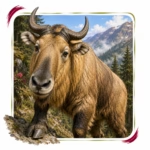
Musk Ox Fact Highlight
From the full animal facts page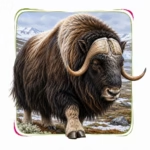
More Animal Comparisons
Pick another animal matchup and keep exploring. Compare appearances, habitats, diets, abilities, and surprising differences.






Make an Animal Story
Create a cold-world story with a rainproof takin and a qiviut-wrapped musk ox!
Source notes: References used for this comparison. See more See less
Try Another Matchup
Explore this comparison →