
Tick vs Flea: Arachnid Parasite vs Insect Parasite Comparison
Ticks and fleas are tiny blood-feeding parasites, but they belong to very different animal groups. Adult ticks are eight-legged arachnids that crawl onto hosts and may remain attached for days. Fleas are six-legged wingless insects that jump quickly between hosts, fur, nests, carpets, and bedding.
About Tick
- Type Arachnid
- Diet Parasite
- Group Parasitiform Arachnid
- Known for Eight legs as an adult, blood feeding, expandable bodies, host attachment, and disease transmission in some species
- Special skill Attaching firmly to a host and expanding greatly while taking a long blood meal
About Flea
- Type Insect
- Diet Parasite
- Group Siphonapteran Insect
- Known for Powerful jumping, flattened body, blood feeding, rapid movement, and life among fur, feathers, nests, or bedding
- Special skill Jumping many times its body length using spring-like structures in the legs and thorax
Tick vs Flea: Quick Answer
Adult ticks are arachnids with eight legs. They crawl, attach to the skin, and often feed for hours or days. Fleas are insects with six legs. They jump, move rapidly through fur or feathers, and take shorter blood meals. Both are external parasites, but they differ in body shape, movement, life cycle, and feeding style.
Where Do They Fit?
Follow the branches to see how Tick and Flea are classified and related.
Tick vs Flea: Quick Comparison
| Feature | Tick | Flea |
|---|---|---|
| Animal type | Arachnid | Insect |
| Animal group | Parasitiform arachnid | Siphonapteran insect |
| Known for | Eight legs, attachment, swelling, and long blood meals | Six legs, powerful jumping, and rapid movement |
| Main habitat | Vegetation, leaf litter, nests, and host resting areas | Fur, feathers, nests, bedding, carpets, and cracks |
| Adult legs | Eight | Six |
| Body shape | Broad and flattened from top to bottom before feeding | Narrow and flattened from side to side |
| Movement | Crawls and climbs; does not jump or fly | Jumps and runs; does not fly |
| Feeding style | Attaches for a prolonged blood meal | Takes repeated shorter blood meals |
| Baby stage | Six-legged larva, then eight-legged nymph | Legless worm-like larva, then pupa |
| Special skill | Expanding greatly while feeding | Jumping many times its body length |
How Are Ticks and Fleas Alike?
- Both ticks and fleas are small external parasites that feed on blood.
- Both can live on mammals or birds, depending on species.
- Both use special mouthparts to pierce skin and obtain a blood meal.
- Both lay eggs and pass through several life stages before adulthood.
- Some species in both groups can transmit disease-causing organisms between hosts.
How Are Ticks and Fleas Different?
- Adult ticks are arachnids with eight legs, while adult fleas are insects with six.
- Ticks crawl and attach firmly, while fleas jump and move quickly through fur or bedding.
- Ticks often feed for hours or days, while fleas take shorter repeated meals.
- Ticks hatch as six-legged larvae, while flea larvae are legless and worm-like.
- Ticks become greatly swollen after feeding, while fleas remain more similar in shape.
Tick vs Flea Showdown
Parasite showdown: The tick wins for size and attachment strength because many species grow larger and anchor firmly during long blood meals. The flea takes speed and stealth with explosive jumps, quick movement, and a narrow body that slips through fur. Social life and swimming are ties because neither group is truly social or specialized for swimming. The flea wins our weirdest-fact prize because its jump is powered by resilin, a springy protein that stores and releases energy like a biological catapult.
Fun Tick vs Flea Facts
Eight Legs vs Six Legs
Adult ticks have eight walking legs because they are arachnids. Adult fleas have six legs because they are insects, and their enlarged hind legs provide much of the power for jumping.
Crawling Hitchhiker vs Jumping Passenger
Ticks climb vegetation or wait in sheltered places, then grab a passing host with their front legs. Fleas usually jump from the environment or another host and quickly disappear into fur, feathers, bedding, or cracks.
Long Meal vs Quick Meals
Many ticks remain attached for several days while taking one large blood meal and expanding dramatically. Adult fleas usually feed more quickly but return for repeated meals while living on or near a host.
Six-Legged Tick Baby vs Legless Flea Larva
A tick hatches as a six-legged larva and gains its fourth pair of legs after molting into a nymph. A flea hatches as a pale, legless larva that eats organic debris before spinning a cocoon and becoming a pupa.
Fleas Use a Biological Catapult
A flea stores energy in spring-like pads containing resilin near the legs and releases it rapidly during a jump. This lets the insect leap many times its own body length without wings.
Tick vs Flea Quiz
- How many legs does an adult tick have? Answer: Eight.
- How many legs does an adult flea have? Answer: Six.
- Which parasite can jump? Answer: Flea.
- Which parasite often remains attached for days? Answer: Tick.
- What springy protein helps power a flea’s jump? Answer: Resilin.
Tick vs Flea FAQ
What is the main difference between a tick and a flea?
A tick is an eight-legged arachnid that crawls and attaches for a long blood meal. A flea is a six-legged insect that jumps and takes shorter repeated meals.
Can ticks and fleas fly?
No. Neither animal has wings. Ticks crawl, while fleas jump using powerful hind legs.
Which is bigger, a tick or a flea?
Ticks are generally larger, especially after feeding, when some species swell dramatically. Fleas remain small and narrow-bodied.
Do ticks and fleas spread disease?
Some species can transmit disease-causing organisms, but not every tick or flea carries them. Children should tell an adult about attached ticks, bites, or pet infestations rather than handling parasites alone.
Do fleas live only on pets?
No. Fleas parasitize many mammals and birds. Eggs, larvae, and pupae may also develop in nests, carpets, bedding, soil, or cracks near a host.
Animal Words to Know
- Parasite: An organism that lives on or in another organism and obtains resources from it.
- Arachnid: A member of the group containing ticks, mites, spiders, and scorpions.
- Insect: An arthropod with six legs and three main body sections as an adult.
- Nymph: An immature stage that resembles a smaller adult and grows through molts.
- Resilin: A springy protein that stores and releases energy in some arthropod body parts.
Tick and Flea Parasite Detective Activity
Tick and Flea Parasite Detective Activity
Use photographs to draw an enlarged adult tick and flea—never collect or handle them. Give the tick eight legs, a broad body, and piercing mouthparts; add a small six-legged tick larva. Give the flea six legs, a narrow side-flattened body, enlarged hind legs, and a legless larva. Label arachnid, insect, legs, body shape, and life cycle.
Meet Each Animal
Want the full fact file? Here are quick highlights from each animal’s own facts page.
Tick Fact Highlight
From the full animal facts page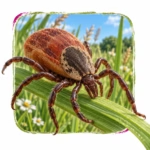
Flea Fact Highlight
From the full animal facts page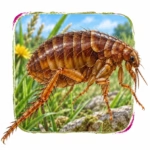
More Animal Comparisons
Pick another animal matchup and keep exploring. Compare appearances, habitats, diets, abilities, and surprising differences.






Make an Animal Story
Turn this tick vs flea comparison into a tiny jumping-and-crawling adventure with our free Animal Story Generator.
Source notes: References used for this comparison. See more See less
Try Another Matchup
Explore this comparison →