
Toucan vs Parrot: Living Tropical Bird Group Comparison
Toucans and parrots may share a tropical tree, brilliant colors, cavity nests, loud voices, fruit meals, and two-toes-forward two-toes-back feet, but they are not close versions of the same bird. Toucans belong beside woodpeckers in Piciformes and carry long oversized lightweight bills suited to reaching fruit and exchanging heat. Parrots form Psittaciformes and carry shorter, deeper, strongly hooked bills powered for cracking, cutting, manipulating, and climbing. Toucans occur only in the Americas; wild parrots span several tropical and southern regions worldwide. Both groups need forests and safe nesting places, yet conservation status must always be checked species by species.
About Toucan
- Type Bird
- Diet Fruit-first omnivore eating many fruits and berries while also taking insects and, depending on species and opportunity, eggs, nestlings, small lizards, frogs, and other small animal food
- Group Toucans (Family Ramphastidae; Order Piciformes)
- Known for A Neotropical family of several dozen species including toucans, aracaris, and toucanets, ranging from small green toucanets to the toco toucan at roughly 60 centimeters long and up to about 850 grams, with a very large lightweight bill, compact body, short wings, rounded tail, and two-forward two-back gripping toes
- Special skill Enormous but surprisingly light bill with a keratin shell and internal bony struts, serrated edges for handling food, long bristled tongue, zygodactyl feet for branches, short wings for forest movement, and adjustable blood flow through the bill that can release body heat
About Parrot
- Type Bird
- Diet Mostly plant-based and highly varied: seeds, nuts, fruit, flowers, buds, nectar, pollen, leaves, and bark, with some species also eating insects, larvae, or other animal matter; diet must be described species by species
- Group Parrots (Order Psittaciformes; including true parrots, cockatoos, and New Zealand parrots)
- Known for An extraordinarily diverse order of nearly 400 living species, from tiny pygmy parrots to large macaws and the heavy flightless kākāpō, generally recognized by a deep strongly hooked upper bill, mobile lower bill, upright posture, large head, and two-forward two-back feet capable of gripping food
- Special skill Powerful hooked bill for cracking, cutting, climbing, and manipulating objects, unusually dexterous zygodactyl feet that often hold food, muscular tongue, strong flight in most species, complex social learning, and in climbing parrots a beak that can work biomechanically like a third limb
Toucan vs Parrot: Quick Answer
A toucan is an American piciform bird with an extremely large, lightweight, often colorful bill used to reach and handle fruit and help control body heat. A parrot is a member of Psittaciformes with a shorter, deeper, strongly hooked bill and dexterous feet used to crack food, climb, and manipulate objects. Both can be colorful, noisy, social, fruit-eating cavity nesters with two toes forward and two backward.
Where Do They Fit?
Follow the branches to see how Toucan and Parrot are classified and related.
Toucan vs Parrot: Quick Comparison
| Feature | Toucan | Parrot |
|---|---|---|
| Bird group | Family Ramphastidae in order Piciformes | Order Psittaciformes, including true parrots, cockatoos, and New Zealand parrots |
| Closest familiar branch | Woodpeckers and other piciform birds | Other parrots within its own ancient bird order |
| Bill | Very long and oversized but light, with a keratin shell and internal struts | Shorter, deeper, strongly hooked, muscular, and powerful |
| Bill jobs | Reaching, grasping, peeling, tossing food, exploring cavities, display, and heat exchange | Cracking, cutting, digging, grooming, carrying, manipulating, and climbing |
| Feet | Two toes forward and two backward, excellent for gripping branches | Two toes forward and two backward, often extremely dexterous and able to hold food |
| Natural range | Southern Mexico, Central America, and South America | Central and South America, Africa, Asia, Australia, New Guinea, New Zealand, and Pacific islands |
| Main food pattern | Mostly fruit plus opportunistic animal food | Usually seeds, nuts, fruit, flowers, nectar, buds, or other plant foods, varying by species |
| Sounds | Croaks, barks, rattles, growls, brays, and bill clattering | Squawks, whistles, contact calls, songs, and in some species learned imitation |
| Nesting | Tree cavities, often pre-existing or enlarged | Usually cavities, though some use cliffs, banks, termite mounds, or ground sites |
| Conservation | Varies by species; forest loss, hunting, and illegal trade threaten several | Varies by species; roughly one in three parrot species is in a threatened Red List category |
How Are Toucans and Parrots Alike?
- Both are warm-blooded, feathered birds with wings, beaks, air sacs, hard-shelled eggs, and chicks that need parental care.
- Both have zygodactyl feet with two toes pointing forward and two backward, giving a firm grip on branches.
- Many toucans and parrots live in tropical forests, eat fruit, move socially, communicate loudly, and depend on tree cavities.
- Both use their bills for far more than eating, including grooming, exploring, displaying, and interacting with companions.
- Both can disperse seeds and help shape plant communities, although whether a swallowed seed survives depends on the bird and plant species.
How Are Toucans and Parrots Different?
- Toucans belong to Ramphastidae in the woodpecker order Piciformes; parrots form the separate order Psittaciformes.
- A toucan bill is extremely long, broad, and internally reinforced yet lightweight; a parrot bill is shorter, deeper, sharply hooked, and driven by powerful jaw muscles.
- Toucans use their feet mainly as branch grips; many parrots use one foot almost like a hand to lift and rotate food.
- Wild toucans occur only in the Americas, while wild parrots evolved across the Americas, Africa, Asia, Australasia, New Zealand, and Pacific islands.
- Toucans are mainly fruit specialists that add opportunistic animal foods; parrot diets range from hard seeds and nuts to fruit, nectar, flowers, leaves, and specialized foods.
- Some parrots can imitate human speech sounds, but toucans are better known for croaks, barks, rattles, and bill clattering rather than speech-like mimicry.
Toucan vs Parrot Adaptation Showdown
Tropical-bird adaptation showdown: Parrot wins group-level size because Psittaciformes stretches from tiny parrots to large macaws and the much heavier kākāpō, and it wins tool strength through a deep hooked bill and food-holding feet. Flight speed, camouflage, social skill, and swimming are ties because hundreds of species occupy different niches and neither group is an aquatic specialist. Toucan wins weirdest adaptation: the spectacular bill is a lightweight food reacher, signal, and controllable thermal window. These categories compare adaptations, not combat.
Fun Toucan vs Parrot Facts
Their Similar Feet Hide Separate Family Trees
Toucans and parrots both place toes two and three forward and toes one and four backward, a zygodactyl arrangement that grips branches. The match does not make them close relatives. Toucans sit in Piciformes with woodpeckers, barbets, and allies, while parrots belong to the separate order Psittaciformes.
One Bill Is a Long Reach and One Is a Power Tool
A toucan’s foam-like bill combines an outer keratin shell with a network of bony struts, creating a large structure without the mass of a solid block. A parrot’s deep hooked upper bill works against a mobile lower bill and muscular tongue to crack, peel, bite, dig, and rotate food with precision.
A Toucan Bill Can Work Like a Radiator
Toco toucans can change blood flow through vessels inside the bill. More warm blood near its uninsulated surface releases heat, while reduced flow helps conserve warmth. The finding does not mean cooling is the bill’s only job, but it reveals a striking living thermal window.
A Parrot Can Turn Its Beak Into a Third Limb
Biomechanics experiments found that climbing parrots press and pull with the head and bill, producing propulsive forces comparable to their legs. Parrots can even move beneath a narrow support using beak-driven “beakiation,” making the feeding tool part of an unusual climbing system.
Their Chicks Start Without the Famous Adult Tools
Toucan chicks hatch blind and bare, and their bills take months to reach adult proportions. Most parrots also hatch helpless in protected nests and depend on regurgitated food, warmth, and defense from parents. Neither a giant toucan bill nor a crushing parrot bill arrives fully built on hatching day.
Toucan vs Parrot Quiz
- Which bird has the longer oversized bill? Answer: The toucan.
- Which bird group has a deep hooked bill that can help it climb? Answer: Parrots.
- What toe pattern do both groups share? Answer: Two toes forward and two backward.
- Where do wild toucans naturally live? Answer: In the tropical Americas.
- How can a toco toucan’s bill help control temperature? Answer: The bird changes blood flow through it to release or conserve heat.
Toucan vs Parrot FAQ
Is a toucan a kind of parrot?
No. A toucan belongs to Ramphastidae in Piciformes, the order that includes woodpeckers. A parrot belongs to Psittaciformes.
Can toucans talk like parrots?
Toucans produce varied croaks, barks, growls, rattles, and bill sounds, but they are not famous speech mimics. Some parrots can learn human-like sounds, although imitation varies greatly and is not the same as human language.
Which has the stronger bill?
A parrot generally has the more forceful cracking and cutting bill. A toucan’s much larger-looking bill is cleverly light and best treated as a reaching and handling tool, not a heavy battering weapon.
Do toucans and parrots live together?
Yes, some species share Central or South American forests and may visit the same fruiting trees. Parrots also occur naturally far beyond the toucan range.
Do toucans or parrots make easy pets?
No wild exotic bird is easy. Both need expert long-term care, space, companionship, enrichment, veterinary support, and legal, ethical sourcing. Never take a bird from the wild, and learning about them in protected habitat is usually the kinder choice.
Animal Words to Know
- Piciformes: The bird order containing woodpeckers, toucans, barbets, and their relatives.
- Psittaciformes: The bird order containing parrots, macaws, parakeets, cockatoos, and New Zealand parrots.
- Zygodactyl: Having two toes directed forward and two backward.
- Frugivore: An animal that eats fruit as a major part of its diet.
- Thermoregulation: Control of body temperature through behavior or body processes.
Toucan and Parrot Bill Activity
Toucan and Parrot Bill Activity
Draw a toco toucan and a large parrot in a tropical American forest. Give the toucan an enormous lightweight bill for reaching fruit. Give the parrot a shorter, deeper hooked bill for gripping and cracking food, plus a foot holding a seed. Show two toes facing forward and two backward on both birds. Label bill, toes, fruit, seeds, tree cavity, flock, and forest.
Meet Each Animal
Want the full fact file? Here are quick highlights from each animal’s own facts page.
Toucan Fact Highlight
From the full animal facts page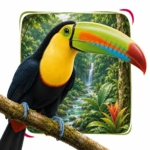
Parrot Fact Highlight
From the full animal facts page
More Animal Comparisons
Pick another animal matchup and keep exploring. Compare appearances, habitats, diets, abilities, and surprising differences.

Make an Animal Story
Turn this toucan vs parrot comparison into a tropical canopy bill-tool adventure with our free Animal Story Generator.
Source notes: References used for this comparison. See more See less
Try Another Matchup
Explore this comparison →