
Vulture vs Eagle: Scavenging Raptor vs Hunting Raptor Comparison
Vultures and eagles are large soaring birds with hooked beaks and excellent eyesight, but they fill different jobs in nature. Vultures are mainly scavengers that locate and eat dead animals, helping clean ecosystems. Eagles are usually active hunters with strong feet and talons for catching live prey.
About Vulture
- Type Bird
- Diet Scavenger
- Group Scavenging Bird of Prey
- Known for Soaring flight, carrion feeding, strong stomach acid, broad wings, and ecosystem cleanup
- Special skill Finding carrion from great distances and digesting dangerous microbes with an unusually acidic stomach
About Eagle
- Type Bird
- Diet Carnivore
- Group Accipitrid Bird of Prey
- Known for Large size, broad wings, soaring, powerful talons, hooked beak, and sharp eyesight
- Special skill Soaring for long periods and gripping live prey with exceptionally powerful feet and sharply curved talons
Vulture vs Eagle: Quick Answer
Vultures are mainly scavengers with broad wings, strong stomach acid, and feet that are usually better for walking than crushing prey. Eagles are active hunters with stronger talons, sharper gripping power, and diets focused more heavily on live animals. Both are soaring birds of prey with hooked beaks and chicks.
Where Do They Fit?
Follow the branches to see how Vulture and Eagle are classified and related.
Vulture vs Eagle: Quick Comparison
| Feature | Vulture | Eagle |
|---|---|---|
| Animal type | Bird | Bird |
| Animal group | Scavenging bird of prey | Accipitrid bird of prey |
| Known for | Carrion feeding, soaring, and ecosystem cleanup | Hunting, powerful talons, soaring, and sharp eyesight |
| Main habitat | Open country, mountains, deserts, forests, and cliffs | Mountains, forests, coasts, wetlands, grasslands, and tundra |
| Typical diet | Mainly carrion | Mostly live prey, fish, birds, mammals, reptiles, and some carrion |
| Feet | Usually weaker gripping feet suited more for walking | Powerful feet with strongly curved talons |
| Head | Often bare or sparsely feathered | Usually fully feathered |
| Flight style | Long-distance soaring with very little flapping | Soaring, gliding, and powerful flapping |
| Baby name | Chick | Chick or eaglet |
| Special skill | Digesting carrion safely | Capturing and carrying prey |
How Are Vultures and Eagles Alike?
- Both vultures and eagles are large birds of prey with hooked beaks.
- Both have excellent eyesight, broad wings, feathers, and strong flight muscles.
- Both use rising air to soar and save energy.
- Both lay eggs and raise chicks in nests or on cliffs depending on species.
- Both play important roles in food webs and may eat carrion.
How Are Vultures and Eagles Different?
- Vultures mainly eat dead animals, while eagles usually hunt live prey.
- Vulture feet are generally less powerful for gripping, while eagle talons are strong killing tools.
- Many vultures have bare or sparsely feathered heads, while eagles usually have feathered heads.
- Vultures often gather in groups around food, while eagles are more commonly solitary or paired.
- Vultures rely heavily on soaring and carrion-finding abilities, while eagles combine soaring with active pursuit and attack.
Vulture vs Eagle Showdown
Bird-of-prey showdown: Size is a tie because both groups include medium-sized species and giants with enormous wingspans. The eagle wins speed, strength, and stealth through active hunting, stronger talons, rapid dives, and surprise attacks. The vulture takes social life because many species gather at carcasses, roosts, and rising-air columns. Swimming is a tie because neither group is specialized for it. The vulture wins our weirdest-fact prize because its stomach can destroy many dangerous microbes found in rotting meat.
Fun Vulture vs Eagle Facts
Scavenger vs Hunter
Vultures specialize mainly in finding and eating carrion, the bodies of animals that are already dead. Eagles usually capture live prey with their talons, although many also scavenge when an easy meal appears.
Walking Feet vs Gripping Talons
Most vultures have relatively blunt claws and feet better suited to walking around carcasses than crushing prey. Eagles have thick toes and sharply curved talons that clamp onto fish, birds, reptiles, or mammals.
Bare Head vs Feathered Head
Many vultures have bare or sparsely feathered heads, which are easier to keep clean while feeding inside carcasses. Eagles usually have fully feathered heads that provide warmth and a streamlined profile.
Soaring Specialist vs Hunting Soarer
Vultures can travel great distances by circling in thermals and gliding between columns of rising air. Eagles also soar efficiently but often switch to powerful flapping, diving, or low pursuit when attacking prey.
Vulture Stomachs Defeat Dangerous Germs
Vulture stomach acid is extremely strong and can destroy many bacteria and toxins that would make other animals sick. This adaptation lets vultures safely recycle carcasses and slow the spread of disease.
Vulture vs Eagle Quiz
- Which bird mainly eats carrion? Answer: Vulture.
- Which bird usually has stronger gripping talons? Answer: Eagle.
- Why do many vultures have bare heads? Answer: They are easier to keep clean while feeding.
- What rising columns of warm air help both birds soar? Answer: Thermals.
- What is a baby eagle often called? Answer: An eaglet.
Vulture vs Eagle FAQ
What is the main difference between a vulture and an eagle?
Vultures are mainly scavengers with broad soaring wings and relatively weak gripping feet. Eagles are usually active hunters with much stronger talons and feet.
Which is bigger, a vulture or an eagle?
There is no single winner because both groups include many species. Some vultures have wider wingspans, while some eagles are heavier and more powerfully built.
Can eagles eat dead animals?
Yes. Eagles mainly hunt live prey but often scavenge carrion when it is available.
Why are vultures important?
Vultures remove carcasses quickly, recycle nutrients, and help reduce opportunities for disease-causing organisms to spread.
Are vultures and eagles closely related?
Some Old World vultures and eagles belong to the family Accipitridae. New World vultures belong to a separate family, Cathartidae, and evolved a similar scavenging lifestyle independently.
Animal Words to Know
- Carrion: The body of an animal that is already dead.
- Scavenger: An animal that feeds mainly or partly on dead organisms.
- Thermal: A rising column of warm air used by soaring birds.
- Talon: A sharply curved claw on a bird of prey.
- Convergent evolution: The independent development of similar traits in unrelated groups facing similar challenges.
Vulture and Eagle Raptor Detective Activity
Vulture and Eagle Raptor Detective Activity
Use a turkey vulture and golden eagle as clear examples. Give the vulture a bare head, broad soaring wings, and a carrion food icon. Give the eagle a feathered head, powerful feet, curved talons, and a rabbit or fish prey icon. Label scavenger, hunter, head, feet, talons, and soaring.
Meet Each Animal
Want the full fact file? Here are quick highlights from each animal’s own facts page.
Vulture Fact Highlight
From the full animal facts page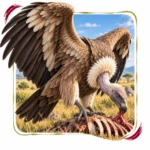
Eagle Fact Highlight
From the full animal facts page
More Animal Comparisons
Pick another animal matchup and keep exploring. Compare appearances, habitats, diets, abilities, and surprising differences.





Make an Animal Story
Turn this vulture vs eagle comparison into a soaring mountain adventure with our free Animal Story Generator.
Source notes: References used for this comparison. See more See less
Try Another Matchup
Explore this comparison →