
Walrus vs Elephant Seal: Arctic Shallow-Shelf Tusker-to-Deep-Ocean Elephant Seal Comparison
Walruses and elephant seals are enormous marine mammals in the pinniped family tree, but they solve ocean life in different ways. The walrus is an Arctic shallow-shelf specialist with tusks, a whisker-covered muzzle, social herds, and suction feeding for buried invertebrates. Elephant seal is a two-species name for long-distance ocean travelers with trunk-like male noses, short breeding seasons ashore, and some of the deepest dives made by any air-breathing mammal. The southern elephant seal supplies this page’s maximum-size and dive-depth examples because it is the larger elephant-seal species.
About Walrus
- Type Mammal
- Diet A benthic carnivore specializing in clams and other soft seafloor invertebrates such as snails, worms, sea cucumbers, and tunicates; sensitive vibrissae locate prey, lips grip it, and a piston-like tongue creates suction that pulls soft tissue from shells, while a few mostly male walruses sometimes take birds or seals
- Group Walrus, Odobenus rosmarus, the only living species in family Odobenidae and genus Odobenus; it is a pinniped related to true seals and eared seals, with Atlantic and Pacific subspecies that differ in average body size and range
- Known for A huge, barrel-shaped Arctic pinniped with a blunt whiskered muzzle, no external ear flaps, four flippers, wrinkled skin, thick blubber, and two ever-growing upper canine tusks in both sexes; Pacific bulls can reach about 3.7 meters and approach 2 metric tons, while females and Atlantic walruses are generally smaller
- Special skill Hundreds of blood- and nerve-rich facial vibrissae map prey in dark sediment; powerful tongue suction extracts clam tissue without crushing most shells; thick blubber, countercurrent heat exchange, closable nostrils, broad flippers, tough hide, and compact shape conserve heat; tusks help with display, defense, ice access, and hauling out but are not used as shovels for routine clam digging
About Elephant Seal
- Type Mammal
- Diet A deep-diving carnivore taking squid, fish, and other pelagic or bottom-associated prey; species, sex, colony, season, and water mass change the menu, with large eyes and sensitive whiskers helping locate moving prey in darkness during repeated dives hundreds of meters deep
- Group Elephant seal means either of two true-seal species in genus Mirounga and family Phocidae: the northern elephant seal Mirounga angustirostris of the North Pacific and the larger southern elephant seal Mirounga leonina of the Southern Ocean; this row labels southern-species records whenever they supply the maximum-size or deepest-dive reference
- Known for An immense smooth-bodied true seal with tiny ear openings, short front flippers, fused-looking rear-flipper movement, huge eyes, and extreme sex differences; adult males grow a resonating trunk-like proboscis, and southern bulls can be five to six times heavier than females, reach roughly 4–5 meters, and weigh several metric tons
- Special skill Large blood volume, oxygen-rich muscle myoglobin, slowing heart rate, shunting blood toward vital organs, collapsible lungs, abundant blubber, streamlined bodies, large low-light eyes, and vibration-sensing whiskers support near-continuous deep diving; southern elephant seals have exceeded 2,000 meters, while adult-male proboscises amplify individually distinctive breeding calls
Walrus vs Elephant Seal: Quick Answer
A walrus has two long tusks, hundreds of stiff muzzle whiskers, and a blunt face; it usually feeds by suction on clams and other animals in shallow Arctic seafloors. An adult male elephant seal has no tusks but develops an inflatable trunk-like nose. Elephant seals hunt fish and squid in deep open water, and the southern elephant seal grows larger than any walrus. Walruses live only in the Arctic, while elephant seals occur in the North Pacific or Southern Ocean depending on the species.
Where Do They Fit?
Follow the branches to see how Walrus and Elephant Seal are classified and related.
Walrus vs Elephant Seal: Quick Comparison
| Feature | Walrus | Elephant Seal |
|---|---|---|
| Scientific identity | Odobenus rosmarus, one living species with Atlantic and Pacific subspecies | Genus Mirounga: northern M. angustirostris and southern M. leonina |
| Family | Odobenidae, the walrus family | Phocidae, the true or earless seals |
| Face clue | Two upper-canine tusks and a broad pad of stiff vibrissae | Adult male has an enlarged inflatable proboscis; no tusks |
| Largest-size clue | Pacific bulls can approach 2 metric tons and about 3.7 m | Southern bulls can reach several metric tons and roughly 4–5 m |
| Main feeding zone | Mostly shallow continental-shelf seafloor | Deep open-ocean and slope water, often hundreds of meters down |
| Typical food | Clams and other benthic invertebrates sucked from the bottom | Squid, fish, and other swimming or deepwater prey |
| Broad range | Discontinuous circumpolar Arctic and subarctic seas | North Pacific for northern species; Southern Ocean for southern species |
| Social pattern | Highly social herds at sea ice and coastal haulouts | Mostly solitary foraging; dense breeding and molting colonies ashore |
| Young | Calf stays with mother for about two years | Pup nurses rapidly for only a few weeks before weaning |
| Standout adaptation | Tactile whisker map plus piston-tongue suction | Extreme oxygen storage, repeated deep dives, and resonating male nose |
How Are Walruses and Elephant Seals Alike?
- Both are pinnipeds—fin-footed marine mammals in order Carnivora—with streamlined bodies, four flippers, whiskers, nostrils that close underwater, lungs that hold air, and thick blubber for insulation and stored energy.
- Both divide life between sea and land or ice: they feed in the ocean but must surface to breathe and haul out to rest, give birth, nurse young, molt, and conduct important social behavior.
- Both show striking sexual dimorphism. Adult males grow much larger than females and use specialized display structures, powerful calls, posture, and competition during breeding.
- Both can fast ashore by drawing energy from blubber, slow the heart and redirect blood while diving, and use sensitive vibrissae to detect information when underwater visibility is poor.
- Both mothers usually produce one dependent young, recognize and protect it, make milk rich in fat, and face human-caused risks including disturbance, entanglement, pollution, and changing ocean conditions.
How Are Walruses and Elephant Seals Different?
- A walrus is the only living member of family Odobenidae; elephant seals are two species in genus Mirounga inside the true-seal family Phocidae.
- Both male and female walruses grow long upper-canine tusks. Elephant seals have no tusks, but a mature bull develops an enlarged proboscis that makes his calls resonate.
- Walruses inhabit Arctic and subarctic shelf seas and depend heavily on shallow seafloor prey. Northern elephant seals cross the North Pacific, while southern elephant seals range around the Southern Ocean and repeatedly hunt far below the sunlit surface.
- A southern elephant-seal bull is the largest pinniped and can greatly outweigh even a Pacific walrus bull; northern elephant seals are smaller than southern ones but still rank among the largest true seals.
- Walruses often remain in social herds and a calf may accompany its mother for about two years. Elephant seals are dispersed at sea, crowd into seasonal rookeries, and wean a fast-growing pup after only a few weeks.
- Walruses can turn the hind flippers forward beneath the body more than true seals can and may use all four limbs while hauling out. Elephant seals galumph on the belly because their rear flippers cannot rotate under the body for walking.
Walrus vs Elephant Seal Adaptation Showdown
Arctic bottom-feeder versus deep-ocean diver showdown: Elephant seal wins size because southern bulls are the largest pinnipeds and can outweigh Pacific walrus bulls by a wide margin. Speed is a tie: both are capable marine swimmers, but popular top-speed numbers come from unlike situations rather than one controlled test. Elephant seal receives a cautious strength win from the southern bull’s much greater maximum mass and powerful breeding-contest body; this is not a bite-force claim or staged-fight prediction. Stealth is a tie because walruses use touch and suction in dim seafloor sediment while elephant seals hunt quietly in dark deep water. Walrus wins social behavior for persistent herds and the roughly two-year mother–calf bond, although elephant seals have sophisticated rookery calls and recognition. Elephant seal wins swimming for long migrations, near-continuous diving, and depths beyond 2,000 meters. Walrus wins strangest adaptation for combining ever-growing canine tusks, hundreds of tactile whiskers, and a piston-like suction tongue. These fields compare adaptations, not combat.
Fun Walrus vs Elephant Seal Facts
The World’s Biggest Seal Is an Elephant Seal
The southern elephant seal is the largest living pinniped. A full-grown bull can be five to six times heavier than a female and several times heavier than a large walrus. Northern elephant seals are the second-largest true seals. “Elephant seal” therefore needs a species label whenever a record is discussed.
Tusks and Trunks Are Different Tools
A walrus tusk is an upper canine tooth that keeps growing in both males and females. It helps with social display, defense, ice access, and hauling out. An elephant-seal bull’s “trunk” is a flexible nose called a proboscis. It enlarges at maturity and helps make the bull’s breeding call sound deep and resonant.
A Walrus Feels for Dinner With Its Mustache
Hundreds of sensitive vibrissae cover a walrus muzzle. Each whisker can move and carries a rich nerve and blood supply, letting the animal examine shapes in dark, stirred-up sediment. The walrus seals its lips around prey and snaps its tongue backward to create suction, usually leaving an emptied clam shell rather than smashing it.
Elephant Seals Visit the Midnight Zone
Tracked southern elephant seals have passed 2,000 meters, and northern elephant seals routinely repeat long dives with only short surface breaks. Oxygen is packed into blood and muscle rather than a giant lungful; the heart slows, blood is prioritized, and lungs compress safely as pressure increases.
Both Animals Leave the Water, but on Different Schedules
Walruses use sea ice or land haulouts between feeding trips and may form herds containing thousands. Elephant seals spend most of the year at sea, then return to traditional beaches once to breed and again to replace hair and the outer skin layer in a catastrophic molt. “Catastrophic” describes the all-at-once molt, not a disaster.
Walrus vs Elephant Seal Quiz
- Which animal has two long tusks? Answer: The walrus.
- Which elephant-seal species supplies the largest-size record? Answer: The southern elephant seal, Mirounga leonina.
- What does a walrus use to find small prey in dark seafloor sediment? Answer: Its sensitive vibrissae, or whiskers.
- What is the adult male elephant seal’s trunk-like nose called? Answer: A proboscis.
- Which animal is the more extreme deep diver? Answer: The elephant seal.
Walrus vs Elephant Seal FAQ
Which is bigger, a walrus or an elephant seal?
The southern elephant seal is bigger. Its largest bulls reach several metric tons, making it the largest pinniped. A Pacific walrus bull can approach two metric tons, while northern elephant seals are smaller than southern ones. Sex, age, condition, subspecies, and population all affect body size.
Is a walrus a type of elephant seal?
No. A walrus is Odobenus rosmarus in family Odobenidae. Elephant seals are Mirounga angustirostris and Mirounga leonina in the true-seal family Phocidae. All are pinnipeds, but their lineages, faces, feeding methods, ranges, and life cycles differ.
Do walruses use their tusks to dig up clams?
Not as the routine digging tool shown in many cartoons. Walruses locate prey with whiskers and can clear sediment with the muzzle, water jets, or flipper movements. They mainly use tusks for social display, dominance, defense, ice access, and help hauling out.
Can elephant seals really dive deeper than 2,000 meters?
Yes. Instrumented southern elephant seals have recorded dives beyond 2,000 meters. Most dives are much shallower, and depth varies with individual, prey, season, location, and species. Northern elephant seals also make repeated deep dives and can remain submerged for remarkably long periods.
Do walruses and elephant seals meet in the wild?
Their core ranges and habitats are very different. Walruses occupy Arctic and subarctic shelf seas. Northern elephant seals use the North Pacific farther south and offshore, while southern elephant seals live around the Southern Ocean. Never approach either animal at a haulout; enormous pinnipeds can move suddenly and need space.
Animal Words to Know
- Pinniped: A fin-footed marine mammal in the seal, sea-lion, or walrus branch.
- Vibrissae: Specialized touch-sensitive whiskers connected to nerves and blood vessels.
- Proboscis: The enlarged inflatable nose of an adult male elephant seal.
- Benthic: Living on, in, or closely associated with the bottom of a sea or lake.
- Catastrophic molt: A concentrated yearly molt in which an elephant seal replaces its hair and outer skin layer over a short haulout period.
Walrus and Elephant Seal Diving Activity
Walrus and Elephant Seal Diving Activity
Draw an adult male walrus and an adult male southern elephant seal at the same scale. Give the walrus long tusks, a whiskered muzzle, and a shallow Arctic seafloor with clams. Make the elephant seal longer and heavier-looking, with a large inflatable nose and a deep Southern Ocean dive toward fish and squid. Add arrows showing that both must return to the surface to breathe. Label pinniped, tusk, whiskers, nose, haul-out, and dive.
Meet Each Animal
Want the full fact file? Here are quick highlights from each animal’s own facts page.
Walrus Fact Highlight
From the full animal facts page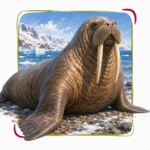
Elephant Seal Fact Highlight
From the full animal facts page
More Animal Comparisons
Pick another animal matchup and keep exploring. Compare appearances, habitats, diets, abilities, and surprising differences.




Make an Animal Story
Turn this walrus vs elephant seal comparison into an Arctic-whisker and deep-ocean-diver adventure with our free Animal Story Generator.
Source notes: References used for this comparison. See more See less
Try Another Matchup
Explore this comparison →