
Water Buffalo vs Cow: Wetland-Water-Buffalo-to-Pasture-Cow Domestic-Bovid Comparison
Water buffalo and cows can stand in neighboring farm fields, chew cud, raise calves, pull loads, and produce milk, but they are not the same animal. Domestic water buffalo are Bubalus bubalis, including river and swamp types with long horns, sparse dark coats, splayed wet-ground hooves, and a strong relationship with water and wallowing. A cow is an adult female domestic cattle animal, usually classified within Bos taurus, and may belong to any of hundreds of dairy, beef, draft, temperate, or tropical breeds. Female water buffalo are also called buffalo cows, so this page uses “cow” as the everyday short name for female domestic cattle. Breed and sex variation make several size and strength rankings honest ties.
About Water Buffalo
- Type Domestic Bovid
- Diet Herbivorous ruminant eating grasses, rice straw, crop residues, hay, silage, legumes, aquatic vegetation, reeds, sedges, and balanced feeds according to river or swamp type, breed, age, season, health, work, milk production, and local husbandry
- Group Domestic water buffalo, Bubalus bubalis in family Bovidae; the domesticated river and swamp lineages differ in chromosome number, body form, horns, use, and geography, while the endangered wild water buffalo is generally treated separately as Bubalus arnee
- Known for A large heavy livestock bovid with major variation: swamp buffalo commonly weigh about 325–450 kilograms and river buffalo about 450–1,000 kilograms, with males usually larger than females; the body is long and dark with sparse hair, a broad wet muzzle, splayed hooves, and permanent horns in both sexes
- Special skill Wide splayed hooves spread weight on mud and flooded ground; strong shoulders, a low steady gait, and flexible footing support traction; rumen microbes unlock fibrous feed; long horns serve defense and display; and because evaporative cooling is relatively inefficient, immersion, wet mud, shade, air movement, or water spraying help control body heat
About Cow
- Type Domestic Cattle
- Diet Herbivorous ruminant eating pasture grasses, legumes, hay, silage, crop residues, and balanced rations, with diets formulated differently for growing, pregnant, lactating, dry, beef, dairy, draft, and grazing cattle; clean water and appropriate minerals are essential
- Group An adult female domestic cattle animal, generally placed within Bos taurus in family Bovidae; taurine cattle, zebu or indicine cattle, and their crosses are classified differently by some authorities, so cow is a sex-and-life-stage word rather than the name of one uniform breed or color
- Known for A large sturdy adult female whose mass, height, coat, horns, hump, ears, dewlap, udder, and body shape vary enormously among dairy, beef, draft, tropical, miniature, taurine, zebu, and crossbred cattle; many familiar cows weigh roughly 400–750 kilograms, but breed ranges extend well beyond that guide
- Special skill A four-compartment stomach and rumen microbes ferment tough forage; a dental pad replaces upper front incisors and works against lower teeth to crop plants; cloven hooves support long grazing hours; a mobile tongue gathers grass; horns may be present, naturally absent, or removed depending on breed and management; and selective breeding has produced extraordinary variation in coat, hump, size, udder, and climate tolerance
Water Buffalo vs Cow: Quick Answer
A water buffalo is a Bubalus livestock animal with river and swamp lineages, usually dark sparse hair, long sweeping or curled horns, very broad splayed hooves, and regular use of water, mud, shade, or spraying for cooling. A cow is an adult female domestic cattle animal in the Bos lineage and may be dairy, beef, draft, taurine, zebu, horned, polled, humped, hump-free, tiny, or very large depending on breed. Both are social horned-family ruminants that eat plants, chew cud, produce milk after calving, and have babies called calves.
Where Do They Fit?
Follow the branches to see how Water Buffalo and Cow are classified and related.
Water Buffalo vs Cow: Quick Comparison
| Feature | Water Buffalo | Cow |
|---|---|---|
| Scientific scope | Domestic Bubalus bubalis | Adult female domestic cattle, generally Bos taurus in a broad treatment |
| What the name means | A domesticated species group with river and swamp lineages | A sex and life stage: an adult female cattle animal |
| Typical build | Long dark body, sparse hair, broad muzzle, splayed feet, and long horns | Extremely breed-variable in size, coat, hump, ears, horns, udder, and proportions |
| Adult mass guide | About 325–1,000 kg across common swamp and river type ranges | Many adult cows roughly 400–750 kg, with much smaller and larger breeds |
| Horns | Normally present in both sexes and often long, sweeping, or curled | May be naturally horned, naturally polled, or managed without horns |
| Main farm landscape | Wet pasture, floodplain farm, rice paddy, canal edge, and dairy holding | Pasture, rangeland, dairy farm, beef ranch, barn, dry lot, and mixed farm |
| Heat strategy | Often depends strongly on wallowing, immersion, shade, spraying, or airflow | Varies by breed; shade, water, airflow, sprinkling, coat, skin, hump, and physiology all matter |
| Major traditional uses | Milk, draft traction, transport, meat, hides, manure, and cultural roles | Milk, beef, hides, manure, draft work, land management, and cultural roles |
| Milk | River buffalo are major dairy animals; milk is generally rich in fat and solids | Dairy breeds dominate global cow-milk production; composition varies by breed, feed, stage, and processing |
| Wet-ground feet | Especially wide and splayed for mud and flooded soil | Cloven hooves vary by breed but are generally less specialized for deep paddy mud |
How Are Water Buffalo and Cows Alike?
- Both are domesticated even-toed bovids in family Bovidae, with cloven hooves, broad muzzles, strong bodies, permanent horns in naturally horned animals, and calves that stand and nurse soon after birth.
- Both are herbivorous ruminants with a rumen, reticulum, omasum, and abomasum; microbes ferment fibrous plants, and adults regurgitate soft food as cud for another round of chewing.
- Both are social herd animals with dominance relationships, individual recognition, vocal, scent, visual, and touch signals, maternal defense, strong cow-calf attachment, and behavior shaped by handling.
- Both can provide milk after giving birth and have been kept for meat, hides, manure, traction, transport, land management, savings, ceremonies, and food systems in different human cultures.
- Both require species-appropriate feed, clean water, shelter, cooling or cold protection, hoof care, veterinary care, calm handling, and safe distance from people who are not trained to work with them.
How Are Water Buffalo and Cows Different?
- Water buffalo belong to genus Bubalus. Domestic cattle belong to genus Bos, and the word cow specifically means an adult female; a female water buffalo may also be called a buffalo cow.
- Water buffalo usually have sparse dark hair, long outward or curled horns, a relatively level back, and very broad splayed hooves. Cattle vary from hornless red miniatures to black-and-white dairy cows and humped zebu with long ears.
- Water buffalo include two deep domestic lineages: river buffalo with 50 chromosomes and swamp buffalo with 48. Cattle contain taurine, zebu, and crossbred populations with their own separate domestication and breed histories.
- Water buffalo are particularly effective on soft flooded ground and often need wallows, immersion, spraying, or shade to lose heat. Cattle heat tolerance varies widely, with zebu and many tropical breeds better adapted than some high-producing temperate dairy breeds.
- River buffalo milk is generally richer in fat and total solids than ordinary cow milk, while dairy cattle have been selected into many highly specialized breeds. Exact composition depends on breed, feed, health, lactation stage, and processing.
- Water buffalo gestation commonly lasts longer than the roughly nine-month cattle pregnancy, but timing varies, and either usually gives birth to one calf rather than a large litter.
Water Buffalo vs Cow Adaptation Showdown
Wet-field specialist versus worldwide cattle specialist showdown: Size is a tie because river buffalo, swamp buffalo, miniature cattle, dairy cows, beef cows, and zebu span enormous overlapping ranges. Speed is a tie because neither broad domestic group has one standardized maximum. Strength is also a tie: water buffalo are superb wet-ground draft animals, while cattle oxen and heavy breeds can pull major loads; training, body mass, footing, harness, and task matter more than the name alone. Stealth is a tie because domestication, coat, and farm habitat vary too widely. Social behavior is a tie because both build herd hierarchies, friendships, calls, and strong mother-calf bonds under human-shaped management. Water buffalo wins swimming for its splayed feet, wetland history, and regular immersion-centered cooling, though many cattle can swim. Water buffalo wins strangest adaptation for combining river and swamp lineages with different chromosome numbers, wide mud-going hooves, long permanent horns, and a body that often uses a wallow as an external cooling system. These fields compare adaptations, not combat or farming value.
Fun Water Buffalo vs Cow Facts
Cow Is a Female Word, Not a Whole Species Name
A mature female domestic cattle animal is a cow. A young female that has not yet had a calf is usually called a heifer, a mature intact male is a bull, and a young animal is a calf. Water buffalo use some of the same livestock words: an adult female can be a buffalo cow and an adult male a buffalo bull. The page title follows everyday speech but keeps the definition clear.
Water Buffalo and Cattle Sit on Different Bovine Branches
Both belong to family Bovidae and the bovine subfamily, but domestic water buffalo are genus Bubalus and cattle are genus Bos. Their ancestors followed separate evolutionary and domestication histories. That is why a water buffalo is not simply a dark cow with bigger horns, and a black horned cow does not become a buffalo.
Both Carry a Fermentation Vat Inside
The largest stomach compartment, the rumen, holds a living community of microbes that ferments grasses, hay, straw, and other fibrous feed. Partly digested material returns to the mouth as cud for rechewing. The reticulum, omasum, and abomasum then help sort, absorb, and digest it. This shared ruminant system lets both animals use plants people cannot digest directly.
Buffalo Milk and Cow Milk Are Not Identical
River water buffalo are important dairy animals in South Asia and the Mediterranean, and their milk generally contains more fat and total solids than ordinary cow milk, helping create rich products such as traditional mozzarella and many regional sweets. Cow milk also changes with breed, feed, season, health, and lactation stage, so no single carton represents every cow or buffalo.
A Water Buffalo Wears Mud-Field Shoes
Wide toes and splayed hooves spread a water buffalo’s weight across wet soil, helping it move and pull in rice paddies where narrower feet may sink more deeply. Cattle hooves are excellent for many pastures and ranges but differ by breed and are not as strongly specialized for flooded mud. Buffalo still need careful footing, rest, welfare, and trained handling during work.
Water Buffalo vs Cow Quiz
- What does the word cow mean? Answer: An adult female cattle animal.
- Which genus contains domestic water buffalo? Answer: Bubalus.
- What are the two main domestic water-buffalo types? Answer: River and swamp buffalo.
- Name the four ruminant stomach compartments. Answer: Rumen, reticulum, omasum, and abomasum.
- Which animal has especially broad splayed hooves for wet mud? Answer: The water buffalo.
Water Buffalo vs Cow FAQ
Is a water buffalo a cow?
Not in the usual everyday meaning. A water buffalo is Bubalus bubalis, while a cow is an adult female domestic cattle animal in the Bos lineage. However, an adult female water buffalo can correctly be called a buffalo cow, which is why context matters.
Which is bigger, a water buffalo or cow?
There is no universal winner. Swamp buffalo commonly weigh about 325–450 kilograms and river buffalo about 450–1,000 kilograms. Cattle breeds range from very small miniature cows to females weighing well above 700 kilograms. Sex, breed, lineage, age, nutrition, pregnancy, and condition can reverse individual examples.
Can water buffalo produce milk?
Yes. River buffalo are major dairy animals, especially in South Asia and parts of the Mediterranean. Buffalo milk is generally rich in fat and total solids. Swamp buffalo can also produce milk but have traditionally been selected more for draft work in many regions.
Do all cows and water buffalo have horns?
Water buffalo naturally grow horns in both sexes, although management may alter them. Cattle vary: many breeds are horned, some are naturally polled or hornless, and some are dehorned. Horn presence, length, and shape should never be used alone to decide whether an unfamiliar animal is safe.
Can a cow live in a rice paddy like a water buffalo?
Some cattle work and graze in humid regions, but a water buffalo’s broad feet, steady traction, and wet-ground heritage make it especially suited to flooded fields. Farm work depends on breed, training, harness, soil, climate, welfare, and local practice; children should never enter a working-animal area without the owner and trained adult supervision.
Animal Words to Know
- Cow: An adult female cattle animal; the word can also follow another species name, as in buffalo cow.
- Bubalus: The genus containing domestic water buffalo and their close wild relatives.
- Bos: The genus used for domestic cattle and several related bovines in common classifications.
- Polled: Naturally born without horns because of inherited genetics, rather than having horns removed.
- Rumen: The largest ruminant stomach compartment, where microbes ferment fibrous food.
Water Buffalo and Cow Farm Activity
Water Buffalo and Cow Farm Activity
Draw an adult female domestic water buffalo beside an adult female domestic cow. Give the buffalo a long dark body, sweeping horns, broad hooves, and a mud wallow. Give the cattle cow a familiar dairy or beef breed shape in a pasture; remember that coat, horns, and body shape vary by breed. Add a note that “cow” means an adult female, so a female water buffalo may also be called a cow. Label water buffalo, cattle, cow, horn, hoof, and calf.
Meet Each Animal
Want the full fact file? Here are quick highlights from each animal’s own facts page.
Water Buffalo Fact Highlight
From the full animal facts page
Cow Fact Highlight
From the full animal facts page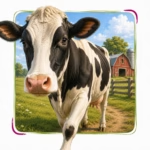
More Animal Comparisons
Pick another animal matchup and keep exploring. Compare appearances, habitats, diets, abilities, and surprising differences.






Make an Animal Story
Turn this water buffalo vs cow comparison into a wet-field and pasture farm mystery with our free Animal Story Generator.
Source notes: References used for this comparison. See more See less
Try Another Matchup
Explore this comparison →