
Woodpecker vs Nuthatch for Kids
Downy Woodpeckers and White-Breasted Nuthatches can appear on the same North American tree, yet they solve the bark-climbing puzzle in different ways. The woodpecker uses a chisel-like bill and stiff tail feathers while hammering and excavating. The nuthatch grips with strong feet, points headfirst down a trunk, and probes crevices without leaning on its tail. Both are small cavity-nesting birds that eat insects and visit feeders, but they belong to different families and have different shapes, calls, and nesting habits.
About Downy Woodpecker
- Type Bird
- Diet Omnivore; mainly insects
- Group Woodpecker; family Picidae
- Known for Black-and-white checks, a chisel-like bill, drumming, and tail-braced climbing
- Special skill Excavating wood and plant galls while stiff tail feathers brace the body
About White-Breasted Nuthatch
- Type Bird
- Diet Omnivore; insects, seeds, and nuts
- Group Nuthatch; family Sittidae
- Known for A white breast, blue-gray back, nasal calls, and headfirst tree travel
- Special skill Climbing down trunks headfirst and covering individual food caches with bark or moss
Quick Answer
Quick answer: A Downy Woodpecker is usually longer and has a broader wingspan, though the birds’ weight ranges overlap. It braces on stiff tail feathers, drums to communicate, and digs its own nest cavity. A White-Breasted Nuthatch has a longer, narrower bill, climbs down headfirst without a tail prop, and usually uses a natural cavity or an old woodpecker hole. Both eat insects and plant foods, visit feeders, nest in trees, and join mixed winter flocks.
Downy Woodpecker vs White-Breasted Nuthatch: Quick Comparison
| Feature | Downy Woodpecker | White-Breasted Nuthatch |
|---|---|---|
| Scientific identity | Dryobates pubescens | Sitta carolinensis |
| Bird family | Picidae | Sittidae |
| Published adult length | About 14-17 cm | About 13-14 cm |
| Published adult mass | About 21-28 g | About 18-30 g |
| Published wingspan | About 25-30 cm | About 20-27 cm |
| Bill and shape | Short chisel-like bill, blocky head, stiff supporting tail | Long narrow bill, large head, almost no neck, very short tail |
| Tree movement | Hitches on bark and braces against stiff tail feathers | Moves up, sideways, and headfirst down without using the tail as a prop |
| Nest site | Usually excavates a cavity in dead or softened wood | Usually uses a natural cavity or abandoned woodpecker hole |
| Main foods | Mostly insects, plus berries, acorns, grains, and feeder foods | Mostly insects, plus seeds, nuts, acorns, and feeder foods |
| Memorable trick | Drums on wood or metal to communicate | Hammers nuts in bark and hides caches under natural coverings |
How Are Woodpeckers and Nuthatches Alike?
- Both are small North American woodland birds that search tree bark for food.
- Both eat many insects as well as seeds, nuts, or other plant foods.
- Both nest in holes in trees and raise helpless chicks inside the cavity.
- Both commonly visit backyard feeders for suet, sunflower seeds, peanuts, or similar foods.
- Both may travel in mixed-species winter flocks with chickadees and other woodland birds.
How Are Woodpeckers and Nuthatches Different?
- The Downy Woodpecker belongs to family Picidae, while the White-Breasted Nuthatch belongs to family Sittidae.
- The woodpecker has a short chisel-like bill, while the nuthatch has a longer, narrow, pointed bill.
- The woodpecker braces against stiff tail feathers, while the nuthatch climbs without using its tail as a prop.
- The woodpecker usually excavates its own nest hole, while the nuthatch often reuses a natural cavity or abandoned woodpecker hole.
- The woodpecker drums to advertise and keep contact, while the nuthatch is known for loud nasal calls and headfirst foraging.
Downy Woodpecker vs White-Breasted Nuthatch Showdown
Adaptation showdown: Downy Woodpecker wins size because its published length and wingspan ranges extend higher, although the mass ranges overlap. Speed is a Tie because the sources do not give a matched flight or climbing test. Downy Woodpecker wins functional strength for excavating cavities and hammering wood while supported by stiff tail feathers; this is not a fight prediction. Stealth is a Tie because neither bird has a matched concealment test. White-Breasted Nuthatch wins social behavior because pairs stay together and defend a territory year round. Swimming is a Tie because neither is a specialized swimmer. White-Breasted Nuthatch wins weirdest for routinely walking headfirst down bark and hiding food under bark, lichen, moss, or snow.
Fun Downy Woodpecker vs White-Breasted Nuthatch Facts
A Tail Works Like a Prop
A Downy Woodpecker leans away from the tree and presses stiffened tail feathers against the bark. That three-point support from two feet and the tail steadies the bird while it hitches, probes, and hammers.
Two Birds Build the Nest Hole
Male and female Downy Woodpeckers both excavate a cavity in dead or fungus-softened wood. The job usually takes one to three weeks, and the bare wood chips inside become the nest lining.
Headfirst Without a Tail Prop
A White-Breasted Nuthatch can travel up, sideways, and headfirst down a trunk. Cornell notes that it does not lean on its tail the way a woodpecker does, so its gripping feet handle the climb.
Nuthatch Means Nut Opener
A White-Breasted Nuthatch wedges a nut or large seed into bark, then strikes it with its bill to open it. That nut-hatching habit helped give the bird its common name.
Snacks Get Camouflage Covers
White-Breasted Nuthatches store seeds and insects one item at a time under loose bark. They may cover a cache with bark, lichen, moss, or snow, making the hiding spot harder to notice.
Woodpecker vs Nuthatch Quiz
- Which bird usually braces against stiff tail feathers? Answer: The Downy Woodpecker.
- Which bird often moves down a trunk headfirst? Answer: The White-Breasted Nuthatch.
- Which bird usually excavates its own nest cavity? Answer: The Downy Woodpecker.
- What do both birds eat in large amounts? Answer: Insects.
- How may a nuthatch hide a food cache? Answer: With bark, lichen, moss, or snow.
Downy Woodpecker vs White-Breasted Nuthatch FAQ
Is a nuthatch a kind of woodpecker?
No. Nuthatches belong to family Sittidae, while woodpeckers belong to family Picidae.
Which is bigger, a Downy Woodpecker or White-Breasted Nuthatch?
The Downy Woodpecker usually has the greater length and wingspan. Their published weight ranges overlap.
Why can a nuthatch climb headfirst?
Its strong feet grip the bark as it turns and creeps in different directions. It does not need the stiff tail prop used by a woodpecker.
Do both birds make holes in trees?
The woodpecker usually excavates its full nest cavity. The nuthatch usually chooses a natural hole or abandoned woodpecker cavity and may enlarge it a little.
Why is speed a tie?
The cited sources describe different movements but do not provide a fair, matched speed test. A tie avoids pretending that unrelated observations form a race.
Animal Words to Know
- Picidae: The bird family containing woodpeckers.
- Sittidae: The bird family containing nuthatches.
- Excavate: To dig or carve material away to make a space.
- Bark forager: A bird that searches tree bark for insects, seeds, or other food.
- Cache: A hidden food item saved for later.
Map Two Bark-Climbing Routes
Map Two Bark-Climbing Routes
Draw one adult Downy Woodpecker and one adult White-Breasted Nuthatch at honest relative scale on the same broad tree trunk. Trace the woodpecker’s tail-braced route and the nuthatch’s up, sideways, and headfirst route. Add ten clue cards for chisel bill, narrow bill, drumming, nasal call, fresh cavity, reused hole, insects, nuts, mixed flock, and covered cache. Sort each clue under Woodpecker, Nuthatch, or Both.
Meet Each Animal
Want the full fact file? Here are quick highlights from each animal’s own facts page.
Downy Woodpecker Fact Highlight
From the full animal facts page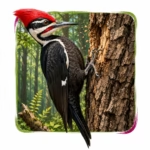
White-Breasted Nuthatch Fact Highlight
From the full animal facts page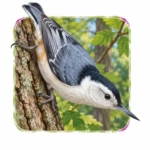
More Animal Comparisons
Pick another animal matchup and keep exploring. Compare appearances, habitats, diets, abilities, and surprising differences.




Make an Animal Story
Send a drumming woodpecker and a headfirst nuthatch into a tree-top mystery with our free Animal Story Generator.