
Woolly Mammoth vs Elephant: Ice Age Mammal Comparison
Woolly mammoths and elephants belong to the same proboscidean family tree, but they were shaped by very different climates. Woolly mammoths lived across the cold Ice Age north with thick fur, small ears, and strongly curved tusks. Living elephants inhabit warmer parts of Africa and Asia and use large ears, powerful trunks, and complex family teamwork.
About Woolly Mammoth
- Type Extinct Mammal
- Diet Herbivore
- Group Proboscidean
- Known for Thick fur, curved tusks, small ears, fat reserves, and life in the Ice Age cold
- Special skill Surviving severe cold with dense fur, a fat layer, small ears, and a compact body
About Elephant
- Type Mammal
- Diet Herbivore
- Group Proboscidean
- Known for Huge size, long trunk, large ears, tusks, intelligence, memory, and family herds
- Special skill Using a muscular trunk for breathing, smelling, drinking, touching, feeding, and lifting
Woolly Mammoth vs Elephant: Quick Answer
Woolly mammoths were extinct cold-adapted relatives of living elephants. They had thick fur, small ears, a fatty hump, and long curved tusks. Living elephants have much less body hair, generally larger ears, and remain the largest land animals alive today.
Where Do They Fit?
Follow the branches to see how Woolly Mammoth and Elephant are classified and related.
Woolly Mammoth vs Elephant: Quick Comparison
| Feature | Woolly Mammoth | Elephant |
|---|---|---|
| Animal type | Extinct mammal | Living mammal |
| Animal group | Proboscidean | Proboscidean |
| Known for | Thick fur, curved tusks, and cold adaptation | Huge size, trunk, large ears, and intelligence |
| Main habitat | Cold steppe-tundra and northern grasslands | Savannas, forests, wetlands, deserts, and scrublands |
| Where found | Europe, Asia, and North America | Africa and Asia |
| Diet | Grasses, sedges, herbs, shrubs, and woody plants | Grass, leaves, bark, roots, fruit, and branches |
| Baby name | Calf | Calf |
| Body covering | Dense underfur and long guard hairs | Sparse hair and thick skin |
| Ears | Small and rounded | Larger, especially in African elephants |
| Special skill | Cold survival | Trunk control and heat management |
How Were Woolly Mammoths and Elephants Alike?
- Both woolly mammoths and elephants are mammals in the order Proboscidea.
- Both have trunks, tusks, thick legs, large bodies, and column-like feet.
- Both are herbivores that spend much of the day feeding.
- Both have babies called calves and likely lived in family herds led by experienced females.
- Both used tusks for digging, moving objects, defense, display, and competition.
How Were Woolly Mammoths and Elephants Different?
- Woolly mammoths are extinct, while African and Asian elephants live today.
- Woolly mammoths had thick fur and a fat layer, while living elephants have sparse hair.
- Mammoths had small ears that reduced heat loss, while elephants have larger ears that help release heat.
- Woolly mammoths lived mainly in cold northern grasslands, while elephants live in warmer African and Asian habitats.
- Mammoth tusks were often more strongly curved and spiraled than those of living elephants.
Woolly Mammoth vs Elephant Showdown
Proboscidean showdown: The elephant wins for maximum size, documented speed, overall strength, and swimming because living African elephants can outweigh typical woolly mammoths and their abilities can be observed directly. Stealth and social life are ties because both had or have quiet movement and complex herd behavior. The woolly mammoth wins our weirdest-fact prize because its tusks preserved growth layers that recorded seasons and life events.
Fun Woolly Mammoth vs Elephant Facts
Furry Cold Specialist vs Warm-Climate Giant
Woolly mammoths had dense underfur, long guard hairs, small ears, short tails, and a thick fat layer that reduced heat loss. Living elephants have sparse body hair and use their large ears, shade, mud, water, and behavior to manage heat.
Small Ears vs Large Ears
A woolly mammoth’s ears were much smaller than those of living elephants, helping conserve warmth in freezing winds. African elephants have especially large ears filled with blood vessels that release body heat.
Curved Tusks vs Straighter Tusks
Mammoth tusks often curved outward, upward, and inward in long spirals. Elephant tusks usually curve more gently, though shape varies greatly with species, sex, age, genes, and wear.
Ice Age Steppe vs Modern Savanna and Forest
Woolly mammoths grazed across the mammoth steppe, a cold, dry landscape rich in grasses and herbs. Elephants live in habitats ranging from African savannas and forests to Asian forests and grasslands.
Tusks Recorded Mammoth Life Stories
Mammoth tusks grew in layers throughout life. Scientists can study chemical changes and growth bands inside them to investigate diet, movement, stress, seasons, and even the timing of major life events.
Woolly Mammoth vs Elephant Quiz
- Which animal is extinct? Answer: Woolly mammoth.
- Which animal had thick fur? Answer: Woolly mammoth.
- What are baby mammoths and elephants called? Answer: Calves.
- Which animal generally has larger ears? Answer: Elephant.
- What can mammoth tusk layers reveal? Answer: Clues about age, seasons, diet, movement, and life events.
Woolly Mammoth vs Elephant FAQ
What is the main difference between a woolly mammoth and an elephant?
A woolly mammoth was a cold-adapted extinct elephant relative with thick fur, small ears, and strongly curved tusks. Living elephants have sparse hair, larger ears, and inhabit warmer regions of Africa and Asia.
Which was bigger, a woolly mammoth or an elephant?
Typical woolly mammoths were similar in size to or smaller than large African elephants. Some other extinct mammoth species grew larger than woolly mammoths.
Are woolly mammoths the ancestors of elephants?
No. Mammoths and living elephants shared older common ancestors, but woolly mammoths were close relatives rather than direct ancestors of today’s elephants.
Did woolly mammoths have trunks?
Yes. They had muscular trunks used for smelling, breathing, touching, drinking, feeding, and moving objects, much as living elephants do.
Why did woolly mammoths become extinct?
Climate and habitat changes after the Ice Age, combined with pressure from human hunting in some regions, likely contributed. Small isolated populations survived longest on Arctic islands.
Animal Words to Know
- Proboscidean: A member of the mammal order containing elephants, mammoths, mastodons, and their extinct relatives.
- Steppe-tundra: A cold, dry, grassy Ice Age habitat with few trees.
- Tusk: An enlarged incisor tooth that grows outward from the mouth.
- Matriarch: An experienced adult female that leads an elephant family group.
- Extinct: Having no living members remaining anywhere on Earth.
Woolly Mammoth and Elephant Ice Age Activity
Woolly Mammoth and Elephant Ice Age Activity
Draw a woolly mammoth beside an African savanna elephant on the same ground line. Give the mammoth thick fur, small ears, a high shoulder, and strongly curved tusks in a cold steppe. Give the elephant sparse hair, enormous ears, a long trunk, and a warm savanna. Label extinct, living, fur, ears, tusks, and habitat.
Meet Each Animal
Want the full fact file? Here are quick highlights from each animal’s own facts page.
Woolly Mammoth Fact Highlight
From the full animal facts page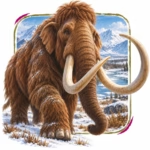
Elephant Fact Highlight
From the full animal facts page
More Animal Comparisons
Pick another animal matchup and keep exploring. Compare appearances, habitats, diets, abilities, and surprising differences.






Make an Animal Story
Turn this woolly mammoth vs elephant comparison into a time-traveling herd adventure with our free Animal Story Generator.
Source notes: References used for this comparison. See more See less
Try Another Matchup
Explore this comparison →