
Yak vs Bison: Bovine Comparison
Yaks and bison are large hoofed mammals in the cattle family Bovidae, but they are built for different landscapes. Domestic yaks are shaggy high-altitude animals descended from wild yak and have supported Asian mountain communities with transport, fiber, milk, meat, hides, and fuel. American bison are massive wild grazers with high shoulder humps that roam North American grasslands and use powerful heads to move snow. This page uses the domestic yak and American bison as the main representatives while noting their wild relatives.
About Yak
- Type Mammal
- Diet Herbivore
- Group Bovine
- Known for Long shaggy coat, sweeping horns, high-altitude survival, sure-footed travel, grunting calls, and helping mountain communities
- Special skill Breathing and working in thin high-altitude air, conserving heat with dense underwool and long outer hair, and crossing steep rocky ground
About Bison
- Type Mammal
- Diet Herbivore
- Group Bovine
- Known for Huge shoulder hump, massive head, shaggy front coat, short curved horns, fast running, snow clearing, and herd movement
- Special skill Running rapidly, swimming strongly, using powerful neck muscles and the head to sweep snow aside, and finding buried grass
Yak vs Bison: Quick Answer
A yak has long skirt-like hair over its belly and legs, a bushy tail, and wide horns that often sweep outward and upward. An American bison has an enormous shoulder hump, a massive low-held head, short curved horns, and especially shaggy fur on the front half of its body. Yaks are famous for Asian high mountains; American bison are famous for North American plains.
Where Do They Fit?
Follow the branches to see how Yak and Bison are classified and related.
Yak vs Bison: Quick Comparison
| Feature | Domestic Yak | American Bison |
|---|---|---|
| Animal type | Mammal | Mammal |
| Scientific name | Bos grunniens | Bison bison |
| Family | Bovidae | Bovidae |
| Body shape | Sturdy cattle-like body with a relatively level back | Very heavy front end with a tall shoulder hump and sloping back |
| Coat | Dense undercoat plus extremely long hair hanging from sides, belly, and legs | Dense coat with especially shaggy hair over the head, shoulders, and forelegs |
| Horns | Usually long and spreading, though domestic types vary | Relatively short, black-tipped, and curving upward |
| Main habitat | Cold high plateaus and alpine grasslands | Prairies, plains, meadows, valleys, and open woodland |
| Native region | Highland Asia | North America |
| Diet | Grasses, sedges, herbs, and other vegetation | Mainly grasses and sedges, plus other plants |
| Baby name | Calf | Calf |
| Special ability | Living and working in cold, oxygen-poor mountain air | Running fast, swimming strongly, and sweeping snow from forage |
How Are Yaks and Bison Alike?
- Both yaks and bison are hoofed mammals in the family Bovidae and subfamily Bovinae.
- Both are ruminant herbivores that digest tough plants in multi-chambered stomachs.
- Both have broad muzzles, cloven hooves, horns in both sexes, herds, and calves.
- Both grow thick coats that help them survive cold, windy environments.
- Both graze on grasses and sedges and can strongly shape the plant communities where they feed.
How Are Yaks and Bison Different?
- Domestic yaks come from highland Asia, while American bison are native to North America.
- Yaks have long hanging hair over much of the body, while bison carry their heaviest shaggy coat around the head, shoulders, and forelegs.
- Bison have a huge muscular shoulder hump and sharply sloping back, while yaks have a more cattle-like outline.
- Yak horns are commonly longer and sweep widely outward, while American bison horns are shorter and curve upward.
- Most yaks are domestic livestock, while American bison are primarily managed as wild or conservation herds, although some live on private ranches.
Yak vs Bison Showdown
Bovine showdown: Using a typical domestic yak and adult American bison as the representatives, the bison wins size, ground speed, overall power, and swimming. Stealth and social behavior are ties because neither animal is a stealth specialist and both form herds with changing membership. The yak wins the weirdest-fact prize because its scientific name means “grunting ox,” and yaks are famous for grunting rather than making the familiar cattle moo. Large wild yaks can rival bison in size, so the size result depends on which animals are compared.
Fun Yak vs Bison Facts
Mountain Specialist vs Plains Powerhouse
Domestic yaks are adapted to cold Asian highlands where thin air, steep ground, intense sunlight, and short growing seasons challenge large mammals. American bison are built for roaming open North American landscapes through summer heat, winter cold, deep snow, and long-distance seasonal movements.
A Hair Skirt vs a Shoulder Cape
A yak’s long coarse outer hairs may hang from its sides, belly, and legs like a skirt, with fine underwool beneath. A bison’s longest hair crowds around its head, beard, shoulders, and forelegs, making its front half look much larger than its hindquarters.
Different Horn Shapes
Many domestic yaks carry long horns that extend sideways before curving forward or upward, although hornless breeds also exist. American bison have much shorter horns that project from the sides of the head and curve upward into dark tips.
Bison Are Surprisingly Fast
Despite their great mass, American bison can run about 35 miles per hour and change direction quickly. They can also jump over obstacles and are strong swimmers, so their heavy appearance should never be mistaken for slowness.
Yaks Help People Above the Tree Line
Mountain communities use domestic yaks and yak-cattle hybrids for carrying loads and producing milk, meat, fiber, hides, and dung that can be dried as fuel where firewood is scarce. Few domestic animals are useful across so many parts of high-altitude life.
Yak vs Bison Quiz
- Which animal has the larger shoulder hump? Answer: The American bison.
- Which animal is best known for living on the high plateaus of Asia? Answer: The yak.
- What are baby yaks and bison called? Answer: Calves.
- Which animal can run about 35 miles per hour? Answer: The American bison.
- Are yaks and bison herbivores? Answer: Yes.
Yak vs Bison FAQ
What is the main difference between a yak and a bison?
A yak is a long-haired Asian mountain bovine adapted to high altitude. An American bison is a massive North American grazer with a huge shoulder hump and especially shaggy fur over the front of its body.
Which is bigger, a yak or a bison?
An adult American bison is generally larger than a typical domestic yak. Wild male yaks can be much larger than domestic yaks and may overlap with or exceed some bison, so species, sex, age, and individual matter.
Are yaks and bison cows?
They are bovines in the cattle family, but they are not domestic cattle. “Cow” can correctly describe an adult female yak or bison as well as an adult female domestic bovine.
Can bison swim?
Yes. American bison are strong swimmers and can cross rivers, even though their massive bodies may not look aquatic.
Are all yaks domestic?
No. Domestic yak are Bos grunniens, while the wild yak is generally classified as Bos mutus. Wild yaks survive in remote high-altitude parts of the Tibetan Plateau and surrounding regions.
Animal Words to Know
- Bovine: A member of the cattle subfamily Bovinae, including cattle, yaks, bison, and close relatives.
- Ruminant: A hoofed plant eater that rechews partly digested food called cud.
- Underwool: Fine insulating hair beneath longer protective outer hair.
- Shoulder hump: The raised area over a bison’s shoulders, supported by elongated vertebrae and powerful muscles.
- Plateau: A broad area of high, relatively level land.
Yak and Bison Habitat Activity
Yak and Bison Habitat Activity
Draw a domestic yak on a cold Asian plateau and an American bison on a North American prairie. Give the yak long hanging hair, a bushy tail, broad horns, and a pack saddle. Give the bison a huge shoulder hump, massive head, beard, and short curved horns. Add snow and wind clues to both scenes. Label bovine, horn, coat, hump, plateau, and prairie.
Meet Each Animal
Want the full fact file? Here are quick highlights from each animal’s own facts page.
Yak Fact Highlight
From the full animal facts page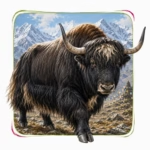
Bison Fact Highlight
From the full animal facts page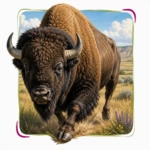
More Animal Comparisons
Pick another animal matchup and keep exploring. Compare appearances, habitats, diets, abilities, and surprising differences.




Make an Animal Story
Turn this yak vs bison comparison into a high-mountain-and-prairie adventure with our free Animal Story Generator.
Source notes: References used for this comparison. See more See less
Try Another Matchup
Explore this comparison →