
Cooper’s Hawk Facts for Kids
The Cooper’s Hawk, Astur cooperii, is a medium-sized North American bird of prey built for chasing other birds through forests and tree-lined neighborhoods. Adults have blue-gray backs, reddish-barred chests, red eyes, short rounded wings, and long rounded tails. Females are much larger than males. Cooper’s Hawks have adapted well to many towns and suburbs, where pigeons, doves, and other birds provide abundant prey.
Quick Cooper’s Hawk Facts
- Animal Type: Bird
- Group: Woodland hawk in the family Accipitridae
- Known For: Long rounded tail, agile woodland flight, bird hunting, red adult eyes, and large females
- Habitat: Forests, woodland edges, parks, suburbs, orchards, and tree-lined cities
- Diet: Mainly birds, plus squirrels, chipmunks, mice, bats, and other small mammals
What You’ll Learn
Learn 10 speedy Cooper’s hawk facts for kids about sharp talons, fast woodland flight, keen eyesight, hunting birds, and nesting, plus a quiz, glossary, and activity
Clear explanations make them fun for children, families, teachers, and young bird explorers.
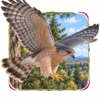
10 Fun Cooper’s Hawk Facts for Kids
1. Its Scientific Genus Recently Changed
Many older books call the species Accipiter cooperii, but current Cornell and Clements treatments place it in Astur as Astur cooperii. The change reflects genetic studies that reorganized several hawk lineages.
Kid Decode: The hawk stayed the same while its scientific address moved to a newly arranged genus.
2. Females Are Much Larger Than Males
Female Cooper’s Hawks are commonly about one-third larger and substantially heavier than males. Both sexes share the same general adult colors, so body size is more useful when birds can be compared directly.
Kid Decode: The female and male wear matching uniforms in noticeably different sizes.
3. Adults Have Red Eyes and Barred Chests
Adults show blue-gray upperparts, a darker cap, reddish barring below, red to orange-red eyes, and a long rounded tail with dark bands and a broad pale tip. Juveniles are brown with vertical streaks and yellowish eyes.
Kid Decode: The bird changes from a brown streaked teenager into a gray-backed, red-eyed adult.
4. Long Tails Steer Through Trees
Short rounded wings provide rapid bursts of speed, while the long tail acts as a rudder during sharp turns. This body plan helps the hawk chase birds through branches, gardens, and woodland edges.
Kid Decode: The wings supply the engine and the long tail performs the forest slalom steering.
5. Their Flight Often Follows Flap-Flap-Glide
In ordinary travel, Cooper’s Hawks use several stiff wingbeats followed by a short glide. During a chase, they accelerate, twist, and thread between obstacles with remarkable control.
Kid Decode: A calm flap-flap-glide can instantly transform into a high-speed branch maze.
6. Birds Form Most of the Diet
Common prey includes doves, pigeons, starlings, robins, jays, quail, and other medium-sized birds. They also take squirrels, chipmunks, mice, bats, and other mammals, with diet varying by region.
Kid Decode: The backyard feeder attracts seed eaters, while the hawk notices the birds rather than the sunflower seeds.
7. Powerful Feet Finish the Hunt
A Cooper’s Hawk grabs prey with long toes and sharp talons and kills mainly by repeated squeezing. The hooked bill tears food afterward rather than delivering the main killing blow.
Kid Decode: The feet operate the capture machinery while the bill handles the meal preparation.
8. High-Speed Hunting Can Cause Injuries
Crashing through dense vegetation is dangerous. A study of museum skeletons found old healed chest and wishbone fractures in many Cooper’s Hawks, evidence of collisions survived during their lives.
Kid Decode: The forest obstacle course sometimes leaves a broken bone that heals beneath the feathers.
9. Males Build and Deliver Food
The male performs most nest construction and brings nearly all food to the female and young during much of the breeding period. The larger female incubates, guards the nest area, and divides prey for small chicks.
Kid Decode: One parent runs the delivery route while the other guards the nursery and serves dinner.
10. Cities Have Become Successful Habitat
Cooper’s Hawks now nest in many parks, suburbs, and tree-lined cities where pigeons and doves are abundant. Urban life also brings dangers such as window, fence, and vehicle collisions.
Kid Decode: The woodland hunter discovered that city trees come with crowded bird restaurants and glass hazards.
The Weirdest Cooper’s Hawk Fact
A study of more than 300 Cooper’s Hawk skeletons found that nearly one-quarter carried healed chest-bone fractures, likely souvenirs from high-speed hunting among branches and obstacles.
Try This Cooper’s Hawk Activity
Cooper’s Hawk Forest-Slalom Activity
Draw an adult Cooper’s Hawk chasing through woodland. Add blue-gray upperparts, dark cap, red eyes, reddish chest bars, short rounded wings, a long rounded banded tail with a white tip, strong yellow feet, and a flap-flap-glide path. Add a larger female near a stick nest, a smaller male delivering prey, white-down chicks, and an urban panel with trees, pigeons, and window-collision warnings.
Quick Cooper’s Hawk Quiz
- What is the current scientific name used by Cornell? Answer: Astur cooperii.
- Which sex is larger? Answer: The female.
- What body part steers sharp turns? Answer: The long rounded tail.
- What forms most of its diet? Answer: Birds.
- What flight pattern is often used in ordinary travel? Answer: Several stiff flaps followed by a glide.
Mini Glossary
- Raptor: A bird of prey with a hooked bill, sharp talons, and strong vision.
- Accipitrid: A member of the hawk, eagle, and kite family Accipitridae.
- Talons: The sharp curved claws of a bird of prey.
- Furcula: The fused collarbones of a bird, commonly called the wishbone.
- Reverse Sexual Dimorphism: A size pattern in which the female is larger than the male.
 Ferret Facts for Kids
 Banteng Facts for Kids
 Stork Facts for Kids
 Machairodus Facts for Kids
More Animal Facts for Kids
Visit the full animal facts library or explore a focused animal group.
More Extinct Animal Facts for Kids
Discover dinosaurs, Ice Age giants, prehistoric sea creatures, recently extinct species, and other animals from the past.
Fact check note: Fact checked with Cornell Lab of Ornithology’s current Cooper’s Hawk overview, identification, and life-history resources; the Clements Checklist’s updated Astur cooperii placement; and raptor research on diet, sexual size differences, flight injuries, nesting roles, migration, urban ecology, and collision mortality.

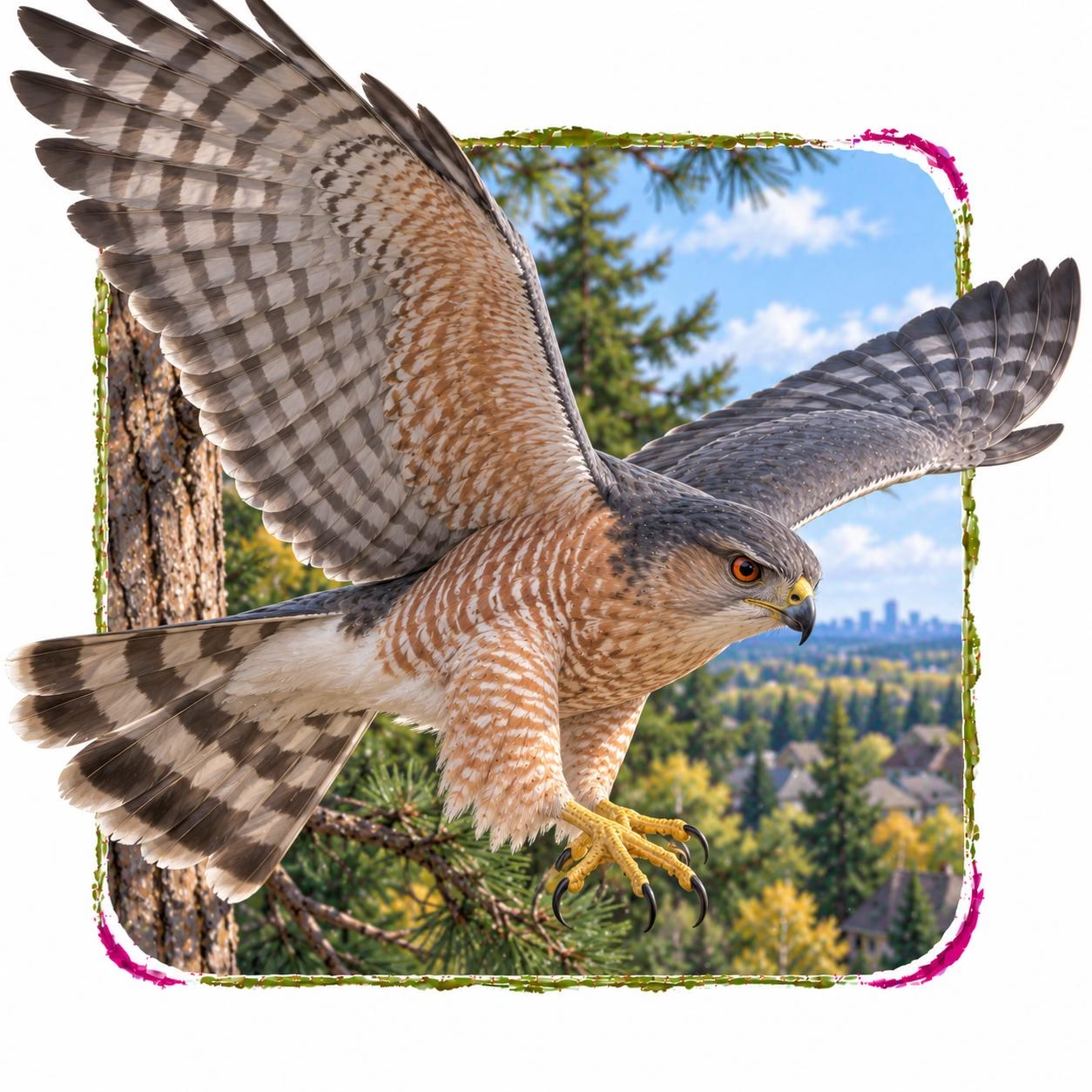
Cooper’s Hawk in its natural Coniferous, deciduous, and mixed forests, woodland edges, parks, orchards, suburbs, farms, and tree-lined cities across North America habitat