
Coot Facts for Kids
Coots are dark, chicken-shaped waterbirds in the genus Fulica and the rail family, Rallidae. Different species inhabit wetlands across much of the world, including the American Coot, Eurasian Coot, Red-gartered Coot, Hawaiian Coot, and several South American forms. They swim and dive like ducks but have lobed toes instead of webbed feet. Coots eat aquatic plants and small animals, build floating nests, defend territories noisily, and often gather in large flocks outside the breeding season.
Quick Coot Facts
- Animal Type: Bird
- Group: Genus Fulica in the rail family, Rallidae
- Known For: Lobed toes, pale bills and frontal shields, running takeoffs, diving, floating nests, and noisy fights
- Habitat: Freshwater lakes, ponds, marshes, reservoirs, rivers, estuaries, and high-altitude wetlands
- Diet: Aquatic plants, algae, seeds, insects, snails, crustaceans, eggs, and small vertebrates depending on species
What You’ll Learn
Discover 10 lively coot facts for kids about lobed toes, swimming, diving, noisy calls, and wetland life, with a quiz, glossary, and activity
These facts are explained simply for kids, parents, teachers, and curious little fact-finders.
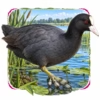
10 Fun Coot Facts for Kids
1. They Are Rails, Not Ducks
Coots belong to the rail family even though they spend much of their time swimming beside ducks. Their compact bodies, strong legs, voices, skeletons, and ancestry connect them with rails and gallinules.
Kid Decode: The bird swims in the duck lane while carrying rail-family identification.
2. Their Toes Have Separate Lobes
Each long toe carries broad scalloped flaps instead of one continuous web. The lobes push against water during swimming and fold partly backward as the bird lifts its foot while walking.
Kid Decode: The foot opens into several tiny paddles without turning into a duck’s web.
3. A Frontal Shield Extends Above the Bill
Most coots have a pale or colored bill that continues into a shield on the forehead. Shield shape and color differ among species and can become brighter during breeding.
Kid Decode: The bill climbs onto the forehead and becomes a small breeding badge.
4. Takeoff Begins With a Water Run
Coots have relatively short rounded wings and heavy bodies for their wing area. They patter across the surface with feet and wings before gaining enough speed to become airborne.
Kid Decode: The wetland runway begins with rapid footsteps splashing across the lake.
5. They Swim and Dive for Food
Coots paddle at the surface, tip forward, dive underwater, and graze on shore. They pull up algae, pondweed, shoots, seeds, and roots and also eat insects, snails, crustaceans, eggs, and small animals.
Kid Decode: One meal may require swimming, diving, grazing, and a little underwater gardening.
6. Some Steal Food From Other Birds
A coot may chase another coot, duck, or diving bird and seize food it has collected. This behavior is called kleptoparasitism, although coots also gather plenty of food for themselves.
Kid Decode: The wetland thief waits for someone else to bring lunch to the surface.
7. Floating Nests Are Anchored to Plants
Many coots weave reeds, stems, and leaves into floating platforms attached to standing vegetation. A ramp can lead from the water to the egg cup, and pairs may build extra platforms nearby.
Kid Decode: The nest is a floating basket tied to the marsh so the wind cannot sail it away.
8. Chicks Can Look Astonishingly Colorful
Newly hatched coot chicks often have black down with bright orange, red, or yellow head and neck plumes. The intense colors fade as they grow and may help adults recognize or choose which chicks to feed.
Kid Decode: The plain dark adult produces chicks wearing tiny flaming festival headdresses.
9. Territorial Fights Use Feet and Water
During disputes, coots charge, splash, rear back, strike with their feet, and sometimes lock together on the surface. Calls and displays often settle trouble before serious injury occurs.
Kid Decode: A marsh argument can become a kicking match performed on a moving floor.
10. Some Migrate While Others Stay
Coots living where wetlands freeze may travel to open water for winter, sometimes at night. Populations in mild climates, tropical islands, or permanent highland lakes may remain year-round or move only locally.
Kid Decode: The same genus includes long-distance travelers and lifelong residents of one wetland.
The Weirdest Coot Fact
A coot’s toes are not joined by duck-like webs. Each toe carries separate flexible lobes that spread in water and fold back as the foot lifts on land.
Try This Coot Activity
Coot Feet-and-Floating-Nest Activity
Draw several coots in a marsh. Add a dark adult with a pale bill and frontal shield, one foot enlarged to show separate lobes, a bird running across the water for takeoff, another diving for plants, a floating nest anchored to reeds, bright-headed chicks, a territorial splash fight, and a flock feeding together.
Quick Coot Quiz
- Which bird family contains coots? Answer: Rallidae, the rail family.
- Are a coot’s toes webbed like a duck’s? Answer: No, each toe has separate lobes.
- Why do coots run across the water? Answer: To gain speed for takeoff.
- What do many coots eat? Answer: Aquatic plants plus small animals.
- Where do many coots build nests? Answer: On floating vegetation anchored in wetlands.
Mini Glossary
- Rail: A bird in the wetland family Rallidae.
- Lobed Toe: A toe with separate flattened flaps that help with swimming and walking.
- Frontal Shield: A hard or fleshy plate extending from the bill onto the forehead.
- Precocial: Hatched able to move soon after birth, though still needing care.
- Kleptoparasitism: Obtaining food by stealing it from another animal.
 Skate Facts for Kids
 Pheasant Facts for Kids
 Leopard Seal Facts for Kids
 Sea Mink Facts for Kids
More Animal Facts for Kids
Visit the full animal facts library or explore a focused animal group.
More Extinct Animal Facts for Kids
Discover dinosaurs, Ice Age giants, prehistoric sea creatures, recently extinct species, and other animals from the past.
Fact check note: Fact checked with Cornell Lab of Ornithology’s American Coot overview, identification, and life-history resources; Audubon’s account of coot foot anatomy; Animal Diversity Web’s Fulica americana account; and ornithological research on Fulica taxonomy, floating nests, chick coloration, feeding, migration, and territorial behavior.

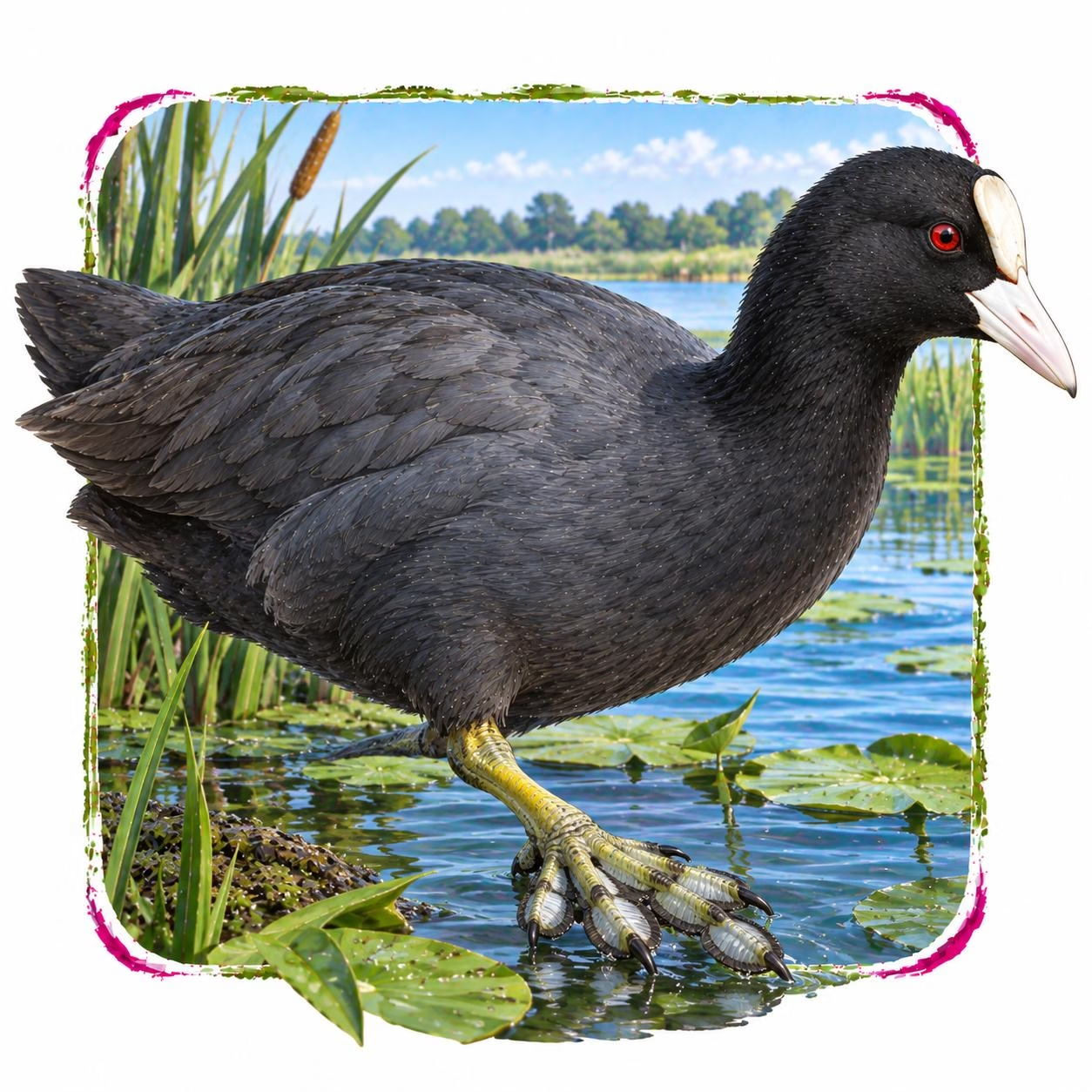
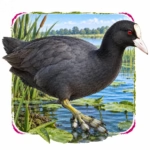
Coot in its natural Freshwater lakes, ponds, marshes, reservoirs, slow rivers, high-altitude wetlands, estuaries, and sheltered coastal waters across much of the world habitat