
Coral Snake Facts for Kids
Coral snakes are small, secretive venomous snakes with bright ringed patterns. They belong to the elapid family, the same broad snake family as cobras and sea snakes, and they are best watched from a safe distance.
Quick Coral Snake Facts
- Animal Type: Reptile
- Group: Elapid snake
- Known For: Bright bands, venom, secretive behavior, and warning colors
- Habitat: Forests, woodlands, sandy areas, leaf litter, grasslands, scrublands, tropical habitats, and warm regions of the Americas, Asia, and Africa depending on species
- Diet: Lizards, small snakes, frogs, small mammals, and other small animals depending on species
What You’ll Learn
Explore 10 colorful coral snake facts for kids about bright bands, venom, hunting, camouflage, and woodland habitats, with a quiz, glossary, and activity
These facts use simple language for kids, parents, teachers, and curious young learners.
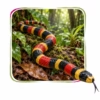
10 Fun Coral Snake Facts for Kids
1. Coral Snakes Are Reptiles
Coral snakes are reptiles with scales, no legs, fangs, and body temperatures that change with their surroundings.
Kid Decode: A coral snake is a quiet ribbon of warning colors.
2. Coral Snakes Are Venomous
Coral snakes have venom used to catch prey and defend themselves, so people should never touch them.
Kid Decode: The best coral snake rule is look, learn, and leave space.
3. They Are Elapids
Coral snakes belong to the elapid family, which also includes cobras and sea snakes.
Kid Decode: They are small members of a famous venomous snake family.
4. They Have Bright Bands
Many coral snakes have bright rings of red, yellow or white, and black, though patterns vary by species and region.
Kid Decode: Their colors are nature’s tiny warning stripes.
5. Baby Coral Snakes Are Snakelets
Baby coral snakes are often called snakelets or hatchlings after they come out of eggs.
Kid Decode: A coral snakelet is a tiny banded noodle with no cuddle plans.
6. Coral Snakes Lay Eggs
Many coral snakes lay eggs in hidden places such as leaf litter, soil, or rotting wood.
Kid Decode: The nursery is tucked away in a secret warm spot.
7. They Are Secretive
Coral snakes often hide under leaves, logs, soil, or ground cover instead of staying out in the open.
Kid Decode: They prefer mystery mode over spotlight mode.
8. They Eat Small Animals
Coral snakes may eat lizards, frogs, small snakes, and other small prey.
Kid Decode: Their menu is quiet forest hunter food.
9. Color Rhymes Are Not Always Reliable
People sometimes use color rhymes for coral snakes, but these are not reliable for every species or region.
Kid Decode: The safe rhyme is simple: do not touch unknown snakes.
10. Coral Snakes Need Healthy Habitats
Coral snakes need safe forests, leaf litter, prey animals, and undisturbed wild spaces.
Kid Decode: Protecting habitats keeps the secret stripe snakes safe.
The Weirdest Coral Snake Fact
Coral snakes are often shy and hidden, but their bright bands are famous warning colors in the snake world.
Try This Coral Snake Activity
Coral Snake Drawing Activity
Draw a coral snake moving through leaf litter. Add red, yellow or white, and black bands, shiny scales, a hidden egg nest, small lizard, leaves, logs, forest floor, and a safe-distance sign.
Quick Coral Snake Quiz
- What animal group are coral snakes in? Answer: Reptiles.
- Are coral snakes venomous? Answer: Yes.
- What snake family are coral snakes in? Answer: The elapid family.
- What are baby coral snakes often called? Answer: Snakelets or hatchlings.
- Should people use color rhymes to handle unknown snakes? Answer: No, unknown snakes should be left alone.
Mini Glossary
- Reptile: A cold-blooded animal group that includes snakes, lizards, turtles, crocodiles, and tuataras.
- Venom: A toxic substance some animals use for hunting or defense.
- Elapid: A venomous snake family that includes cobras, coral snakes, and sea snakes.
- Snakelet: A baby snake.
- Warning Colors: Bright colors that may warn predators an animal is dangerous or unpleasant to eat.
 Sea Cucumber Facts for Kids
 Boxfish Facts for Kids
 Cockatoo Facts for Kids
 Fukuisaurus Facts for Kids
More Animal Facts for Kids
Visit the full animal facts library or explore a focused animal group.
More Extinct Animal Facts for Kids
Discover dinosaurs, Ice Age giants, prehistoric sea creatures, recently extinct species, and other animals from the past.
Fact check note: Fact checked with Britannica coral snake resources, Britannica Kids coral snake resources, North Carolina Wildlife eastern coral snake resources, and trusted reptile education references.

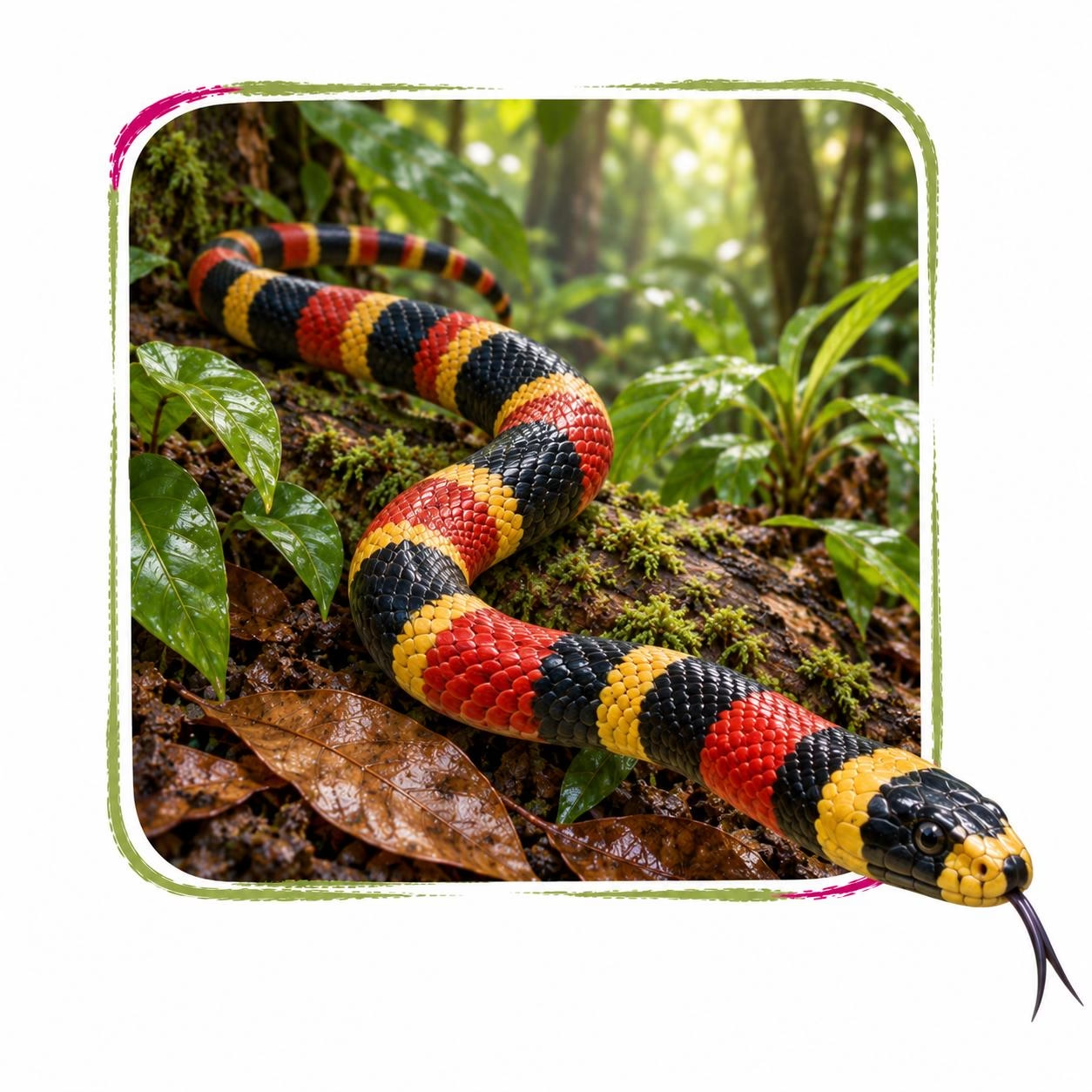
Coral Snake in its natural Forests habitat