
Corn Snake Facts for Kids
Corn snakes are colorful nonvenomous snakes from the southeastern and central United States. They are helpful rodent hunters, use constriction to catch prey, and lay eggs in warm hidden places.
Quick Corn Snake Facts
- Animal Type: Reptile
- Group: Rat snake, colubrid, and constrictor
- Known For: Orange and red blotches, checkerboard belly pattern, nonvenomous bite, eggs, hatchlings, rodent hunting, climbing, and calm nature
- Habitat: Forest edges, overgrown fields, farms, barns, rocky areas, pine woods, abandoned buildings, woodpiles, and warm hidden spaces
- Diet: Mice, rats, small birds, bird eggs, lizards, frogs, and other small animals depending on age and habitat
What You’ll Learn
Learn 10 giant green anaconda facts for kids about massive bodies, swimming, powerful coils, hunting, and South American wetlands, plus a quiz, glossary, and activity
Simple explanations make them great for children, families, teachers, and young reptile fans.
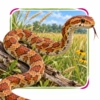
10 Fun Corn Snake Facts for Kids
1. Corn Snakes Are Reptiles
Corn snakes are reptiles, so they have scales, breathe air, and depend on outside warmth.
Kid Decode: A corn snake is a smooth-scaled rodent hunter with autumn colors.
2. They Are Nonvenomous Snakes
Corn snakes are nonvenomous, which means they do not use venom to catch prey.
Kid Decode: They are better at squeezing than stinging.
3. Baby Corn Snakes Are Hatchlings
Baby corn snakes are called hatchlings after they come out of eggs.
Kid Decode: A hatchling corn snake is a tiny noodle with a patterned suit.
4. Corn Snakes Lay Eggs
Female corn snakes lay eggs in warm hidden places such as rotting stumps or piles of plant material.
Kid Decode: The eggs need cozy heat and humidity, like a secret reptile incubator.
5. They Are Constrictors
Corn snakes catch prey by wrapping around it and squeezing.
Kid Decode: This snake uses muscle loops instead of venom tricks.
6. They Eat Rodents
Corn snakes often eat mice and rats, which makes them useful around farms and old buildings.
Kid Decode: They are quiet pest-control helpers with scales.
7. They Have Checkerboard Bellies
Many corn snakes have black-and-white checkerboard patterns on the belly.
Kid Decode: The belly can look like a tiny snake chessboard.
8. They Can Climb
Corn snakes can climb trees, shrubs, fences, and rough surfaces while searching for food or shelter.
Kid Decode: This snake is not stuck on the ground floor.
9. They Shed Their Skin
As corn snakes grow, they shed their old outer skin in one piece or several pieces.
Kid Decode: Shedding is like changing out of too-tight pajamas.
10. They Are Often Mistaken for Dangerous Snakes
Because of their bright blotches, corn snakes are sometimes mistaken for venomous snakes, but they are harmless to people when left alone.
Kid Decode: The safest rule with any wild snake is look, learn, and give it space.
The Weirdest Corn Snake Fact
A corn snake’s name may come from its habit of hunting mice near corn stores or from its checkerboard belly pattern that looks like kernels of corn.
Try This Corn Snake Activity
Corn Snake Drawing Activity
Draw a corn snake curled near a barn or forest edge. Add orange and red blotches, checkerboard belly inset, eggs in a rotting stump, hatchlings, mouse tracks, shed skin, climbing branch, warm leaves, and a “watch wild snakes from a distance” sign.
Quick Corn Snake Quiz
- What animal group are corn snakes in? Answer: Reptiles.
- What are baby corn snakes called? Answer: Hatchlings.
- Do corn snakes use venom to catch prey? Answer: No, they are nonvenomous.
- How do corn snakes catch prey? Answer: By constriction.
- What pattern is often found on the belly? Answer: A black-and-white checkerboard pattern.
Mini Glossary
- Reptile: An animal group with scales that breathes air and often lays eggs.
- Hatchling: A newly hatched baby animal.
- Constrictor: A snake that wraps around prey and squeezes.
- Nonvenomous: Not using venom to catch prey or defend itself.
- Shed: To remove old outer skin as the body grows.
 Moth Facts for Kids
 Firefly Facts for Kids
 Marmoset Facts for Kids
 Dimetrodon Facts for Kids
More Animal Facts for Kids
Visit the full animal facts library or explore a focused animal group.
More Extinct Animal Facts for Kids
Discover dinosaurs, Ice Age giants, prehistoric sea creatures, recently extinct species, and other animals from the past.
Fact check note: Fact checked with Smithsonian National Zoo eastern corn snake resources, Florida Museum corn snake references, and trusted North American reptile education sources.

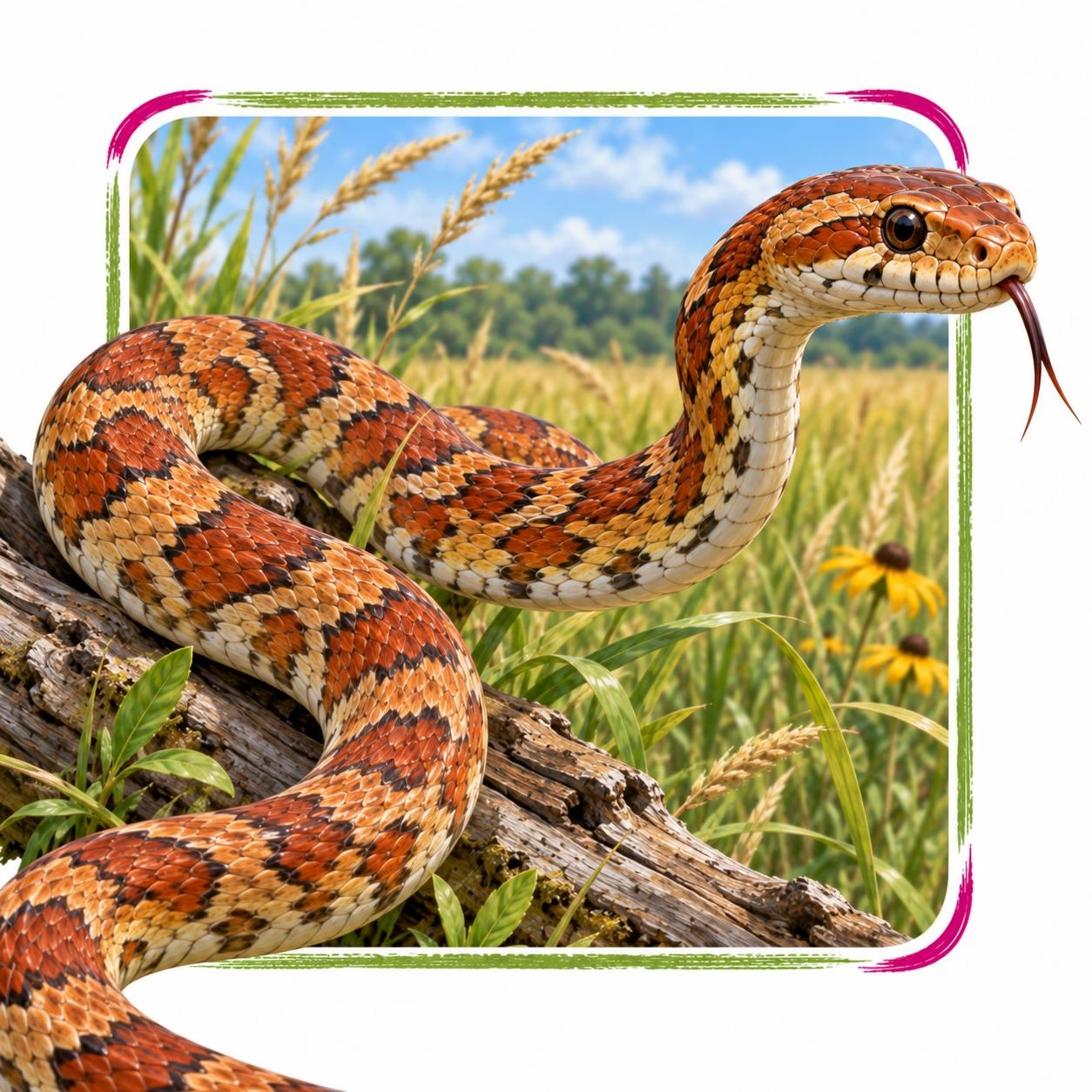
Corn Snake in its natural Grasslands habitat