
Cougar Facts for Kids
The cougar, Puma concolor, is a large cat native to the Americas. It is also called mountain lion, puma, catamount, and, in some regions, panther. Cougars occupy an extraordinary range of habitats from Canadian forests and western mountains to tropical forests, deserts, wetlands, and Patagonia. They are solitary ambush hunters with powerful hind legs, long balancing tails, tawny coats, and one of the widest geographic ranges of any land mammal in the Western Hemisphere.
Quick Cougar Facts
- Animal Type: Mammal
- Group: Large cat in the family Felidae
- Known For: Many common names, powerful leaps, long tail, silent stalking, screams, and wide American range
- Habitat: Mountains, forests, deserts, grasslands, wetlands, scrub, and rocky country
- Diet: Deer, guanacos, peccaries, capybaras, rabbits, rodents, livestock, and other animals depending on region
What You’ll Learn
Explore 10 powerful cougar facts for kids about huge jumps, stealth, hunting, mountain habitats, and their many names, plus a quiz, glossary, and activity
Easy explanations make them great for children, families, teachers, and young animal lovers.
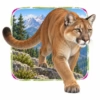
10 Fun Cougar Facts for Kids
1. It Has More Names Than Most Mammals
Cougar, mountain lion, puma, catamount, painter, and regional uses of panther can all refer to Puma concolor. The many names arose across its enormous range and do not represent separate species.
Kid Decode: One cat crossed so many languages and landscapes that it collected a backpack full of names.
2. Its Range Spans Two Continents
Cougars naturally occur from Canada through Central America to the southern tip of South America. No other living wild land mammal in the Western Hemisphere occupies a longer north-to-south range.
Kid Decode: Its paw-print trail stretches from snowy northern forests almost to the end of Patagonia.
3. Females Are Smaller Than Males
Adult males are usually substantially heavier and longer than adult females. Body size also varies by region, prey, nutrition, and climate, so one number cannot represent every population.
Kid Decode: The same tawny uniform comes in a larger male edition and a smaller female edition.
4. The Tail Is a Balancing Pole
A cougar’s muscular tail can approach one-third of its total length. It steadies the body during sharp turns, steep climbs, leaps, and rapid movement over rocks or fallen trees.
Kid Decode: The long tail swings behind the cat like a furry counterweight on a mountain rope.
5. Powerful Hind Legs Launch Huge Jumps
Cougars can spring many metres horizontally and leap high onto ledges or over obstacles. They rely on explosive acceleration and jumping rather than long-distance pursuit.
Kid Decode: The back legs store a sudden burst powerful enough to launch a tawny cat across a room-sized gap.
6. They Hunt by Stalking and Ambush
A cougar uses cover, silence, and low body posture to approach prey before a short rush or leap. Deer are important in many regions, but prey ranges from rodents and rabbits to guanacos, peccaries, capybaras, and young livestock.
Kid Decode: The hunt is a quiet approach followed by a few seconds of muscular thunder.
7. They Hide Large Meals
After making a large kill, a cougar may drag it into cover and rake leaves, soil, grass, or snow over the carcass. It can return for several meals while scavengers also try to find it.
Kid Decode: The cat turns one deer into a hidden outdoor refrigerator covered with forest debris.
8. Kittens Begin Life With Spots
Cougar kittens are born with dark spots and blue eyes. The spots fade as they grow, and the eyes change color before the youngsters become independent after learning hunting skills from their mother.
Kid Decode: The plain tawny adult begins as a blue-eyed kitten sprinkled with camouflage dots.
9. Scrapes Carry Scent Messages
Cougars rake the ground with their hind feet and leave piles of leaves, soil, or needles that may be marked with urine or dung. These scrapes communicate presence, reproductive condition, and territory use.
Kid Decode: A small pile of kicked leaves becomes a message board readable through a cougar’s nose.
10. They Cannot Roar Like Lions
Cougars belong to a cat lineage without the throat anatomy used for a full lion-style roar. They communicate with chirps, whistles, growls, hisses, purr-like sounds, and loud screams, especially during courtship or conflict.
Kid Decode: The mountain lion skips the lion roar and replaces it with whistles, chirps, and a scream from the dark.
The Weirdest Cougar Fact
A cougar is larger than many roaring cats, yet its throat anatomy does not produce a lion-style roar; it communicates with whistles, chirps, growls, hisses, purr-like sounds, and startling screams.
Try This Cougar Activity
Cougar Stalking-and-Jumping Activity
Draw a cougar moving through rocky American habitat. Add a tawny adult with a long heavy tail, powerful hind legs, rounded ears, pale muzzle, and black tail tip. Include a silent stalking trail, a large jump, deer prey, a scrape and scent mark, a den with spotted kittens, a night scream bubble, and a wildlife crossing connecting two habitats.
Quick Cougar Quiz
- What other names are used for a cougar? Answer: Mountain lion, puma, catamount, and sometimes panther.
- Where does it naturally live? Answer: Across parts of North, Central, and South America.
- What does its long tail help with? Answer: Balance during running, climbing, and jumping.
- Are cougar kittens born plain tawny? Answer: No, they are spotted.
- Can a cougar roar like a lion? Answer: No.
Mini Glossary
- Felid: A member of the cat family, Felidae.
- Ambush Predator: A hunter that approaches secretly or waits before making a sudden attack.
- Scrape: A scent-marking pile of soil, leaves, or debris made with the hind feet.
- Home Range: The area an animal regularly uses for food, shelter, and reproduction.
- Wildlife Corridor: Connected habitat that allows animals to move safely between larger areas.

 Nuthatch Facts for Kids
 Sperm Whale Facts for Kids
 Sea Dragon Facts for Kids
 Josephoartigasia Facts for Kids
More Animal Facts for Kids
Visit the full animal facts library or explore a focused animal group.
More Extinct Animal Facts for Kids
Discover dinosaurs, Ice Age giants, prehistoric sea creatures, recently extinct species, and other animals from the past.
Fact check note: Fact checked with the Mammal Diversity Database’s Puma concolor taxonomy, Animal Diversity Web’s cougar account, IUCN Red List species information, National Park Service mountain-lion research and safety resources, and peer-reviewed studies of cougar movement, diet, communication, reproduction, genetics, and habitat connectivity.

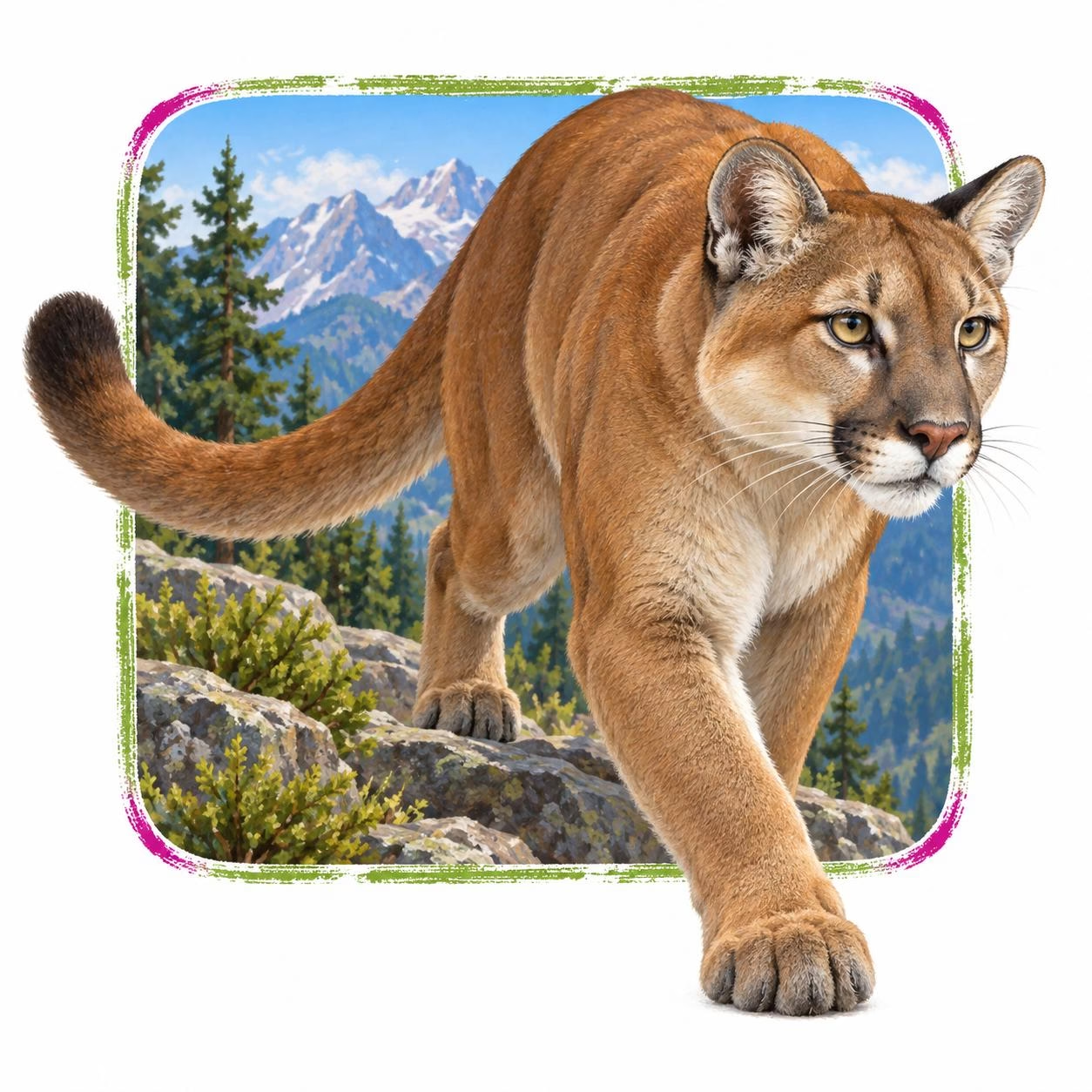
Cougar in its natural Mountains, forests, tropical rainforest, deserts, grasslands, wetlands, scrub, rocky canyons, and wooded suburbs across the Americas habitat