
Damselfly Facts for Kids
Damselflies are slender predatory insects in the suborder Zygoptera and the order Odonata. They live on every continent except Antarctica and are especially common near ponds, streams, marshes, and lakes. Adults have two pairs of similarly shaped wings, widely separated compound eyes, six spiny legs, and long narrow abdomens. Their young stages, called nymphs or naiads, live underwater and usually carry three leaf-like gills at the end of the abdomen.
Quick Damselfly Facts
- Animal Type: Insect
- Group: Suborder Zygoptera in the order Odonata
- Known For: Slender bodies, separated eyes, paired wings, aquatic nymphs, tail gills, and wheel-shaped mating
- Habitat: Ponds, lakes, streams, rivers, marshes, bogs, wetlands, and nearby vegetation
- Diet: Mosquitoes, midges, flies, aphids, aquatic insect larvae, crustaceans, and other small animals
What You’ll Learn
Explore 10 delicate damselfly facts for kids about long bodies, four wings, hunting insects, aquatic young, and pond life, with a quiz, glossary, and activity
These easy facts are made for kids, parents, teachers, and curious young learners.
10 Fun Damselfly Facts for Kids
1. They Are Close Dragonfly Relatives
Damselflies and dragonflies share the order Odonata. Damselflies form the suborder Zygoptera, a name referring to their forewings and hindwings being broadly similar in shape.
Kid Decode: The dragonfly family tree carries one slender branch with matching wing pairs.
2. Their Eyes Usually Stay Apart
Most damselflies have large compound eyes positioned widely apart on the sides of the head. Dragonfly eyes are usually much closer together or touching, though identification should use several features.
Kid Decode: Two giant mosaic eyes watch from opposite ends of the tiny head.
3. Most Fold Their Wings at Rest
Many species rest with all four wings held together above the abdomen. Spreadwing damselflies and a few other groups hold them partly open, so this familiar rule has exceptions.
Kid Decode: The usual wing pose resembles four glass pages closing over a long blue bookmark.
4. All Damselflies Are Predators
Adults catch mosquitoes, midges, flies, aphids, and other small insects. Underwater nymphs hunt mosquito larvae, worms, crustaceans, tadpoles, and other prey small enough to overpower.
Kid Decode: The delicate jewel is a hunter during both its underwater and flying lives.
5. Spiny Legs Form an Aerial Basket
The six legs are better for perching and capturing prey than for walking. During flight, the adult holds them forward to form a spiny basket that traps small insects.
Kid Decode: Six legs turn into a flying shopping basket stocked with mosquitoes.
6. Nymphs Carry Tail Gills
Most damselfly nymphs have three leaf-like structures called caudal lamellae at the abdomen tip. They exchange gases and may also help with swimming, balance, display, or escape.
Kid Decode: The underwater youngster wears three leafy paddles where an adult has none.
7. The Lower Lip Becomes a Jaw Mask
An odonate nymph’s labium folds beneath the head. When prey approaches, the structure shoots forward, grips the animal with hooked lobes, and folds the meal back toward the mouth.
Kid Decode: A hidden face mask springs outward and returns carrying lunch.
8. There Is No Pupal Stage
Damselflies undergo incomplete metamorphosis. They hatch as aquatic nymphs, molt repeatedly, climb out of water, shed one final skin, and emerge directly as winged adults.
Kid Decode: The insect skips the cocoon and changes from water hunter to air hunter in one final molt.
9. Mating Creates a Wheel Shape
A male clasps a female behind the head in tandem. The female curves her abdomen forward to collect sperm, forming a loop commonly called the mating wheel or heart.
Kid Decode: Two slender bodies bend into a living wheel above the pond.
10. Eggs Often Enter Plant Tissue
Many females use a blade-like ovipositor to insert eggs into aquatic plants, sometimes while the male remains attached. Other species place eggs on surfaces or directly into water.
Kid Decode: A water plant becomes a nursery with eggs tucked inside its living walls.
The Weirdest Damselfly Fact
A damselfly nymph catches prey with a hinged lower lip that unfolds from beneath the head like a spring-loaded mask and grabs an animal before folding back.
Try This Damselfly Activity
Damselfly Pond-to-Air Drawing Activity
Draw a damselfly life cycle beside a pond. Add an underwater nymph with three tail gills and an extendable labium catching prey, a nymph climbing a plant stem, an empty exuvia, a soft emerging adult expanding four wings, a jewel-colored adult with separated eyes, a mating wheel, eggs inserted into a water plant, and an adult catching a mosquito.
Quick Damselfly Quiz
- Which insect order contains damselflies? Answer: Odonata.
- Do a damselfly’s large eyes usually touch? Answer: No, they are widely separated.
- Where do the nymphs live? Answer: Underwater.
- What are the three tail structures on many nymphs? Answer: External gill lamellae.
- Does a damselfly have a pupal stage? Answer: No.
Mini Glossary
- Zygopteran: A member of the damselfly suborder Zygoptera.
- Nymph: An immature insect stage that resembles the adult body plan but lacks full wings.
- Labium: The lower lip, modified into a prey-catching mask in odonate nymphs.
- Exuvia: The empty outer skin left behind after molting.
- Incomplete Metamorphosis: Development through egg, nymph, and adult stages without a pupa.
 Tarsier Facts for Kids
 Caribou Facts for Kids
 Swan Facts for Kids
 Beelzebufo Facts for Kids
More Animal Facts for Kids
Visit the full animal facts library or explore a focused animal group.
More Extinct Animal Facts for Kids
Discover dinosaurs, Ice Age giants, prehistoric sea creatures, recently extinct species, and other animals from the past.
Fact check note: Fact checked with the Natural History Museum’s Odonata and pond-life resources, the British Dragonfly Society’s damselfly identification and life-cycle guidance, Missouri Department of Conservation’s damselfly account, and entomological research on odonate nymphs, labial prey capture, caudal gills, emergence, mating, and oviposition.

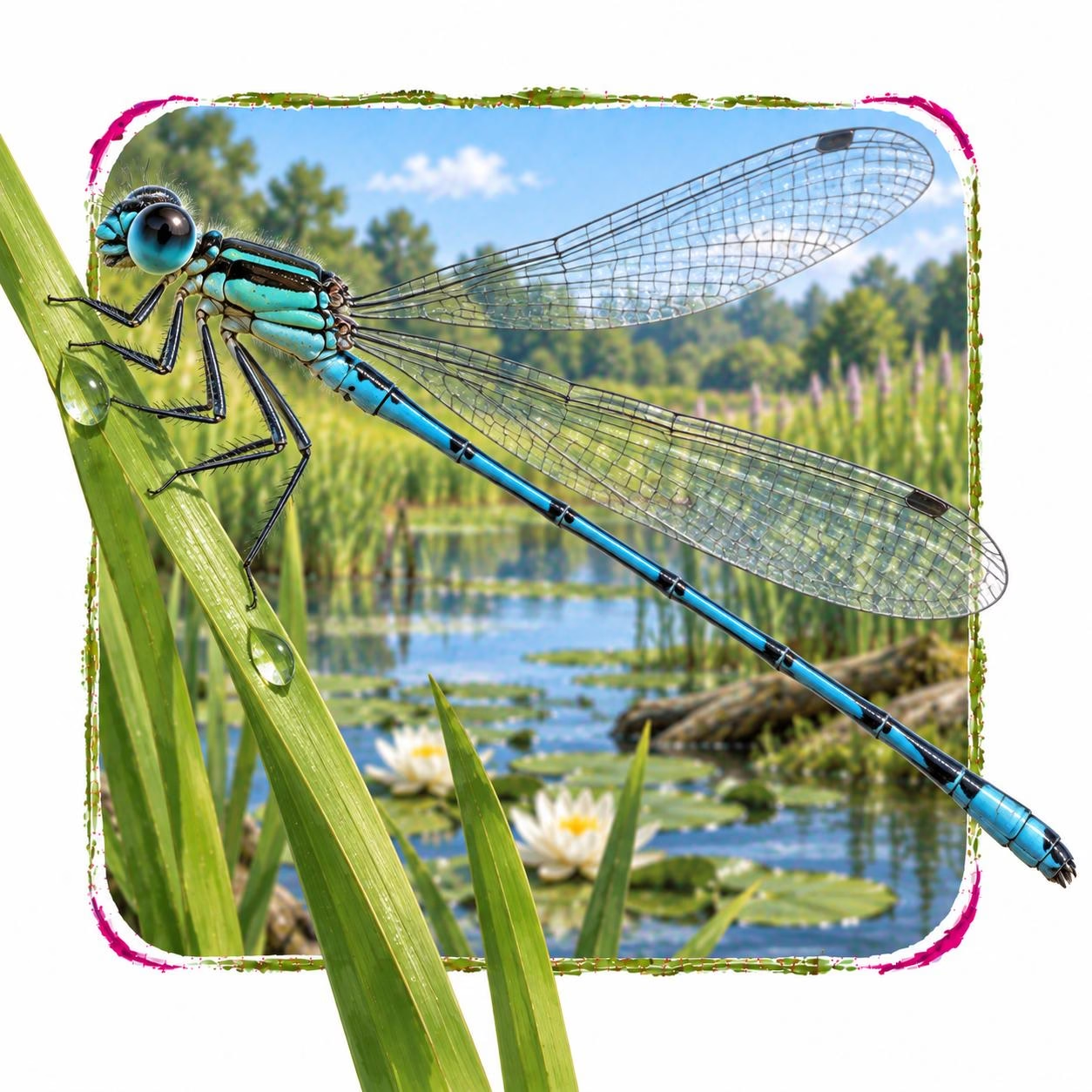
Damselfly in its natural Ponds, lakes, streams, rivers, marshes, bogs, swamps, wet meadows, forest pools, and nearby vegetation on every continent except Antarctica habitat