
Dingo Facts for Kids
Dingoes are wild dogs that live in Australia. They are clever hunters with pointed ears, bushy tails, strong senses, and the ability to live in deserts, forests, grasslands, and other habitats across the continent.
Quick Dingo Facts
- Animal Type: Mammal
- Group: Wild dog and canid
- Known For: Australia, howling, and hunting skills
- Habitat: Deserts, grasslands, forests, woodlands, scrublands, coastal regions, and open habitats across Australia
- Diet: Mammals, birds, reptiles, insects, carrion, and other animal foods
What You’ll Learn
Learn 10 wild dingo facts for kids about hunting, howling, packs, Australian habitats, and clever survival, plus a quiz, glossary, and activity
Simple explanations make them fun for children, families, teachers, and young animal explorers.
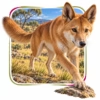
10 Fun Dingo Facts for Kids
1. Dingoes Are Mammals
Dingoes are furry mammals that feed milk to their young.
Kid Decode: A dingo is a wild Australian dog with sharp senses.
2. Dingoes Are Canids
Dingoes belong to the canid family along with wolves, foxes, and domestic dogs.
Kid Decode: They are members of the dog family tree.
3. Dingoes Live in Australia
Dingoes are strongly associated with Australia and many Australian ecosystems.
Kid Decode: They are iconic wild dogs of the continent.
4. Dingoes Have Pointed Ears
Their upright ears help them hear sounds from far away.
Kid Decode: Dingo ears work like furry listening towers.
5. Dingoes Can Howl
Dingoes often howl to communicate with other dingoes.
Kid Decode: A howl can travel across the landscape like a wild message.
6. Baby Dingoes Are Called Pups
Baby dingoes are called pups and are cared for by adults.
Kid Decode: A dingo pup is a fluffy future explorer.
7. Dingoes Live in Packs
Some dingoes live and hunt in family groups called packs.
Kid Decode: A pack is a teamwork club with wagging tails.
8. Dingoes Are Carnivores
Dingoes mainly eat other animals and are important predators.
Kid Decode: Their menu is built around hunting and scavenging.
9. Dingoes Are Adaptable
Dingoes can survive in deserts, forests, grasslands, and many other habitats.
Kid Decode: They are flexible problem-solvers of the wild.
10. Dingoes Need Healthy Ecosystems
Dingoes depend on balanced ecosystems with enough space and prey.
Kid Decode: Protecting habitats helps wild dogs thrive.
The Weirdest Dingo Fact
Dingoes can communicate using howls that sound different from many domestic dog barks.
Try This Dingo Activity
Dingo Drawing Activity
Draw a dingo standing in the Australian outback. Add pointed ears, bushy tail, pups, grass, rocks, eucalyptus trees, a sunset sky, and distant hills.
Quick Dingo Quiz
- What animal group are dingoes in? Answer: Mammals.
- What family do dingoes belong to? Answer: The canid family.
- What are baby dingoes called? Answer: Pups.
- Where are dingoes most famous? Answer: Australia.
- How do dingoes often communicate? Answer: By howling.
Mini Glossary
- Mammal: An animal with fur that feeds milk to its young.
- Canid: A member of the dog family.
- Pup: A baby dingo.
- Pack: A social group of canids.
- Carnivore: An animal that eats mostly other animals.

 Beluga Whale Facts for Kids
 Sea Cucumber Facts for Kids
 Carolina Chickadee Facts for Kids
 Mastodonsaurus Facts for Kids
More Animal Facts for Kids
Visit the full animal facts library or explore a focused animal group.
More Extinct Animal Facts for Kids
Discover dinosaurs, Ice Age giants, prehistoric sea creatures, recently extinct species, and other animals from the past.
Fact check note: Fact checked with Britannica dingo resources, Australian Museum dingo resources, and trusted wildlife education references.

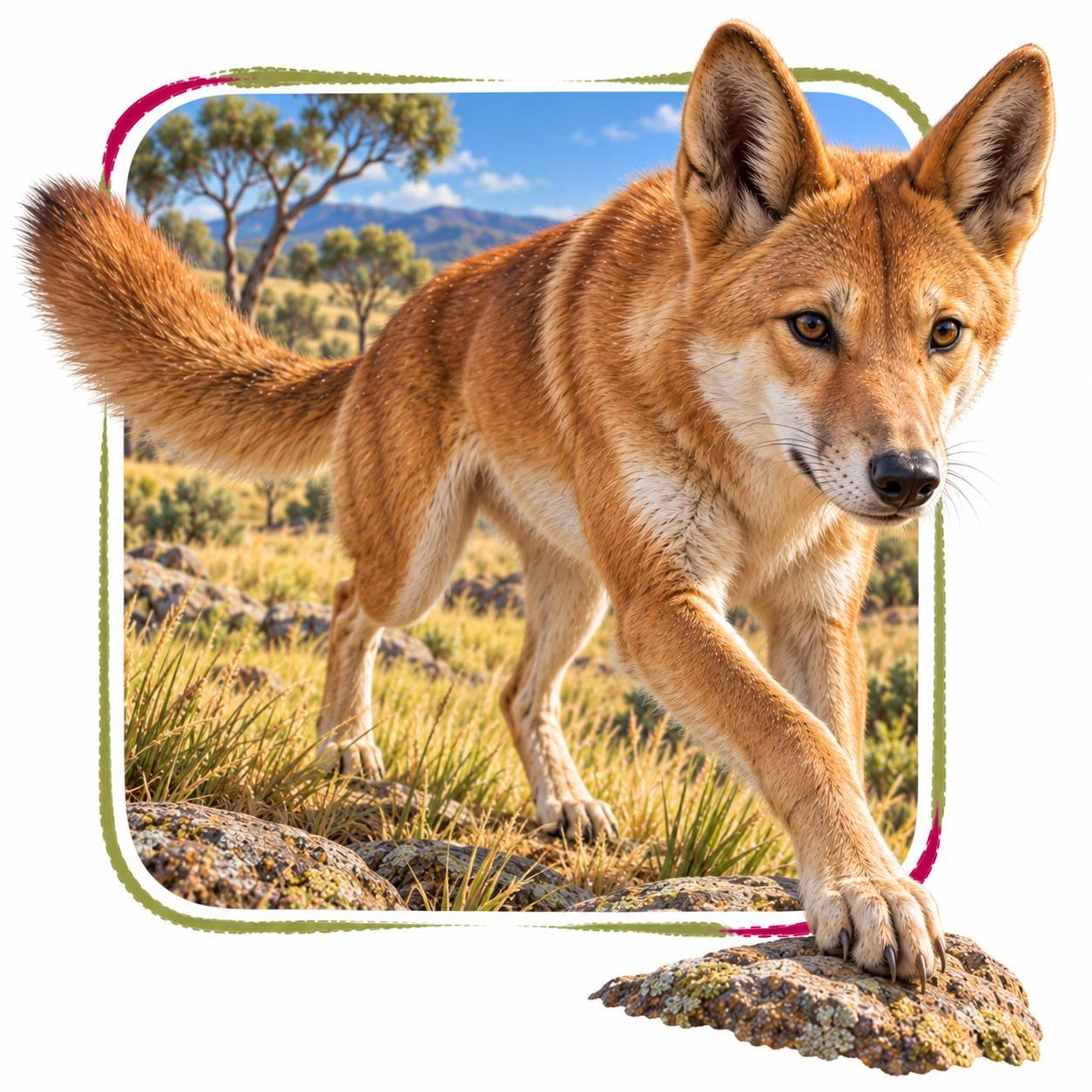
Dingo in its natural Grasslands habitat