
Dromedary Facts for Kids
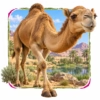
The dromedary, Camelus dromedarius, is the one-humped camel of North Africa, the Middle East, and South Asia. It has been domesticated for thousands of years for transport, milk, meat, fibre, and work. No truly wild dromedary population survives, although large feral herds live in Australia. Dromedaries are superbly adapted to hot, dry landscapes with fat stored in one hump, broad padded feet, closable nostrils, long eyelashes, tough lips, and remarkable control of heat and water loss.
Quick Dromedary Facts
- Animal Type: Mammal
- Group: One-humped camel in the family Camelidae
- Known For: One fat-filled hump, broad padded feet, closable nostrils, heat tolerance, rapid rehydration, and desert travel
- Habitat: Deserts, semi-deserts, dry grasslands, scrub, oases, farms, and caravan routes
- Diet: Grasses, leaves, thorny shrubs, salt-tolerant plants, seeds, and dry vegetation
What You’ll Learn
Discover 10 hardy dromedary facts for kids about one hump, wide feet, long eyelashes, desert survival, and life with people, with a quiz, glossary, and activity
These facts are explained simply for kids, parents, teachers, and curious little fact-finders.
10 Fun Dromedary Facts for Kids
1. It Has One Hump
A dromedary has one hump, while domestic Bactrian camels have two. The hump is built from fatty tissue supported by fibrous tissue and changes shape with the animal’s nutritional condition.
Kid Decode: One hump identifies the dromedary, but its size tells a second story about stored energy.
2. The Hump Stores Fat, Not Drinking Water
Hump fat supplies energy when food is scarce. Breaking down fat also produces some metabolic water, but the process uses oxygen and does not turn the hump into a simple internal water bottle.
Kid Decode: The hump is an energy pantry, not a sloshing desert canteen.
3. Body Temperature Can Rise and Fall
A hydrated dromedary can allow its body to warm during the day and cool at night. Storing heat temporarily delays sweating and reduces water loss until the desert air becomes cooler.
Kid Decode: Instead of running the body’s cooling system all day, the camel borrows heat and returns it after sunset.
4. Oval Blood Cells Survive Rapid Rehydration
Camel red blood cells are oval and unusually flexible. They continue flowing when blood becomes concentrated during dehydration and tolerate swelling when the animal drinks rapidly.
Kid Decode: The bloodstream carries stretchy oval rafts designed for drought and sudden refilling.
5. Nostrils and Eyelids Block Sand
A dromedary can narrow or close its nostrils during blowing sand. Long double eyelashes, eyebrow hair, and a translucent third eyelid protect the eyes while still allowing some vision.
Kid Decode: The face closes its air doors and lowers a see-through windscreen when the sand begins flying.
6. Nasal Passages Reclaim Moisture
Complex surfaces inside the nose cool exhaled air and recover part of its water vapor before it escapes. Efficient kidneys and intestines also produce concentrated urine and dry dung.
Kid Decode: Even an outgoing breath passes through a tiny moisture-recycling station.
7. Broad Feet Spread on Sand
Two toes rest on a wide elastic pad that expands against soft ground. The design spreads body weight and reduces sinking, although the pads are less suited to sharp rocks and slippery mud.
Kid Decode: Each step opens a broad desert snowshoe made from skin and soft tissue.
8. Tough Lips Select Thorny Food
Thick split lips can move independently and choose leaves among thorns. Dromedaries eat grasses, dry shrubs, salty plants, seeds, and tough vegetation that many livestock avoid.
Kid Decode: The flexible mouth picks a leafy lunch from a plant wearing natural barbed wire.
9. They Walk With a Pacing Gait
During a pace, the front and rear legs on the same side move forward together. This rolling motion inspired the nickname ship of the desert and differs from the alternating diagonal walk of many hoofed mammals.
Kid Decode: Left legs travel together, then right legs, making the tall body sway like a slow boat.
10. Humans Shaped the Modern Dromedary
People domesticated dromedaries thousands of years ago and bred them for riding, loads, racing, milk, meat, and fibre. Free-living Australian herds descend from animals imported during the nineteenth century and are feral, not native wild camels.
Kid Decode: The modern one-humped camel carries thousands of years of partnership and one enormous Australian escape story.
The Weirdest Dromedary Fact
A dromedary can let its body temperature rise during the hot day and fall again at night, reducing the need to sweat away precious water.
Try This Dromedary Activity
Dromedary Desert-Adaptation Drawing Activity
Draw a dromedary crossing a hot desert. Add one fat-filled hump, a long curved neck, double eyelashes, a third eyelid, closable nostrils, thick split lips reaching around thorny plants, broad padded two-toed feet, chest and knee callosities, a pacing footprint trail, a mother with one calf, and a body-temperature chart rising by day and falling at night.
Quick Dromedary Quiz
- How many humps does a dromedary have? Answer: One.
- What is stored inside the hump? Answer: Fat, not a tank of water.
- How do broad feet help? Answer: They spread weight across soft sand.
- What can the nostrils do during blowing sand? Answer: Close tightly.
- Are Australia’s free-living dromedaries truly wild? Answer: No, they are feral descendants of domestic camels.
Mini Glossary
- Camelid: A member of the family containing camels, llamas, alpacas, guanacos, and vicuñas.
- Feral: Living freely after descending from domesticated animals.
- Dehydration: A condition caused by losing more body water than is replaced.
- Callosity: A thickened pad of skin that protects a pressure point.
- Pacing Gait: A walking pattern in which both legs on one side move together.
 Fiddler Crab Facts for Kids
 Sloth Bear Facts for Kids
 Weasel Facts for Kids
 Megantereon Facts for Kids
More Animal Facts for Kids
Visit the full animal facts library or explore a focused animal group.
More Extinct Animal Facts for Kids
Discover dinosaurs, Ice Age giants, prehistoric sea creatures, recently extinct species, and other animals from the past.
Fact check note: Fact checked with the Mammal Diversity Database’s Camelus dromedarius taxonomy, Animal Diversity Web’s dromedary account, classic and modern camel physiology research on body-temperature variation, dehydration and rapid rehydration, and comparative studies of feet, nasal water recovery, blood cells, diet, domestication, and feral Australian populations.

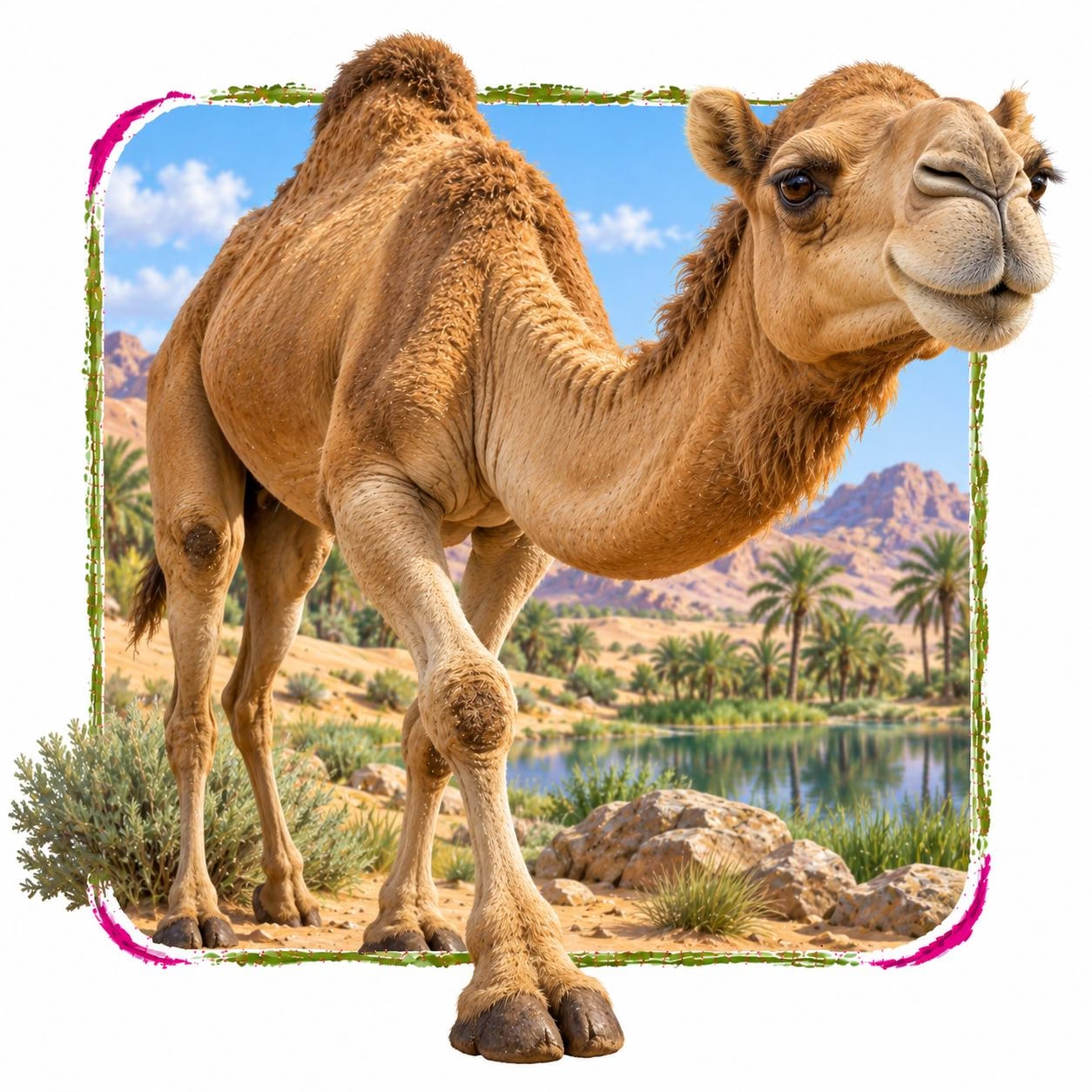
Dromedary in its natural Hot deserts, semi-deserts, dry grasslands, thorn scrub, oases, farms, settlements, and caravan landscapes across North Africa, the Middle East, South Asia, and feral ranges in Australia habitat