
Eastern Grey Kangaroo Facts for Kids
The Eastern Grey Kangaroo, Macropus giganteus, is a large marsupial native to eastern and southeastern Australia, including Tasmania. It favors open forest and woodland beside grassy feeding areas and often gathers in social groups called mobs. Eastern greys have soft woolly gray fur, darker faces, black-tipped tails, powerful hind legs, long feet, small forelimbs, and muscular tails. They rest in shade during hot daylight hours and graze mainly from late afternoon through the night.
Quick Eastern Grey Kangaroo Facts
- Animal Type: Mammal
- Group: Macropod marsupial in the family Macropodidae
- Known For: Efficient hopping, powerful hind legs, fifth-limb tail use, social mobs, warning thumps, and pouch-raised joeys
- Habitat: Open forest, woodland, grassland, farmland edges, scrub, and subalpine country
- Diet: Mainly grasses, plus herbs, leaves, shoots, and occasional fungi
What You’ll Learn
Learn 10 amazing eastern grey kangaroo facts for kids about hopping, pouches, joeys, powerful legs, and Australian grasslands, with a quiz, glossary, and activity
These simple facts are made for kids, parents, teachers, and curious young minds.
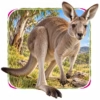
10 Fun Eastern Grey Kangaroo Facts for Kids
1. Giganteus Does Not Mean Largest Living Kangaroo
The scientific name Macropus giganteus means gigantic large-foot, but Red Kangaroo males can grow heavier. Eastern Grey males are still impressive and may weigh more than twice as much as adult females.
Kid Decode: The name promises a giant, but another Australian kangaroo wins the heavyweight trophy.
2. The Coat Looks Soft and Woolly
Eastern greys usually have light to dark gray woolly fur, a darker face, pale underparts, and a dark tail tip. Coastal animals can be paler, while southern and Tasmanian animals may grow longer fur.
Kid Decode: The gray coat changes shade across the map while keeping its soft blanket-like texture.
3. Spring-Like Tendons Save Energy
During hopping, elastic tendons in the ankles and legs stretch when the feet land and release stored energy for the next leap. Faster hopping does not increase energy use as sharply as it would in many mammals.
Kid Decode: Each landing winds a biological spring that helps pay for the next jump.
4. The Tail Becomes a Fifth Limb
At slow speed, a kangaroo plants its forelimbs and tail, swings both hind legs forward, and repeats the pattern. Measurements show the tail can produce more propulsive force than the forelimbs combined.
Kid Decode: The famous balancing tail briefly turns into the strongest leg in a five-limbed walk.
5. Mobs Change Membership
Eastern greys gather in mobs that may contain females, joeys, young males, and one or more large males. Individuals join and leave, and groups often become larger where good grass is concentrated.
Kid Decode: A mob is a shifting neighborhood gathering rather than one permanent family roster.
6. They Graze During Cooler Hours
Fresh grass is the preferred food, along with herbs, leaves, shoots, and occasional fungi. Animals commonly shelter in forest or scrub during hot daylight and feed in open areas from late afternoon to morning.
Kid Decode: The woodland becomes a bedroom by day and the grassland becomes a dining room after sunset.
7. Microbes Help Digest Grass
Eastern Grey Kangaroos use foregut fermentation, allowing microbes in stomach chambers to break down tough plant fibre. They may regurgitate and rechew plant material to improve digestion.
Kid Decode: A hidden stomach community turns grass into energy before the meal travels onward.
8. Thumps and Coughs Carry Warnings
An alarmed kangaroo stamps its powerful hind feet, producing vibrations and sound that alert nearby animals. Eastern greys also use clucks, soft calls, and guttural coughs during contact, alarm, and male displays.
Kid Decode: One ground-shaking thump can send a warning through an entire grazing mob.
9. Males Box and Kick
Males push, grapple, and box with their forearms while balancing on their tails. In stronger contests they can lean back and kick with both hind legs, using size and strength to establish dominance.
Kid Decode: The tail becomes a kickstand while two muscular rivals turn their hind feet into the main argument.
10. A Joey Starts Smaller Than a Jellybean
After a pregnancy of about 36 days, a newborn weighing less than one gram crawls unaided into the pouch and attaches to a teat. It begins leaving the pouch at around nine months but can continue nursing much longer.
Kid Decode: The future two-metre hopper begins as a pink climber weighing less than a paperclip.
The Weirdest Eastern Grey Kangaroo Fact
At slow walking speeds, an Eastern Grey Kangaroo plants its tail on the ground as a muscular fifth limb, but during fast hopping the tail stays off the ground and works as a balancing counterweight.
Try This Eastern Grey Kangaroo Activity
Eastern Grey Kangaroo Movement-and-Pouch Activity
Draw a mob where Australian woodland meets grassland. Add a large male, smaller females, woolly gray coats, dark faces, black-tipped tails, spring-like hind-leg tendons, a fast hopping sequence, a slow five-limb walk using the tail, grazing at dusk, warning foot thumps, two males boxing, and a pouch cutaway showing a tiny newborn attached to a teat and an older joey peeking outside.
Quick Eastern Grey Kangaroo Quiz
- Where does the Eastern Grey Kangaroo live? Answer: Eastern and southeastern Australia, including Tasmania.
- What is a kangaroo group called? Answer: A mob.
- What does the tail do during slow walking? Answer: It acts as a powerful fifth limb.
- What does the species mainly eat? Answer: Grass.
- How much does a newborn joey weigh? Answer: Less than one gram.
Mini Glossary
- Marsupial: A mammal whose extremely undeveloped young usually continue growing attached to a teat, often inside a pouch.
- Macropod: A member of the kangaroo family; the name means large foot.
- Mob: A social group of kangaroos.
- Embryonic Diapause: A temporary pause in the development of an embryo.
- Foregut Fermentation: Digestion in which microbes break down plants in stomach chambers before the small intestine.
 Bull Shark Facts for Kids
 Harpy Eagle Facts for Kids
 Barracuda Facts for Kids
 Gigantophis Facts for Kids
More Animal Facts for Kids
Visit the full animal facts library or explore a focused animal group.
More Extinct Animal Facts for Kids
Discover dinosaurs, Ice Age giants, prehistoric sea creatures, recently extinct species, and other animals from the past.
Fact check note: Fact checked with the Australian Museum’s updated Eastern Grey Kangaroo account, Animal Diversity Web’s Macropus giganteus review, current macropod taxonomy, and research on hopping energetics, pentapedal tail locomotion, social mobs, communication, foregut fermentation, embryonic diapause, milk changes, joey development, and population management.

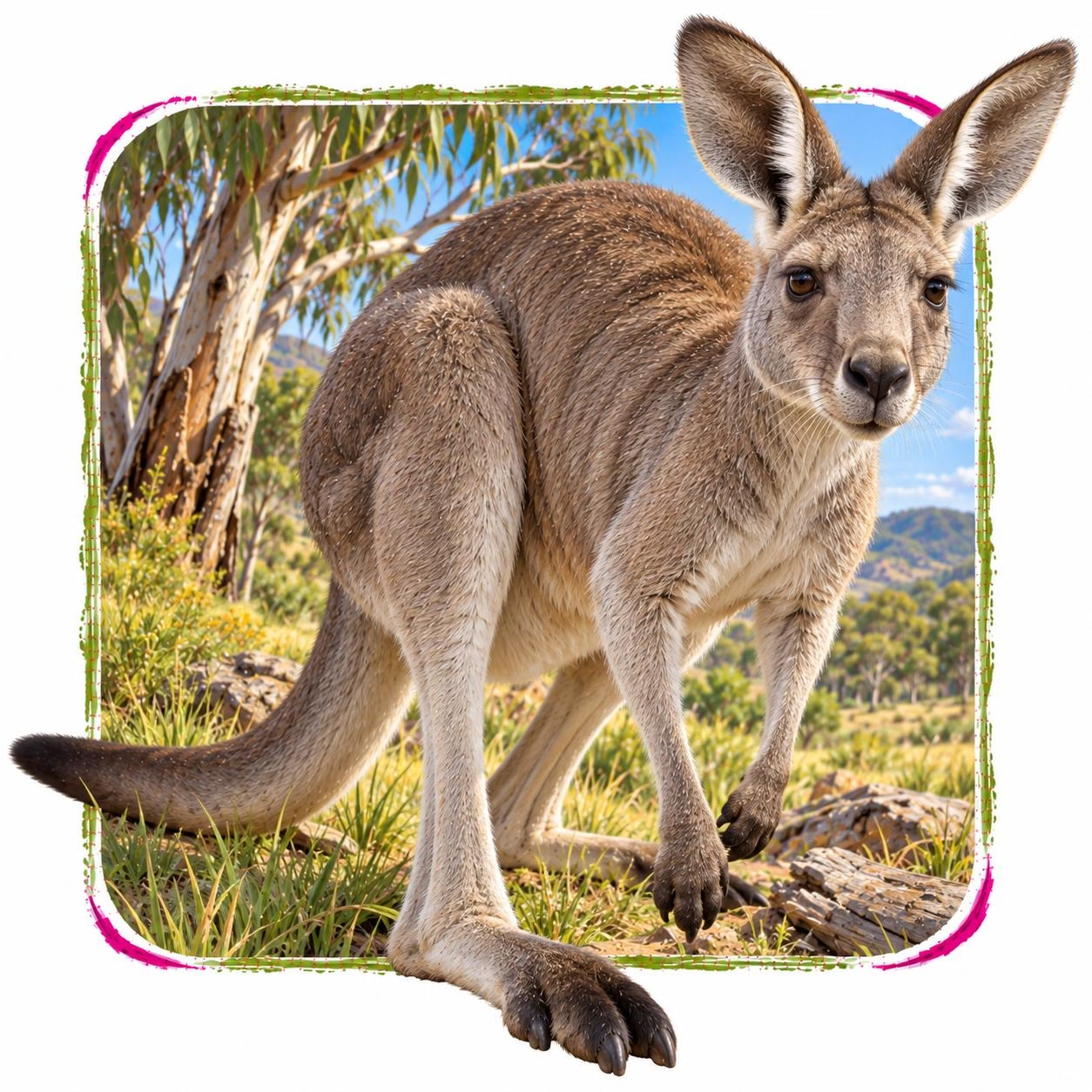
Eastern Grey Kangaroo in its natural Open forest, woodland, grassy clearings, pasture edges, scrub, farmland with remnant vegetation, and subalpine habitats across eastern and southeastern Australia including Tasmania habitat