
Elephant Facts for Kids
Elephants are the largest land animals on Earth. They are smart, social, gentle giants with long trunks, big ears, strong tusks, and close family groups.
Quick Elephant Facts
- Animal Type: Mammal
- Group: Herbivore
- Known For: Long trunk and big ears
- Habitat: Grasslands, forests, and savannas
- Diet: Grass, leaves, bark, roots, fruit, and plants
What You’ll Learn
Explore 10 amazing elephant facts for kids about trunks, tusks, families, communication, and more, with a quiz, glossary, and activity
Simple explanations make these facts great for children, parents, teachers, and curious young learners.

10 Fun Elephant Facts for Kids
1. Elephants Are the Largest Land Animals
Elephants are the biggest animals that live on land. African elephants are usually larger than Asian elephants.
Kid Decode: An elephant is like a walking mountain with ears.
2. Elephants Use Their Trunks Like Tools
An elephant’s trunk is a nose and upper lip together. Elephants use it to breathe, smell, drink, grab food, spray water, and greet each other.
Kid Decode: An elephant trunk is a nose, hand, straw, and shower all in one.
3. Elephants Have Big Ears for Cooling
Elephants flap their ears to help cool their bodies. Blood flows through the ears, and moving them helps release heat.
Kid Decode: Elephant ears work like giant cooling fans.
4. Elephants Live in Family Groups
Many elephants live in family groups led by an older female called a matriarch. The group helps protect and care for young elephants.
Kid Decode: Elephant families stick together like a tiny parade team.
5. Baby Elephants Are Called Calves
A baby elephant is called a calf. Calves stay close to their mothers and learn from the herd as they grow.
Kid Decode: A baby elephant is a wobbly little giant in training.
6. Elephants Can Communicate in Deep Sounds
Elephants make many sounds, including deep rumbles. Some low sounds can travel long distances through the ground and air.
Kid Decode: Elephants can send deep rumble messages across the wild.
7. Elephants Are Plant Eaters
Elephants are herbivores, which means they eat plants. They may spend many hours each day eating enough food for their huge bodies.
Kid Decode: An elephant’s salad bowl is basically the whole forest.
8. Elephants Have Tusks Made of Ivory
Tusks are long teeth that grow outside an elephant’s mouth. Elephants may use tusks for digging, lifting, stripping bark, or defense.
Kid Decode: Tusks are elephant tools that never fit in a toolbox.
9. Elephants Are Very Smart
Elephants can learn, remember, solve problems, and show care for other elephants. They are known for strong social behavior.
Kid Decode: Elephants have big brains to match their big bodies.
10. Elephants Help Their Habitats
Elephants spread seeds through their dung and can open paths through thick plants. This helps other animals and plants in their ecosystem.
Kid Decode: Elephants are giant gardeners of the wild.
New Elephant Fact for Kids
Elephants Move Differently in Dry and Green Savannas
Scientists used GPS tracking to follow African savanna elephants in two East African savannas. In the wetter Mara–Serengeti, elephants reused many connected paths. In the drier Samburu–Laikipia, their movement was more spread out and tied to permanent water. The study suggests conservation plans should match each region's elephant movement.
The Weirdest Elephant Fact
Elephants can use their trunks to suck up water, but they do not drink through the trunk like a straw. They spray the water into their mouths.
Try This Elephant Activity
Elephant Drawing Activity
Draw an elephant spraying water with its trunk. Add big ears, curved tusks, grass, trees, and a baby elephant walking beside it.
Quick Elephant Quiz
- What is a baby elephant called? Answer: A calf.
- What do elephants use their trunks for? Answer: Breathing, smelling, drinking, grabbing food, and more.
- Are elephants meat eaters or plant eaters? Answer: Plant eaters.
- Why do elephants flap their ears? Answer: To help cool their bodies.
- What is a matriarch? Answer: An older female elephant that leads the family group.
Mini Glossary
- Herbivore: An animal that eats plants.
- Calf: A baby elephant.
- Matriarch: A female leader of an elephant group.
- Tusks: Long teeth that grow outside the mouth.
- Habitat: The natural home of an animal.




 Emu Facts for Kids
 Seal Facts for Kids
 Great Horned Owl Facts for Kids
 Anancus Facts for Kids
More Animal Facts for Kids
Visit the full animal facts library or explore a focused animal group.
More Extinct Animal Facts for Kids
Discover dinosaurs, Ice Age giants, prehistoric sea creatures, recently extinct species, and other animals from the past.
Fact check note: Fact checked with National Geographic Kids, Britannica Kids, and San Diego Zoo Wildlife Alliance.

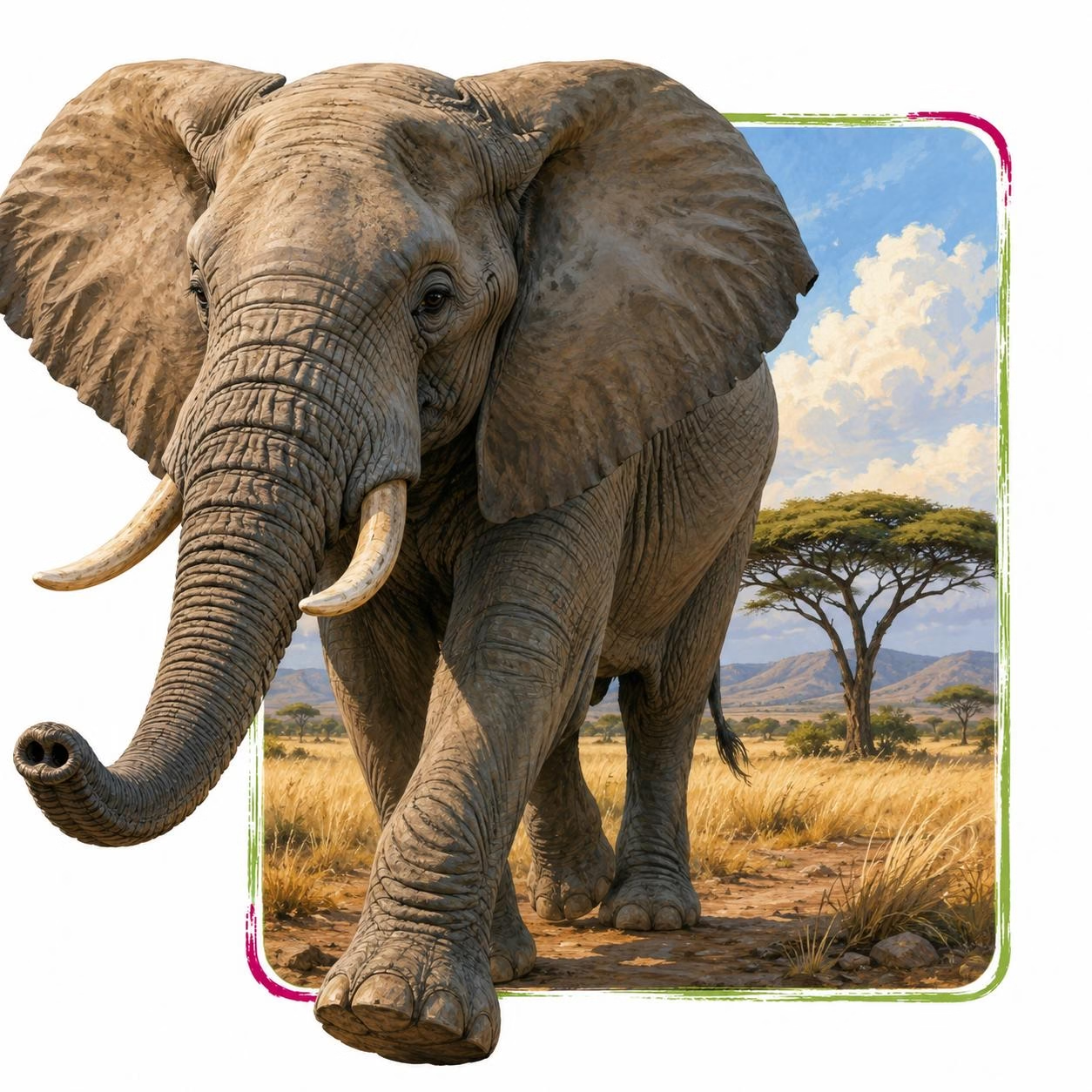
Elephant in its natural Savannas habitat