
Elephant Seal Facts for Kids
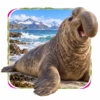
Elephant seals are enormous true seals in the genus Mirounga. Two living species exist: the Northern Elephant Seal, Mirounga angustirostris, of the eastern North Pacific, and the Southern Elephant Seal, Mirounga leonina, of subantarctic and Antarctic waters. Adult males develop an inflatable trunk-like nose called a proboscis and can be several times heavier than females. Elephant seals spend most of the year at sea, making repeated deep dives for squid and fish before returning to land for breeding and molting.
Quick Elephant Seal Facts
- Animal Type: Mammal
- Group: True seals in the genus Mirounga and family Phocidae
- Known For: Giant males, inflatable noses, extreme diving, long migrations, breeding battles, fasting, and dramatic annual molts
- Habitat: Open ocean, deep offshore feeding grounds, islands, beaches, rocky coasts, and subantarctic shores
- Diet: Squid, fish, sharks, rays, and other deep-water prey depending on species, sex, and region
What You’ll Learn
Discover 10 enormous elephant seal facts for kids about giant males, deep dives, flippers, ocean feeding, and beach colonies, plus a quiz, glossary, and activity
Clear explanations make them fun for children, families, teachers, and little fact-hunters.
10 Fun Elephant Seal Facts for Kids
1. There Are Two Living Species
Northern Elephant Seals live in the eastern North Pacific, while Southern Elephant Seals circle the Southern Ocean. They belong to the same genus but differ in maximum size, range, breeding sites, migration routes, and prey.
Kid Decode: One elephant-seal branch patrols the North Pacific while the larger branch circles Antarctica.
2. Southern Males Are the Largest Seals
Adult male Southern Elephant Seals are the largest living seals and the heaviest pinnipeds. Northern males are smaller but still far larger than females of their own species.
Kid Decode: The southern bull turns a beach full of seals into a heavyweight championship.
3. The Nose Grows Into a Proboscis
Males develop a hanging inflatable nose as they mature. During breeding displays, the proboscis enlarges the front of the face and helps produce deep roaring and knocking calls.
Kid Decode: The strange nose acts less like an elephant’s hand and more like a booming sound chamber.
4. Males and Females Look Extremely Different
Elephant seals show dramatic sexual dimorphism. Bulls have much greater mass, thicker necks, chest shields, scars, and enlarged noses, while females remain relatively streamlined for repeated ocean foraging.
Kid Decode: The same species produces a beach tank and a sleek deep-sea hunter in two very different sizes.
5. They Dive Again and Again
Elephant seals regularly descend hundreds of metres and can reach much deeper water. Many dives last around twenty minutes to more than an hour, separated by only brief breathing periods at the surface.
Kid Decode: The seal’s day becomes a repeating elevator ride from air to darkness and back.
6. The Body Switches Into Dive Mode
During a dive, the heart rate slows, blood flow is prioritized for essential organs, and oxygen stored in blood and muscle supports activity. Flexible lungs and chest structures cope with increasing pressure.
Kid Decode: The body closes unnecessary departments and sends its oxygen budget to the brain, heart, and swimming muscles.
7. Long Migrations Connect Beach and Open Ocean
After breeding or molting, elephant seals travel thousands of kilometres to productive feeding areas. Males and females can use different routes, depths, and prey zones even when they breed at the same colony.
Kid Decode: One crowded beach launches separate ocean highways for bulls and females.
8. Breeding and Molting Require Long Fasts
Adults eat at sea but may go weeks without food while breeding or replacing their coat on land. Stored fat provides energy, and the animals reduce unnecessary movement to conserve reserves.
Kid Decode: The blubber bank pays every bill while the seal stays ashore with no seafood deliveries.
9. Bulls Compete for Access to Females
Large males roar, display, push, bite, and strike one another during the breeding season. A few dominant bulls may mate many times, while most males gain little or no breeding success.
Kid Decode: The rookery’s loudest battles create a very uneven family tree.
10. Pups Grow Rapidly on Rich Milk
A female usually gives birth to one pup and nurses it for only a few weeks. Her milk becomes extremely rich in fat, helping the pup gain weight before abrupt weaning and its first independent fast.
Kid Decode: A short milk season transforms one wrinkled newborn into a plump future diver.
The Weirdest Elephant Seal Fact
Tracked elephant seals can spend about 90 percent of their time at sea underwater, surfacing for only a few minutes before beginning the next long dive.
Try This Elephant Seal Activity
Elephant Seal Deep-Dive-and-Rookery Activity
Draw Northern and Southern Elephant Seals side by side. Add a huge male with a proboscis, smaller females, no external ear flaps, rear flippers pointing backward, a deep-ocean dive path, squid and fish prey, a slow-heart-rate icon, a long migration map, a beach rookery with rival males, a nursing pup, fasting adults, and a patchy catastrophic-molt panel.
Quick Elephant Seal Quiz
- How many living elephant seal species exist? Answer: Two.
- Which sex develops the large proboscis? Answer: Adult males.
- Are elephant seals true seals or sea lions? Answer: True seals.
- What do they mainly hunt? Answer: Squid, fish, and other marine animals.
- What happens during the annual molt? Answer: Large patches of old hair and outer skin are replaced.
Mini Glossary
- Pinniped: A member of the seal, sea lion, and walrus group.
- Proboscis: The inflatable trunk-like nose of an adult male elephant seal.
- Bradycardia: A slowing of the heart rate, especially during a dive.
- Rookery: A place where many seals gather to breed and raise young.
- Catastrophic Molt: A rapid annual replacement of large patches of hair and outer skin.
 Pufferfish Facts for Kids
 Olm Facts for Kids
 Termite Facts for Kids
 Carolina Parakeet Facts for Kids
More Animal Facts for Kids
Visit the full animal facts library or explore a focused animal group.
More Extinct Animal Facts for Kids
Discover dinosaurs, Ice Age giants, prehistoric sea creatures, recently extinct species, and other animals from the past.
Fact check note: Fact checked with the Mammal Diversity Database’s Mirounga angustirostris and Mirounga leonina taxonomy, NOAA Fisheries elephant-seal research, Australian Antarctic Program southern-elephant-seal resources, and long-term studies of diving, migration, fasting, breeding, lactation, molting, and population recovery.

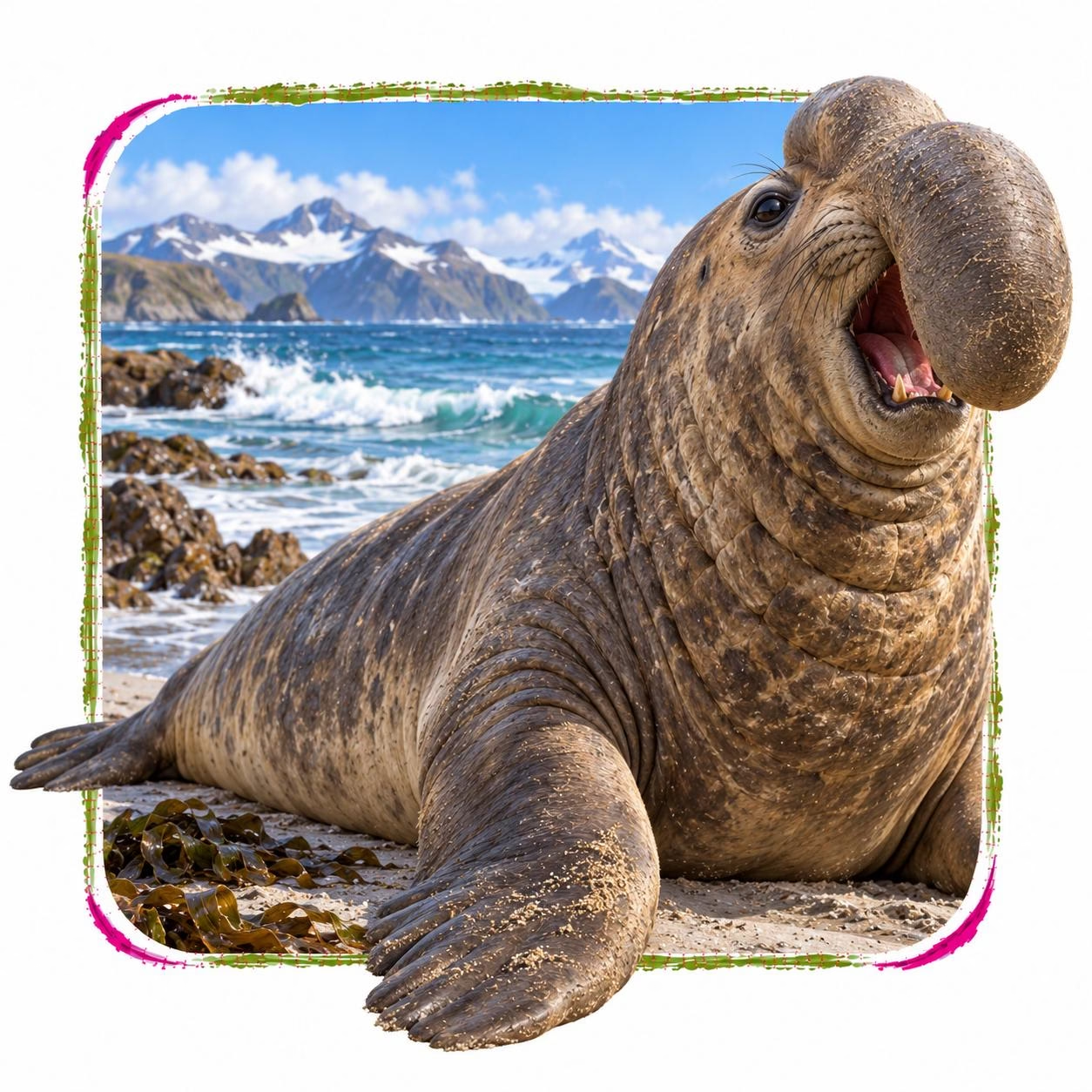
Elephant Seal in its natural Deep open-ocean feeding grounds and breeding beaches, islands, rocky shores, and subantarctic coasts in the eastern North Pacific and Southern Ocean habitat