
Elk Facts for Kids
The elk, Cervus canadensis, is also called the wapiti. It is one of the largest members of the deer family and is native to North America and parts of Central and East Asia. Elk have long legs, a pale rump patch, dark necks, and large social herds. Adult males grow branching antlers, bugle during the autumn rut, and compete for groups of females. Elk graze on grasses and herbs and browse shrubs, bark, and tree shoots.
Quick Elk Facts
- Animal Type: Mammal
- Group: Deer in the family Cervidae
- Known For: Huge male antlers, autumn bugling, pale rump patches, migrating herds, spotted calves, and ivory canine teeth
- Habitat: Mountains, forests, meadows, grasslands, shrublands, river valleys, and parklands
- Diet: Grasses, sedges, herbs, shrubs, leaves, twigs, bark, and agricultural plants
What You’ll Learn
Explore 10 majestic elk facts for kids about large antlers, bugling calls, herds, grazing, and North American habitats, with a quiz, glossary, and activity
These easy facts are written for kids, parents, teachers, and curious young learners.
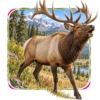
10 Fun Elk Facts for Kids
1. Elk and Wapiti Are the Same Species
Cervus canadensis is usually called elk in North America and wapiti in many scientific and international settings. The name wapiti avoids confusion because elk in much of Europe means the animal North Americans call moose.
Kid Decode: One deer needs two common names because the word elk crossed the Atlantic and changed animals.
2. They Are Among the Largest Deer
Adult bulls can stand around one and a half metres at the shoulder and weigh several hundred kilograms. Cows are smaller, and body size varies among Rocky Mountain, Roosevelt, Asian, and other populations.
Kid Decode: The deer family includes one long-legged member built on near-horse-sized proportions.
3. Only Bulls Normally Grow Antlers
Male elk grow a new pair of antlers each year. The structures are bone, not horn, and can branch into long beams with several pointed tines.
Kid Decode: The bull builds a giant bone tree, carries it through autumn, and drops it after winter.
4. Velvet Feeds the Fast-Growing Antlers
While antlers grow, soft velvet supplies blood, oxygen, and minerals. After the antlers harden, the velvet dries and bulls rub it from the bone against trees and shrubs.
Kid Decode: A living skin sleeve powers one of the fastest bone-growth projects in the animal world.
5. Bugling Announces the Rut
During the autumn breeding season, bulls produce a call that begins low and rises into a high whistle. Bugling advertises strength, warns rival males, and helps gather or maintain groups of females.
Kid Decode: A huge animal releases a call that climbs from a roar into an eerie mountain whistle.
6. Bulls Guard Groups of Cows
A dominant bull may collect and defend a harem during the rut. He bugles, wallows, scent marks, herds wandering cows, and challenges rivals, often eating and resting less than usual.
Kid Decode: Autumn turns one grass-eating bull into a sleepless singer, shepherd, perfumer, and bodyguard.
7. Calves Begin Life With Spots
A cow usually gives birth to one calf in late spring or early summer. The newborn lies quietly hidden in vegetation, and its spotted coat breaks up the body outline until it becomes strong enough to follow.
Kid Decode: The future herd animal starts as a silent spotted secret folded into tall grass.
8. Some Herds Surf the Green Wave
Migratory elk move toward newly growing spring plants as snow melts and vegetation greens at higher elevations. Other populations remain resident or make shorter movements depending on snow, food, disturbance, and tradition.
Kid Decode: The herd follows spring uphill, eating fresh green growth as the season climbs the mountain.
9. They Graze, Browse, and Chew Cud
Elk eat grasses and herbs when available and switch toward shrubs, twigs, bark, and dried plants in other seasons. Microbes in a multi-chambered stomach ferment plant fibres before the food is rechewed as cud.
Kid Decode: One mouthful of grass visits the chewing department twice before digestion is finished.
10. Ivories Are Tiny Ancient Tusks
Both male and female elk retain small upper canine teeth called ivories. These rounded teeth are evolutionary remnants of enlarged tusk-like canines found in early deer and still seen in musk and water deer.
Kid Decode: Two tiny teeth hide a fossil story about deer ancestors that carried tusks instead of antlers.
The Weirdest Elk Fact
Elk still carry two small upper canine teeth called ivories, evolutionary leftovers from deer ancestors whose males used enlarged tusk-like canines.
Try This Elk Activity
Elk Antler-and-Migration Drawing Activity
Draw an elk herd moving from a mountain meadow toward lower winter forest. Add a bull with large branching antlers, velvet-covered antler growth, cows without antlers, spotted hidden calves, pale rump patches, a bugle sound wave, a rut wallow, grazing and browsing, cud-chewing stomach chambers, tiny ivory canine teeth, and a green-wave migration map.
Quick Elk Quiz
- What other name is used for the elk? Answer: Wapiti.
- Which sex normally grows antlers? Answer: Males.
- What covers a growing antler? Answer: Velvet.
- What is the bull’s high breeding call called? Answer: A bugle.
- What are elk ivories? Answer: Small upper canine teeth.
Mini Glossary
- Wapiti: Another common name for Cervus canadensis, especially useful where elk means moose.
- Cervid: A member of the deer family.
- Velvet: Blood-rich skin covering a rapidly growing antler.
- Rut: The seasonal breeding period of deer and some other hoofed mammals.
- Ruminant: A plant eater that regurgitates and rechews partly digested food.
 Cardinal Facts for Kids
 African Elephant Facts for Kids
 Vole Facts for Kids
 Mussaurus Facts for Kids
More Animal Facts for Kids
Visit the full animal facts library or explore a focused animal group.
More Extinct Animal Facts for Kids
Discover dinosaurs, Ice Age giants, prehistoric sea creatures, recently extinct species, and other animals from the past.
Fact check note: Fact checked with the Mammal Diversity Database’s Cervus canadensis taxonomy, National Park Service elk biology and rut resources, U.S. Geological Survey migration research, and cervid studies of antler growth, bugling, social herds, calf hiding, rumination, ivory canine teeth, disease, and conservation.

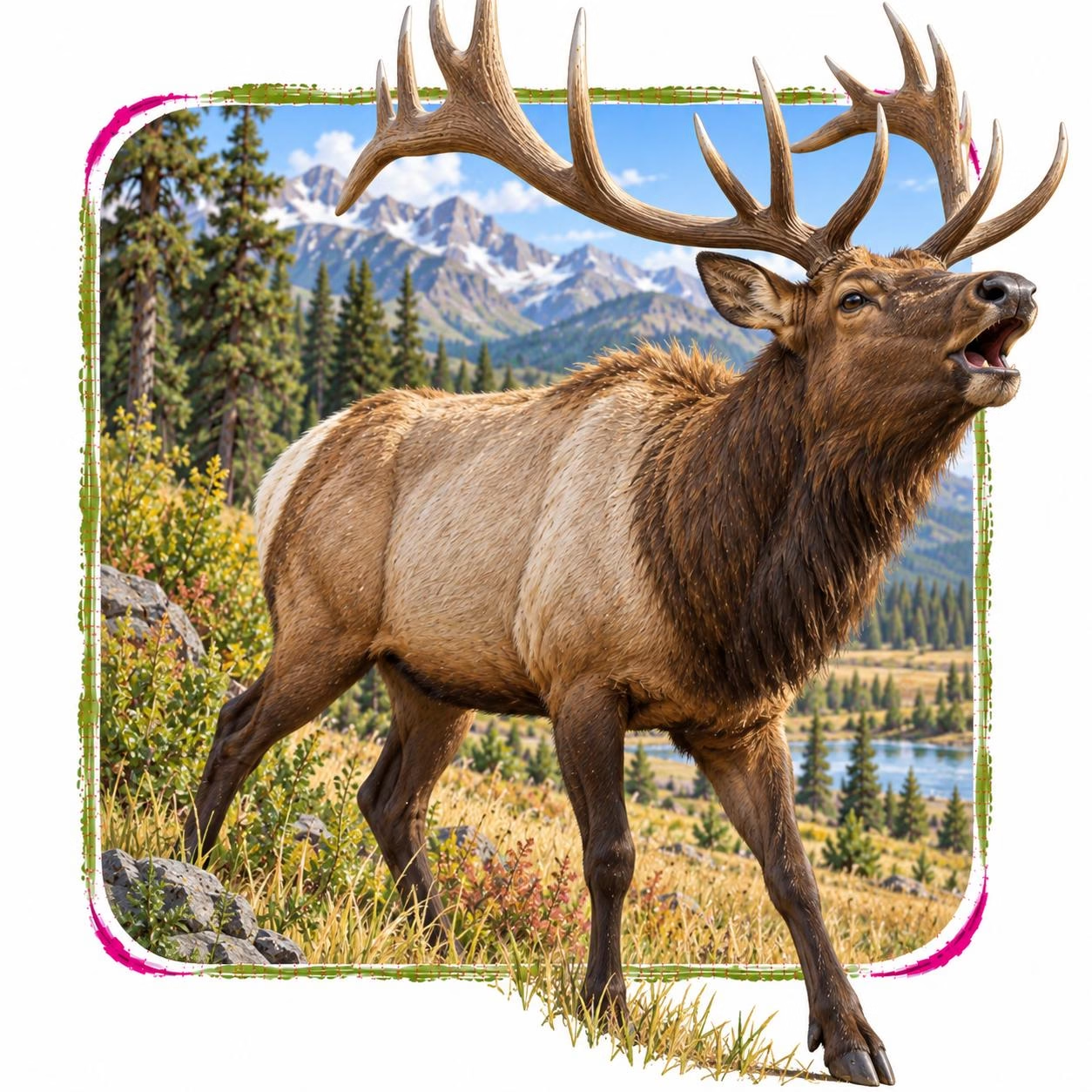
Elk in its natural Mountain meadows, coniferous and deciduous forest, forest edges, grasslands, shrublands, river valleys, parklands, and seasonal ranges across North America and parts of Asia habitat