
Eurasian Lynx Facts for Kids
The Eurasian lynx, Lynx lynx, is the largest living lynx and the biggest member of the small-cat branch on average. It ranges from parts of western and northern Europe across Russia, Siberia, Central Asia, the Himalayas, and East Asia. Eurasian lynx have long legs, broad furry paws, tufted ears, cheek ruffs, spotted gray-to-reddish coats, and short tails ending in a completely black tip. They are solitary ambush predators that hunt hares, birds, rodents, and hoofed mammals such as roe deer.
Quick Eurasian Lynx Facts
- Animal Type: Mammal
- Group: Wild cat in the genus Lynx and family Felidae
- Known For: Tufted ears, facial ruffs, wide snowshoe paws, spotted coats, black-tipped short tails, and deer hunting
- Habitat: Boreal forest, temperate woodland, mountain forest, rocky slopes, forest-steppe, and scrub
- Diet: Roe deer and other small ungulates, hares, rodents, birds, foxes, and other animals depending on region
What You’ll Learn
Learn 10 fascinating eurasian lynx facts for kids about tufted ears, large paws, stealth, hunting, and forest habitats, plus a quiz, glossary, and activity
Simple explanations make them great for children, families, teachers, and young wildlife fans.

10 Fun Eurasian Lynx Facts for Kids
1. It Is the Largest Living Lynx
Eurasian lynx are generally larger than Canada lynx, Iberian lynx, and bobcats. Adult males are heavier than females, and body size changes substantially across the enormous Eurasian range.
Kid Decode: The biggest lynx species stretches the small-cat label almost to its limit.
2. Ear Tufts and Cheek Ruffs Frame the Head
Long black ear tufts, pale patches behind the ears, and flared facial hair create the classic lynx outline. The exact function of the tufts is uncertain but may involve signaling or sensing air movement.
Kid Decode: The face arrives with two feather-like antennae and a furry set of side curtains.
3. The Tail Ends in Solid Black
A Eurasian lynx has a short tail with a fully black terminal section. This differs from a bobcat, whose tail is often black mainly on the upper surface with a pale underside.
Kid Decode: The tail looks as though its final section was dipped completely into black ink.
4. Broad Paws Work Like Snowshoes
Large furry paws spread body weight over soft snow, while long legs lift the body above drifts and vegetation. Paw size and winter coat thickness vary across climates and populations.
Kid Decode: Four silent snowshoes carry the cat across a winter surface that would swallow narrower feet.
5. Coat Spots Change Across the Range
Some Eurasian lynx are strongly spotted or rosetted, while others appear almost plain gray. Coat color can range from pale gray to yellowish, reddish, or brown and becomes denser in winter.
Kid Decode: The species wardrobe runs from faint fog-gray to a richly spotted woodland mosaic.
6. Roe Deer Are Major European Prey
In much of Europe, roe deer form a large part of the diet. Elsewhere, lynx hunt hares, musk deer, chamois, young reindeer, rodents, birds, foxes, and other prey suited to local habitats.
Kid Decode: The menu changes across Eurasia, but the cat can bring down an animal several times its own size.
7. They Stalk Instead of Running Far
A lynx uses forest cover, quiet steps, and patience to approach closely before a rapid rush or leap. If the first attack fails, it usually abandons a long chase rather than pursuing across great distance.
Kid Decode: The hunt is built around silence and surprise, not an endless cross-country sprint.
8. Large Kills Feed Several Meals
After killing a deer, a lynx may drag or partly cover the carcass with leaves, snow, or vegetation and return repeatedly. Ravens, foxes, wolves, bears, and other scavengers may discover and steal food.
Kid Decode: One hidden deer becomes a forest refrigerator with several uninvited customers.
9. Scent Marks Divide Large Home Ranges
Adults usually live alone outside mating and family periods. Urine, scrapes, droppings, cheek rubbing, and claw marks advertise occupancy along paths, ridges, rocks, and other prominent places.
Kid Decode: The solitary cat writes its neighborhood boundaries in scent instead of fences.
10. Kittens Learn Hunting From Their Mother
Females give birth in sheltered dens among rocks, roots, hollow trees, or dense vegetation. Kittens remain with their mother for many months, practicing stalking and prey handling before dispersing.
Kid Decode: A spotted kitten graduates from den life through a long apprenticeship in silent hunting.
The Weirdest Eurasian Lynx Fact
Researchers can recognize individual Eurasian lynx in camera-trap photographs because the arrangement of spots and rosettes on each cat’s coat is distinctive.
Try This Eurasian Lynx Activity
Eurasian Lynx Snow-Forest Activity
Draw a Eurasian lynx moving through snowy forest. Add tufted black ears, white ear spots, cheek ruffs, a gray or reddish spotted coat, long legs, broad furry paws, and a short tail with a completely black tip. Include a silent ambush trail, roe deer and hare prey, a cached carcass under snow and leaves, scent marks, a den with kittens, a camera trap matching flank spots, and a wildlife corridor crossing a road.
Quick Eurasian Lynx Quiz
- What is the scientific name of the Eurasian lynx? Answer: Lynx lynx.
- What color is the end of its short tail? Answer: Completely black.
- How do broad paws help in winter? Answer: They spread weight over snow.
- Which hoofed animal is important prey in much of Europe? Answer: Roe deer.
- Does global Least Concern status mean every local population is safe? Answer: No.
Mini Glossary
- Felid: A member of the cat family, Felidae.
- Ambush Predator: A hunter that approaches quietly or waits before making a sudden attack.
- Home Range: The area an animal regularly uses for hunting, shelter, and reproduction.
- Camera Trap: A motion-triggered camera used to record shy wildlife.
- Reintroduction: The deliberate return of a species to part of its former range.


 Leafy Sea Dragon Facts for Kids
 Snipe Facts for Kids
 Gerbil Facts for Kids
 Cave Lion Facts for Kids
More Animal Facts for Kids
Visit the full animal facts library or explore a focused animal group.
More Extinct Animal Facts for Kids
Discover dinosaurs, Ice Age giants, prehistoric sea creatures, recently extinct species, and other animals from the past.
Fact check note: Fact checked with the Mammal Diversity Database’s Lynx lynx taxonomy, Animal Diversity Web’s Eurasian Lynx account, Panthera’s updated lynx overview, European large-carnivore monitoring and reintroduction studies, and research on prey selection, home ranges, camera-trap identification, reproduction, road mortality, genetics, and regional conservation.

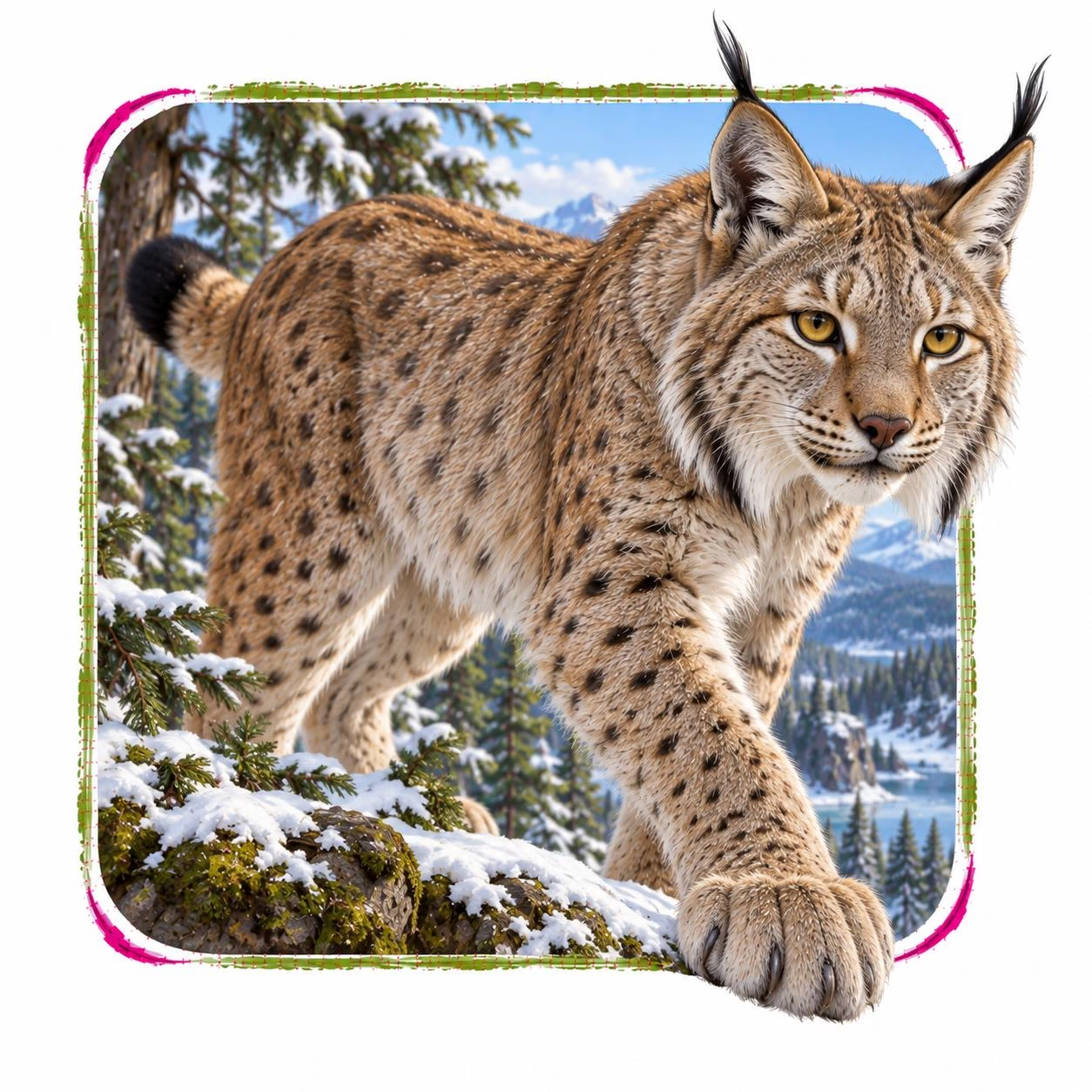
Eurasian Lynx in its natural Boreal forest, temperate and mixed woodland, mountain forest, rocky slopes, forest-steppe, scrub, and snowy landscapes across Europe and northern, central, and eastern Asia habitat