
European Badger Facts for Kids
The European badger, Meles meles, is a sturdy black, white, and gray member of the weasel family. It lives across much of Europe and into western Asia in woodland, farmland, grassland, scrub, and even some suburbs. European badgers are powerful diggers that shelter in underground tunnel systems called setts. They emerge mainly after dark to search for earthworms, insects, fruit, roots, small animals, and other seasonal foods.
Quick European Badger Facts
- Animal Type: Mammal
- Group: Mustelid in the weasel family, Mustelidae
- Known For: Black-and-white facial stripes, powerful digging claws, underground setts, scent latrines, and delayed implantation
- Habitat: Woodland, farmland, hedgerows, grassland, scrub, parks, and suburban edges
- Diet: Earthworms, insects, fruit, roots, bulbs, grains, eggs, carrion, and small animals
What You’ll Learn
Discover 10 sturdy european badger facts for kids about digging, striped faces, underground homes, diet, and woodland life, with a quiz, glossary, and activity
These facts are explained simply for kids, parents, teachers, and curious little fact-finders.

10 Fun European Badger Facts for Kids
1. Its Face Carries Bold Warning Stripes
A white head crossed by two black stripes makes the European badger easy to recognize. The pattern may help individuals identify one another and can also warn predators that the animal is strong and well defended.
Kid Decode: The face wears two black racing stripes that double as a family badge and warning sign.
2. Front Claws Are Built for Digging
The forefeet carry long curved claws and powerful muscles. Badgers use them to excavate soil, open insect nests, uncover roots, and enlarge their underground homes.
Kid Decode: Each front paw combines a shovel, rake, and underground construction tool.
3. A Sett Can Last for Generations
Large main setts may contain many entrances, tunnels, ventilation routes, sleeping chambers, and bedding piles. Badgers repair and expand suitable systems, so some setts remain occupied for decades or even centuries.
Kid Decode: One underground home can outlive many badger families and several human lifetimes.
4. Social Life Changes With Food Supply
In food-rich regions, several adults may share a territory and main sett as a social group or clan. Elsewhere, badgers live alone or in much smaller groups, so one British-style clan does not describe every population.
Kid Decode: The same species can run a crowded underground village or a much quieter household.
5. Latrines Mark Important Places
Badgers dig shallow pits for dung near setts, paths, feeding areas, and territory boundaries. Smells from dung and scent glands communicate identity, group membership, reproductive condition, and recent activity.
Kid Decode: A row of tiny toilet pits becomes a scented noticeboard along the woodland border.
6. Earthworms Can Dominate the Menu
Where damp soil provides many earthworms, badgers may eat hundreds in one night. In dry seasons or other habitats they switch toward beetles, fruit, grain, roots, carrion, eggs, and small vertebrates.
Kid Decode: The night menu follows the weather, with worms starring after rain and fruit taking later shifts.
7. Most Activity Begins After Sunset
European badgers usually rest underground by day and emerge around dusk. Their schedule shifts with season, disturbance, temperature, moonlight, food, and human activity.
Kid Decode: The sett door opens when daylight fades and the woodland floor begins its night shift.
8. They Do Not Truly Hibernate
In cold regions badgers spend longer underground and may enter short periods of torpor, using stored body fat while activity and metabolism fall. They can still wake and emerge during mild winter weather.
Kid Decode: Winter turns the badger’s calendar sleepy, but it never presses a season-long off switch.
9. Mating and Birth Are Separated by a Pause
Badgers may mate during many months of the year. After fertilization, embryos can remain unattached before implantation, synchronizing most births for late winter or early spring.
Kid Decode: The pregnancy clock pauses near the beginning so cubs arrive when spring is approaching.
10. Cubs Begin Life in a Bedding-Lined Chamber
A female, called a sow, usually gives birth underground to a small litter. Cubs are pale and helpless at first, develop facial stripes, begin exploring outside in spring, and remain dependent for months.
Kid Decode: The stripe-faced digger begins as a tiny pale cub tucked inside a grass-lined room.
The Weirdest European Badger Fact
A female may mate months before pregnancy truly begins because the tiny embryo pauses development and implants later, helping cubs arrive at a favorable time.
Try This European Badger Activity
European Badger Sett-and-Night Activity
Draw a European badger emerging from woodland at dusk. Add a white head with bold black stripes, gray back, black belly and legs, long front claws, a cutaway sett with entrances and bedding chambers, earthworms and fruit, a latrine near a boundary, scent rubbing, a winter torpor panel, and a sow with striped cubs.
Quick European Badger Quiz
- Which family contains the European badger? Answer: Mustelidae, the weasel family.
- What is a badger’s underground home called? Answer: A sett.
- Which food is especially important in many regions? Answer: Earthworms.
- What are badger toilet sites called? Answer: Latrines.
- What is delayed implantation? Answer: A pause before an embryo attaches and continues developing.
Mini Glossary
- Mustelid: A member of the weasel family, including badgers, otters, martens, and ferrets.
- Sett: An underground badger tunnel system with entrances, passages, and chambers.
- Latrine: A repeatedly used toilet site that can also carry scent information.
- Delayed Implantation: A reproductive pause before an embryo attaches to the uterus and grows.
- Torpor: A temporary reduction in activity and body processes during cold or food shortage.
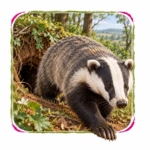
 Muskrat Facts for Kids
 Weasel Facts for Kids
 European Goldfinch Facts for Kids
 Sarcosuchus Facts for Kids
More Animal Facts for Kids
Visit the full animal facts library or explore a focused animal group.
More Extinct Animal Facts for Kids
Discover dinosaurs, Ice Age giants, prehistoric sea creatures, recently extinct species, and other animals from the past.
Fact check note: Fact checked with the Mammal Diversity Database’s Meles meles taxonomy, Badger Trust species biology, peer-reviewed studies of European badger social systems, sett use, latrines, diet, delayed implantation, reproduction, movement, torpor, and regional conservation.

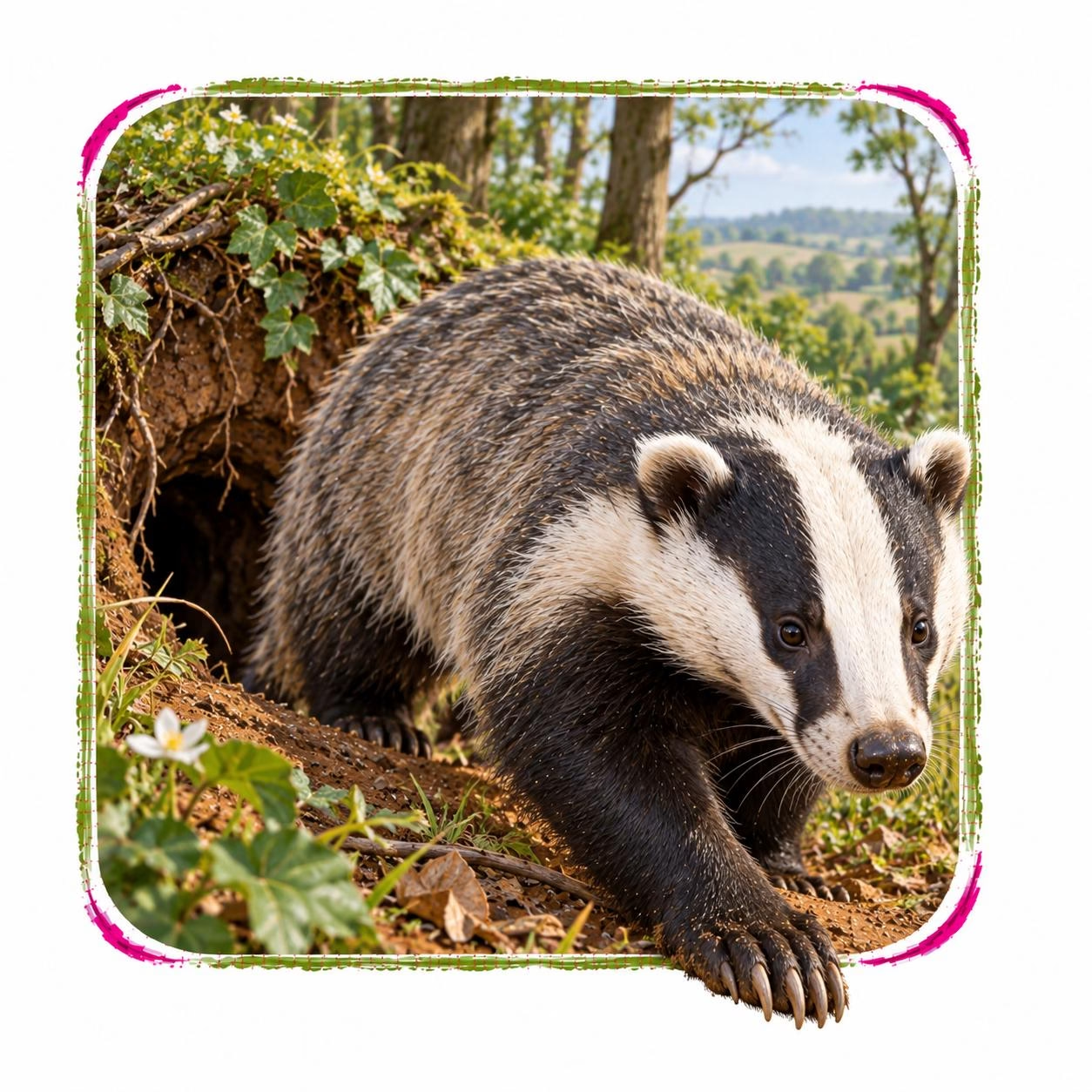
European Badger in its natural Deciduous and mixed woodland, farmland, hedgerows, grassland, scrub, parks, gardens, and suburban edges across much of Europe and western Asia habitat