
European Beaver Facts for Kids
The European beaver, Castor fiber, is a large semi-aquatic rodent native to Europe and parts of Asia. It has dense waterproof fur, bright orange incisors, webbed hind feet, small dexterous front paws, and a broad scaly tail. European beavers live along rivers, streams, lakes, canals, and wetlands, where they feed entirely on plants. By cutting vegetation, digging canals, building lodges, and sometimes constructing dams, they can transform waterways into complex wetland habitat.
Quick European Beaver Facts
- Animal Type: Mammal
- Group: Beaver in the rodent family Castoridae
- Known For: Orange iron-rich teeth, flat tails, webbed hind feet, lodges, dams, scent mounds, and wetland engineering
- Habitat: Rivers, streams, lakes, canals, ponds, floodplains, marshes, and wooded wetlands
- Diet: Bark, twigs, leaves, shoots, grasses, herbs, roots, rhizomes, and aquatic plants
What You’ll Learn
Explore 10 clever european beaver facts for kids about dams, lodges, giant teeth, swimming, and wetland engineering, plus a quiz, glossary, and activity
Easy explanations make them fun for children, families, teachers, and young nature explorers.

10 Fun European Beaver Facts for Kids
1. It Is Europe’s Largest Native Rodent
European beavers are among the world’s largest rodents, smaller only than capybaras on average. Adults have heavy bodies, short limbs, dense fur, and strong skulls built around lifelong gnawing teeth.
Kid Decode: The continent’s biggest rodent arrives with the body of a furry barrel and the tools of a lumber crew.
2. Orange Teeth Contain Iron
The front surface of each incisor contains iron-rich enamel that is harder and more resistant to acid than the paler material behind it. Uneven wear keeps the cutting edge sharp.
Kid Decode: The orange color is not dirt; it is metal-strengthened tooth armor.
3. Its Lips Close Behind the Incisors
Skin folds seal the mouth behind the protruding front teeth. This allows a beaver to cut branches underwater while keeping wood chips and most water away from the throat.
Kid Decode: The teeth work outside while the rest of the mouth closes its waterproof door.
4. Hind Feet Become Swimming Paddles
Large webbed hind feet provide propulsion, while the front paws hold food and dig. The tail helps steer, stores fat, loses heat, supports the body on land, and slaps water as an alarm.
Kid Decode: The rear feet supply the engine while the tail handles steering, balance, storage, and warnings.
5. Not Every Beaver Builds a Dam
Where deep stable water already protects an underwater entrance, beavers may live in bank burrows or lodges without damming anything. Dams are most useful on shallow or fluctuating streams.
Kid Decode: The famous dam is a solution to a water problem, not a compulsory beaver homework assignment.
6. Lodges Have Underwater Entrances
A lodge or bank burrow contains a dry resting chamber above water, reached through submerged entrances. Branches, mud, roots, stones, and vegetation strengthen and insulate the structure.
Kid Decode: The front door sits underwater while the bedroom remains dry above the waterline.
7. Their Menu Is Entirely Plant Based
Beavers eat willow and aspen bark, twigs, leaves, grasses, sedges, herbs, roots, rhizomes, and water plants. They do not normally eat fish despite sharing ponds with them.
Kid Decode: The wetland engineer stocks a woody salad bar and leaves the fish alone.
8. Winter Food Can Be Stored Underwater
In cold regions, families anchor piles of branches near the lodge before ice forms. They swim beneath the ice to collect bark and twigs without making long trips onto land.
Kid Decode: A submerged branch pile becomes a refrigerator that stays reachable beneath winter ice.
9. Families Share One Territory
A typical family contains an adult pair, the current year’s kits, and sometimes young from the previous year. They maintain structures, groom one another, and mark boundaries with scent mounds containing castoreum.
Kid Decode: The riverside household combines parents, kits, teenagers, building repairs, and scented boundary signs.
10. Their Return Rebuilds Wetlands
Dams and canals can slow water, raise local water tables, trap sediment, create ponds, and add deadwood. These changes often benefit amphibians, fish, insects, birds, and plants, though flooding and tree cutting can also create human conflicts.
Kid Decode: One beaver family can redraw a stream into a patchwork of ponds, channels, mud, and new wildlife homes.
The Weirdest European Beaver Fact
A beaver can close its lips behind its front teeth, allowing the orange incisors to keep gnawing wood underwater without flooding the mouth.
Try This European Beaver Activity
European Beaver Wetland-Engineer Activity
Draw a European beaver beside a woodland stream. Add orange incisors, lips closing behind the teeth, small front paws, webbed hind feet, a flat scaly tail, transparent eyelid, a lodge or bank burrow with an underwater entrance, a dam only on a narrow shallow channel, a food cache, a scent mound, parents with kits, and a before-and-after wetland habitat panel.
Quick European Beaver Quiz
- What gives a beaver’s incisors their orange color? Answer: Iron-rich enamel.
- Which feet are webbed? Answer: The hind feet.
- Does every European beaver build a dam? Answer: No.
- What is a beaver family home called? Answer: A lodge or bank burrow.
- Why are beavers called ecosystem engineers? Answer: Their building and feeding change water, plants, and habitat for many species.
Mini Glossary
- Rodent: A mammal with continuously growing front incisors adapted for gnawing.
- Lodge: A beaver shelter built from branches, mud, and plants, usually with an underwater entrance.
- Castoreum: A strong-smelling substance used in beaver scent communication.
- Ecosystem Engineer: An organism that physically changes habitat and resource availability for other species.
- Reintroduction: The deliberate return of a species to part of its former range.
 Lionfish Facts for Kids
 Chickadee Facts for Kids
 Pika Facts for Kids
 Megalania Facts for Kids
More Animal Facts for Kids
Visit the full animal facts library or explore a focused animal group.
More Extinct Animal Facts for Kids
Discover dinosaurs, Ice Age giants, prehistoric sea creatures, recently extinct species, and other animals from the past.
Fact check note: Fact checked with the Mammal Diversity Database’s Castor fiber taxonomy, the Mammal Society’s Eurasian Beaver account, European conservation and reintroduction resources, and peer-reviewed research on beaver teeth, underwater feeding, lodges, dam building, scent communication, family groups, wetland engineering, and population recovery.

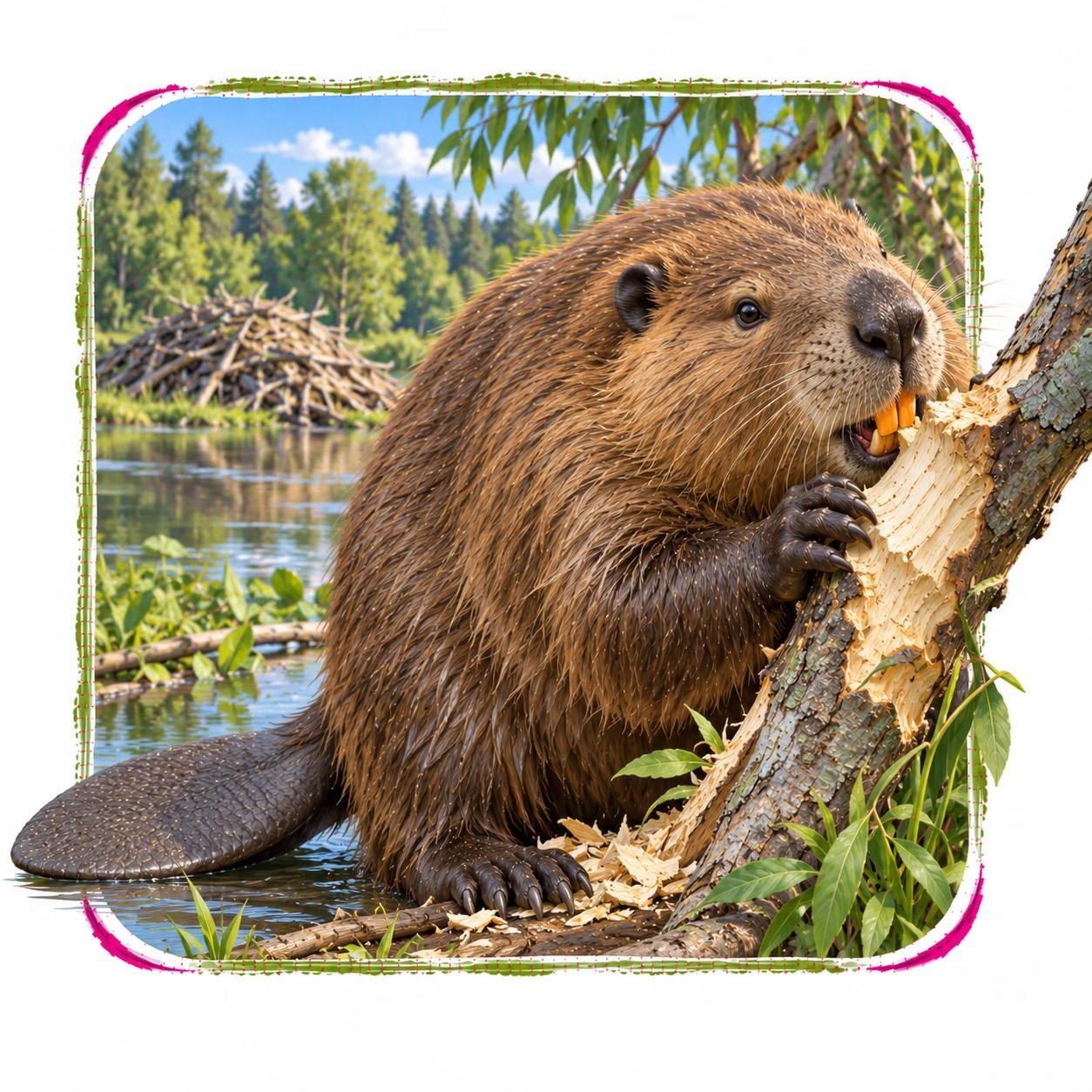
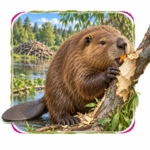
European Beaver in its natural Rivers, streams, lakes, canals, floodplains, marshes, ponds, riparian woodland, and other permanent freshwater habitats across Europe and parts of Asia habitat