
European Bison Facts for Kids
The European bison, Bison bonasus, is also called the wisent. It is Europe’s heaviest wild land mammal and the closest living relative of the American bison. European bison have high shoulders, long legs, a shaggy forequarters and beard, slimmer hindquarters, and short curved horns carried by both sexes. They graze on grasses and herbs and browse leaves, shoots, twigs, and bark. Every living animal descends from a tiny captive population used to restore the species after extinction in the wild.
Quick European Bison Facts
- Animal Type: Mammal
- Group: Wild cattle relative in the family Bovidae
- Known For: Europe’s largest wild land-animal body, permanent horns, wisent name, forest and grassland feeding, restored herds, and a severe genetic bottleneck
- Habitat: Mixed forest, woodland clearings, grassland, meadows, river valleys, and mountain foothills
- Diet: Grasses, sedges, herbs, leaves, shoots, twigs, bark, and occasional fungi
What You’ll Learn
Learn 10 mighty european bison facts for kids about huge bodies, shaggy coats, herd life, grazing, and European forests, with a quiz, glossary, and activity
These simple facts are written for kids, parents, teachers, and curious young minds.
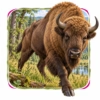
10 Fun European Bison Facts for Kids
1. Wisent Is Its Traditional European Name
Wisent is widely used for Bison bonasus in Europe. The animal is a bison, not one of the true buffalo species from Africa or Asia, and it should not be confused with the extinct aurochs.
Kid Decode: The forest giant answers to wisent while avoiding both the buffalo and aurochs name tags.
2. It Is Europe’s Heaviest Wild Land Mammal
Large bulls can weigh around 800 kilograms or more, though modern size varies with population and condition. Cows are smaller, and both sexes stand tall on longer legs than American bison.
Kid Decode: The continent’s heavyweight champion carries its bulk surprisingly high above the forest floor.
3. It Differs From the American Bison
European bison are generally taller and more long-legged, with less massive front quarters, a longer tail, and a less woolly coat. American bison look more front-heavy and carry a larger shaggy cape.
Kid Decode: One cousin resembles a forest athlete while the other resembles a prairie battering ram.
4. Both Sexes Keep Permanent Horns
Bulls and cows grow short curved horns with a bony core and keratin covering. Unlike deer antlers, bison horns are not shed and regrown each year.
Kid Decode: The horns are lifelong equipment rather than an annual bone crown.
5. They Graze and Browse
European bison eat grasses, sedges, and herbs in open areas and also browse leaves, shoots, twigs, bark, and occasional fungi. Access to both woodland and productive openings creates a richer menu.
Kid Decode: Breakfast may be meadow grass while dinner comes directly from a leafy branch.
6. Female Herds Change Membership
Cows, calves, and young animals form mixed groups whose size and membership change. Adult bulls often travel alone or in small male groups outside the breeding season.
Kid Decode: The herd behaves like a shifting forest gathering rather than a permanently fixed family.
7. Calves Begin Reddish Brown
A cow usually gives birth to one calf after a pregnancy of about nine months. The newborn’s warmer reddish coat darkens as it grows, and the mother guards and nurses it within the herd.
Kid Decode: The future dark giant enters the world wearing a small rusty-colored coat.
8. Bulls Compete During the Rut
In late summer and autumn, bulls display, wallow, scent mark, guard receptive cows, and sometimes clash horn to horn. Most contests end through posture and pushing rather than severe injury.
Kid Decode: The forest floor becomes an arena of dust, scent, rumbling, and careful horned strength.
9. The Species Vanished From the Wild
The last wild lowland European bison was killed in Białowieża Forest in 1921, and the last original wild Caucasian animal died in 1927. Only captive animals remained.
Kid Decode: For a time, Europe’s largest land mammal survived only behind human-built fences.
10. Twelve Founders Rebuilt the Population
Although 54 animals were recorded in captivity in the 1920s, only 12 contributed genes to the living population. Coordinated breeding and reintroductions rebuilt free-ranging herds, but low genetic diversity remains a major concern.
Kid Decode: Thousands of modern wisent stand on a family tree with only twelve roots.
The Weirdest European Bison Fact
Every European bison alive today descends genetically from only 12 founder animals that survived in captivity after the species disappeared from the wild.
Try This European Bison Activity
European Bison Comeback Drawing Activity
Draw a European bison herd where forest opens into meadow. Add a huge bull, smaller cows, permanent curved horns on both sexes, long legs, a high shoulder hump, shaggy beard, grazing and browsing, a reddish newborn calf, a rut wallow, bark-stripped branches, a 1927 extinction-in-the-wild timeline, 12 founder silhouettes, and reintroduction arrows into modern European landscapes.
Quick European Bison Quiz
- What other name is used for the European bison? Answer: Wisent.
- Is it a true buffalo? Answer: No, it is a bison and wild-cattle relative.
- Which sexes have horns? Answer: Both males and females.
- When did the last original wild European bison disappear? Answer: In 1927.
- How many founders contributed to today’s population? Answer: Only 12.
Mini Glossary
- Wisent: Another common name for the European bison.
- Bovid: A member of the family containing cattle, bison, buffalo, antelopes, sheep, and goats.
- Ruminant: A plant eater that regurgitates and rechews partly digested food.
- Genetic Bottleneck: A sharp population reduction that leaves little genetic diversity.
- Rewilding: Restoring wildlife and natural ecological processes to landscapes.
 Colossal Squid Facts for Kids
 Adélie Penguin Facts for Kids
 Crab Facts for Kids
 Pterodactylus Facts for Kids
More Animal Facts for Kids
Visit the full animal facts library or explore a focused animal group.
More Extinct Animal Facts for Kids
Discover dinosaurs, Ice Age giants, prehistoric sea creatures, recently extinct species, and other animals from the past.
Fact check note: Fact checked with the IUCN Red List’s European Bison assessment and 2020 status update, the IUCN SSC Bison Specialist Group, European bison genetics and genealogy research, and conservation sources documenting extinction in the wild, captive founders, reintroduction, feeding ecology, social structure, and current recovery.

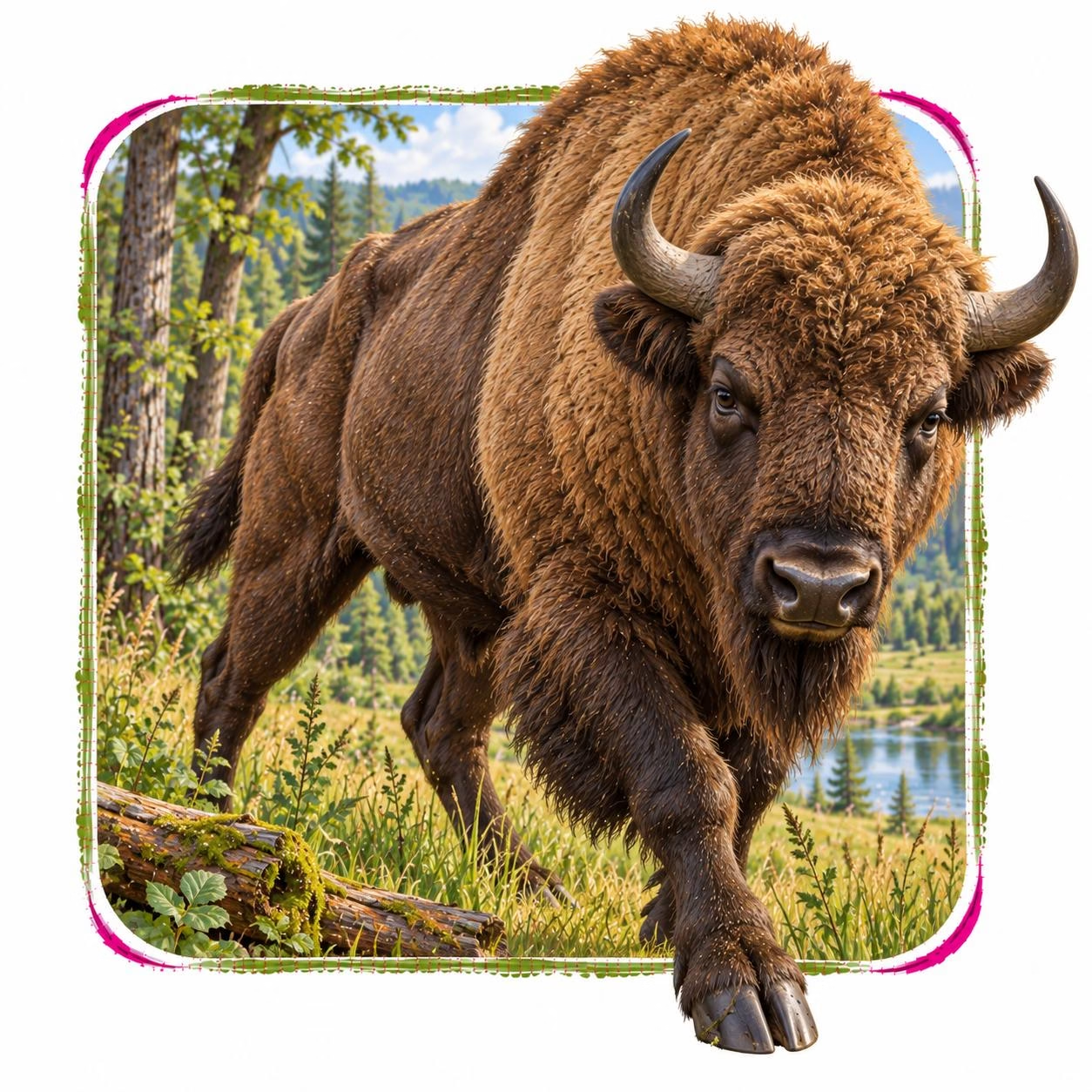
European Bison in its natural Mixed and deciduous forest, woodland clearings, meadows, grasslands, river valleys, mountain foothills, and rewilded landscapes across Central, Eastern, and parts of Western Europe habitat