
European Goldfinch Facts for Kids
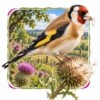
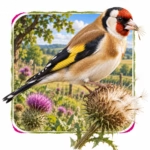
The European Goldfinch, Carduelis carduelis, is a small colorful finch native to Europe, North Africa, and western and central Asia. It has a bright red face, black-and-white head, warm buff back, black wings crossed by bold yellow bars, and a musical twittering call. European Goldfinches use fine pointed bills to pull seeds from thistles, teasels, dandelions, and other plants. They live in open woodland, farmland, orchards, parks, gardens, hedgerows, and weedy fields.
Quick European Goldfinch Facts
- Animal Type: Bird
- Group: Finch in the family Fringillidae
- Known For: Red face, yellow wing bars, fine seed-picking bill, tinkling song, acrobatic feeding, and winter flocks
- Habitat: Open woodland, farms, orchards, gardens, parks, hedgerows, grassland, and weedy fields
- Diet: Mainly small seeds, plus buds and some insects or other invertebrates, especially for growing chicks
What You’ll Learn
Discover 10 colorful european goldfinch facts for kids about red faces, yellow wings, songs, seeds, and garden life, plus a quiz, glossary, and activity
Clear explanations make them ideal for children, families, teachers, and little fact-hunters.
10 Fun European Goldfinch Facts for Kids
1. The Red Face Belongs to Adults
Adult males and females wear a red facial mask, although males often show slightly more red behind the eye. Juveniles begin with streaked brown heads and gain the famous mask after molting.
Kid Decode: The young bird starts in plain clothes and earns its red superhero mask later.
2. Yellow Wing Bars Flash in Flight
Broad yellow bands cross otherwise black wings and remain visible whether the bird is perched or flying. White spots and tips create additional patterns against the black feathers.
Kid Decode: Two yellow lightning stripes blink every time the dark wings open.
3. A Fine Bill Reaches Tiny Seeds
The slender pointed bill can reach between spines and scales to extract small seeds from thistles, teasels, dandelions, burdocks, and other plants. Males may reach slightly deeper seeds because their bills average longer.
Kid Decode: The narrow bill works like tweezers reaching into a prickly seed vault.
4. They Can Feed Upside Down
Strong feet and agile balance allow goldfinches to hang at steep angles or upside down from swaying stems. This gives access to seed heads that heavier or less flexible birds cannot use easily.
Kid Decode: The lunchtime perch becomes a tiny trapeze with thistle seeds as the prize.
5. Flight Looks Bouncy
European Goldfinches alternate quick wingbeats with short glides, producing an undulating or wave-like path. Flocks often call continuously while traveling.
Kid Decode: The bird draws a string of shallow hills and valleys across the sky.
6. Adults Feed Chicks Soft Seeds and Invertebrates
Adults eat mostly seeds, but nestlings receive soft unripe seeds and some insects or other tiny invertebrates that provide protein. The exact balance varies with place and food supply.
Kid Decode: The nursery menu softens the seeds and adds a few protein snacks for fast growth.
7. Females Build Neat Cup Nests
The female usually constructs a compact cup high in a tree or shrub fork using grass, moss, roots, wool, plant down, and spider silk. The outside may be decorated with lichen for camouflage.
Kid Decode: The nest is a tiny woven bowl stitched together with plant fibre and spider thread.
8. Young Birds Leave Before Looking Like Adults
Chicks hatch helpless and are fed by both parents. When they fledge, they can fly but still lack the adult red face and may continue receiving food while learning to feed independently.
Kid Decode: The first flight happens before the famous face paint arrives.
9. Winter Brings Sociable Flocks
Outside the breeding season, goldfinches gather in flocks that search fields, roadsides, gardens, and feeders for seeds. Groups may mix with siskins, redpolls, and other finches.
Kid Decode: The quiet garden seed patch can suddenly become a twittering yellow-winged crowd.
10. Some Stay While Others Migrate
Southern populations may remain near breeding areas, while many northern birds move south or west for winter. British birds, for example, may travel toward France, Spain, and Portugal.
Kid Decode: One goldfinch keeps its home address while another follows seeds toward a warmer winter.
The Weirdest European Goldfinch Fact
The scientific name Carduelis comes from a Latin word linked with thistles, the prickly plants whose tiny seeds the bird is specially equipped to reach.
Try This European Goldfinch Activity
European Goldfinch Seed-Garden Activity
Draw a European Goldfinch balancing on a thistle. Add a red face, black-and-white head, buff back, black wings with bright yellow bars, a forked black tail with white markings, a fine pointed bill pulling seeds, an upside-down feeding pose, a bouncing flight path, a neat cup nest, plain-headed juveniles, and a winter flock at teasels and a bird feeder.
Quick European Goldfinch Quiz
- What color is the adult goldfinch’s face? Answer: Bright red.
- What bold color crosses the black wings? Answer: Yellow.
- Which prickly plants provide favorite seeds? Answer: Thistles and teasels.
- Do young birds begin with a red face? Answer: No.
- Why do some goldfinches travel south in winter? Answer: To find milder weather and food.
Mini Glossary
- Finch: A small seed-eating songbird with a compact body and specialized bill.
- Granivore: An animal that eats mainly seeds.
- Fledge: To grow flight feathers and leave the nest.
- Partial Migrant: A species in which some populations or individuals migrate while others remain resident.
- Introduced Species: A species living outside its native range because people moved it there.
 Indian Cobra Facts for Kids
 Archerfish Facts for Kids
 Toucan Facts for Kids
 Elasmosaurus Facts for Kids
More Animal Facts for Kids
Visit the full animal facts library or explore a focused animal group.
More Extinct Animal Facts for Kids
Discover dinosaurs, Ice Age giants, prehistoric sea creatures, recently extinct species, and other animals from the past.
Fact check note: Fact checked with BirdLife International’s European Goldfinch species factsheet, RSPB and Woodland Trust identification and feeding accounts, Cornell Lab of Ornithology’s European Goldfinch life-history resources, and ornithological studies of seed selection, breeding, migration, flocking, introduced populations, and plumage.

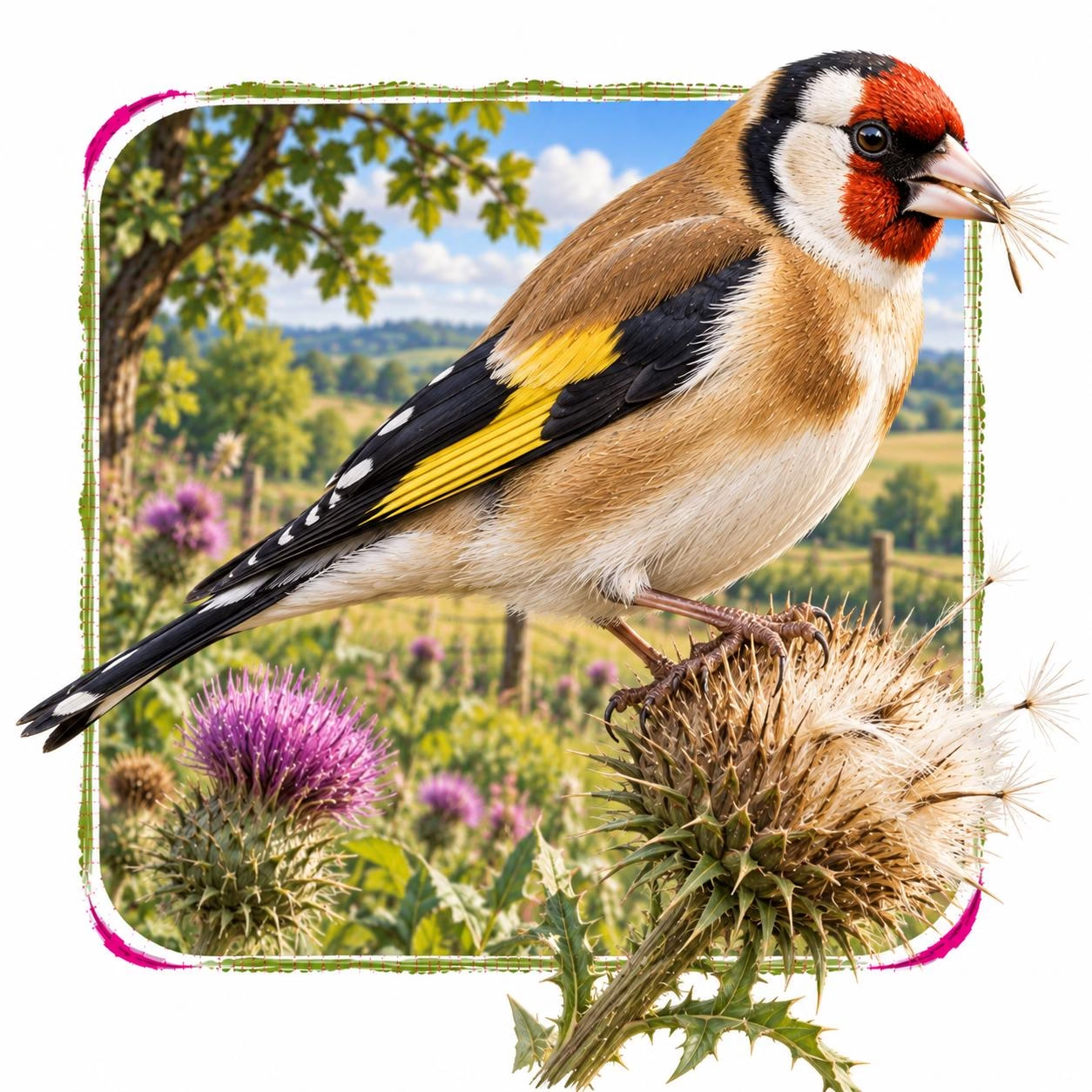
European Goldfinch in its natural Open woodland, forest edges, farmland, orchards, hedgerows, gardens, parks, grasslands, roadsides, and weedy fields across Europe, North Africa, western and central Asia, and introduced ranges habitat