
European Hornet Facts for Kids
The European Hornet, Vespa crabro, is a large social wasp native to Europe and parts of Asia and introduced to eastern North America. It has a reddish-brown head and thorax, yellow-and-brown patterned abdomen, powerful jaws, and two pairs of clear wings. Colonies live for one season inside hollow trees, wall spaces, sheds, bird boxes, and other sheltered cavities. Workers hunt insects for larvae while adults drink sap, nectar, fruit juices, and sugary larval secretions.
Quick European Hornet Facts
- Animal Type: Insect
- Group: True hornet in the genus Vespa and family Vespidae
- Known For: Large size, annual paper nests, social colonies, insect hunting, night flight, sap feeding, and defensive stings
- Habitat: Woodland, forest edges, orchards, parks, farms, gardens, villages, and buildings with sheltered cavities
- Diet: Adults drink sugary liquids; larvae receive chewed insects and other animal prey
What You’ll Learn
Explore 10 fascinating european hornet facts for kids about large nests, colonies, hunting insects, warning behavior, and stings, with a quiz, glossary, activity, and sensible safety tips
These easy facts are made for kids, parents, teachers, and curious young learners.
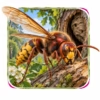
10 Fun European Hornet Facts for Kids
1. It Is a True Hornet
European Hornets belong to Vespa, the genus of true hornets. They are much larger than many common yellowjackets but smaller than the largest Asian giant-hornet species.
Kid Decode: The insect earns the hornet name scientifically, not merely because it looks like an oversized wasp.
2. Queens Start Colonies Alone
A mated queen emerges from winter shelter in spring, finds a cavity, builds the first paper cells, lays eggs, and feeds the first larvae. Her daughters later take over most foraging and construction.
Kid Decode: One queen begins as architect, hunter, nurse, and egg layer before the workforce arrives.
3. The Nest Is Made From Wood Paper
Workers scrape weathered wood and bark with their jaws, mix the fibres with saliva, and spread the pulp into combs and protective envelopes. Different wood sources can create streaked paper patterns.
Kid Decode: The colony turns old wood into layered cardboard using jaws instead of factory machines.
4. Workers Are Female
Most active colony members are non-reproductive females. They build, guard, clean, cool, feed larvae, and gather food, while the queen becomes increasingly focused on laying eggs.
Kid Decode: The flying workforce is an army of sisters running nearly every department.
5. Females Can Sting More Than Once
Queens and workers possess smooth venomous stingers modified from egg-laying structures and can sting repeatedly. Males have no stinger because they lack that female reproductive structure.
Kid Decode: The colony’s sons carry antennae and wings but no venom needle.
6. Larvae Receive Chewed Insects
Workers capture flies, moths, wasps, bees, beetles, grasshoppers, and other insects. They remove less useful parts and carry a soft protein-rich prey ball back to the brood.
Kid Decode: A captured insect becomes a tiny meatball delivery for the white grubs in the nest.
7. Adults Prefer Sugary Fuel
Adult hornets drink tree sap, nectar, ripe or fallen fruit juice, and other carbohydrates that power flight. They cannot swallow the same solid prey chunks fed to larvae.
Kid Decode: The children eat protein while the flying adults run mainly on liquid sugar.
8. Larvae Feed the Workers Back
Hungry larvae release sweet amino-acid-rich droplets that workers collect. This two-way food exchange links insect hunting by adults with energy returned from the brood.
Kid Decode: The nursery pays its food bill with sugary droplets handed back to the workers.
9. They Can Fly at Night
European Hornets remain active in dim light and may hunt or travel after sunset. Artificial lights can attract and confuse them, sometimes bringing individuals to lit windows.
Kid Decode: The giant wasp carries a night-flying license that most social wasps rarely use.
10. Only New Queens Usually Survive Winter
By late summer the colony produces males and new queens. After mating, young queens shelter alone through winter, while the old queen, workers, males, and nest die before the next spring.
Kid Decode: The entire buzzing city closes for winter, leaving only future queens asleep in hidden shelters.
The Weirdest European Hornet Fact
European Hornet workers can keep flying after sunset and are strongly attracted to artificial lights, an unusual habit among large social wasps.
Try This European Hornet Activity
European Hornet Colony-Life Activity
Draw a cutaway hornet nest inside a hollow tree. Add a large queen, smaller female workers, winged males, gray-brown paper combs, white larvae in open cells, workers chewing wood fibres, an insect-prey ball, adults drinking tree sap and fallen-fruit juice, larval sugar exchange, night flight around a distant lamp, new queens overwintering, and a safety boundary around the nest.
Quick European Hornet Quiz
- What material forms the nest? Answer: Paper made from chewed wood fibres and saliva.
- Which colony members can sting? Answer: Females, including queens and workers.
- Can males sting? Answer: No.
- What do workers bring to the larvae? Answer: Chewed insects and other animal prey.
- Who usually survives winter? Answer: Newly mated queens.
Mini Glossary
- Vespid: A member of the wasp family Vespidae.
- Eusocial: Living in a colony with cooperative care, overlapping generations, and reproductive division of labor.
- Gynes: New reproductive females that may become queens.
- Trophallaxis: The transfer or exchange of liquid food between colony members.
- Annual Colony: A colony that begins, grows, reproduces, and ends within one year.
 Egret Facts for Kids
 Blue Jay Facts for Kids
 Sea Anemone Facts for Kids
 Parasaurolophus Facts for Kids
More Animal Facts for Kids
Visit the full animal facts library or explore a focused animal group.
More Extinct Animal Facts for Kids
Discover dinosaurs, Ice Age giants, prehistoric sea creatures, recently extinct species, and other animals from the past.
Fact check note: Fact checked with EPPO and UniProt taxonomy for Vespa crabro, Penn State Extension’s European Hornet account, University of Massachusetts Extension resources, and peer-reviewed studies of nest biology, caste roles, prey processing, adult sugar feeding, larval trophallaxis, night activity, venom, and annual colony cycles.

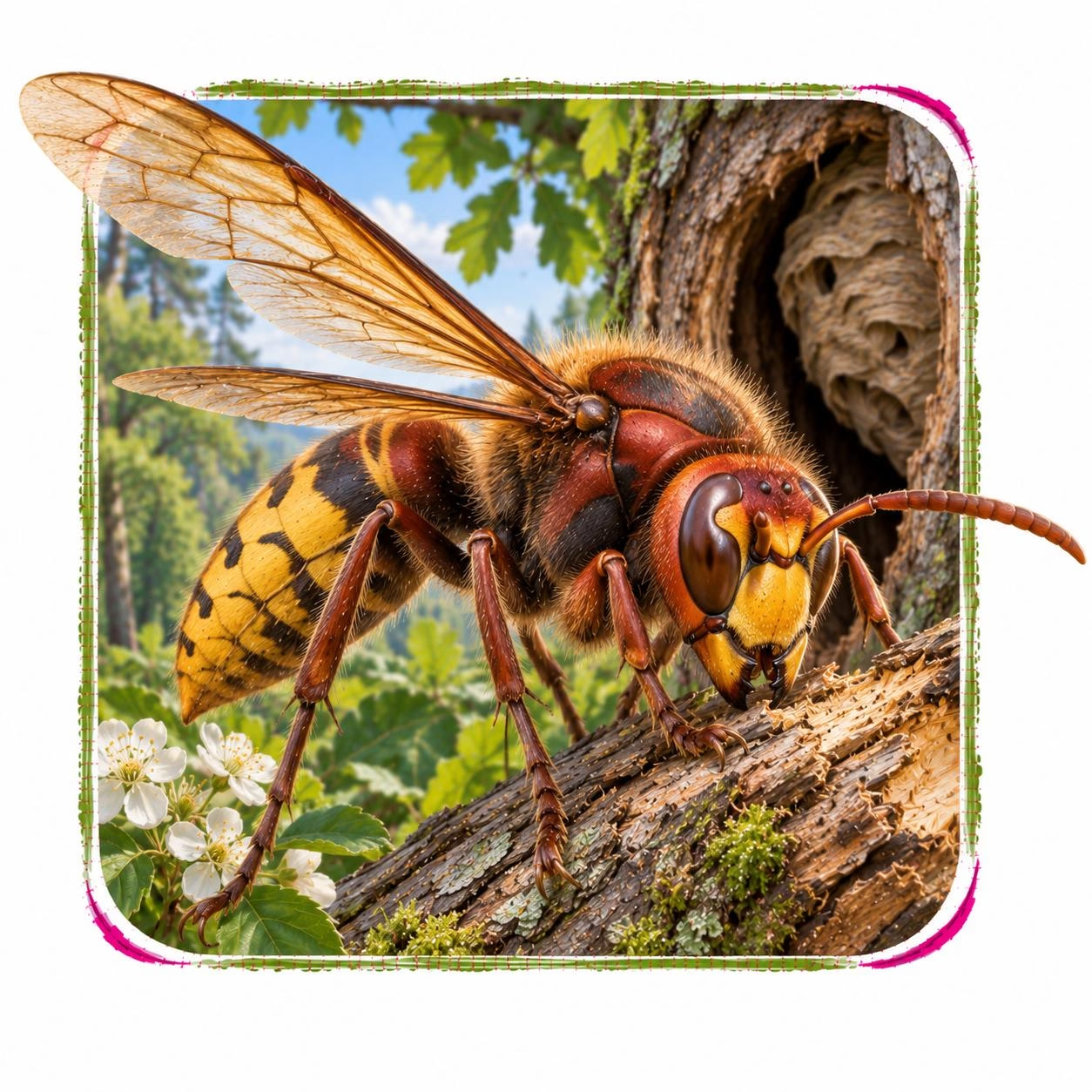
European Hornet in its natural Woodland, forest edges, orchards, parks, gardens, farms, villages, and buildings with hollow trees, wall voids, sheds, bird boxes, or other sheltered nest cavities across Europe and parts of Asia, with introduced populations in North America habitat