
European Mink Facts for Kids
The European Mink, Mustela lutreola, is a small semi-aquatic member of the weasel family and one of Europe’s most endangered mammals. It has dark chocolate-brown fur, a slender body, short legs, a relatively short tail, and distinctive white fur on both the upper and lower lips. European Mink live close to rivers, streams, marshes, wetlands, and densely vegetated banks. They hunt frogs, fish, crayfish, insects, small mammals, birds, and other waterside prey.
Quick European Mink Facts
- Animal Type: Mammal
- Group: Mustelid in the weasel family, Mustelidae
- Known For: White upper and lower lips, dense water-resistant fur, riverside hunting, solitary territories, and Critically Endangered status
- Habitat: Forest streams, rivers, marshes, reedbeds, floodplains, oxbow lakes, and densely vegetated banks
- Diet: Frogs, fish, crayfish, aquatic insects, voles, mice, birds, eggs, and other small animals
What You’ll Learn
Learn 10 important european mink facts for kids about swimming, thick fur, wetland habitats, hunting, and conservation, plus a quiz, glossary, and activity
Simple explanations make them fun for children, families, teachers, and young wildlife fans.
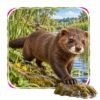
10 Fun European Mink Facts for Kids
1. It Is Not Closely Related to the American Mink
European and American Mink developed similar semi-aquatic bodies but sit on different branches of the mustelid family tree. European Mink are more closely related to polecats and Siberian weasels.
Kid Decode: Two animals borrowed the same river-hunter design without being close mink cousins.
2. White Lips Help With Identification
Most European Mink have white fur on both upper and lower lips, often extending onto the chin. American Mink usually lack the complete white upper-lip marking, though individual variation makes expert identification important.
Kid Decode: A white moustache and lower-lip patch provide a clue, not an unbreakable name tag.
3. Dense Fur Traps Warm Air
Short glossy guard hairs cover thick underfur that traps insulating air and sheds water. This coat protects the small body during repeated trips through cold streams and marshes.
Kid Decode: The animal carries a fitted brown wetsuit made from two layers of fur.
4. Partly Webbed Feet Aid Swimming
Five-toed feet have some webbing that helps push through water while remaining useful for running, climbing banks, and handling prey. The body is less specialized for swimming than an otter’s.
Kid Decode: The feet compromise between paddles for the stream and paws for the muddy bank.
5. It Stays Close to Water
European Mink depend strongly on rivers, streams, marshes, floodplains, reedbeds, and dense waterside vegetation. Individuals usually travel along narrow riparian corridors rather than ranging far across dry open land.
Kid Decode: The mink’s map is a winding blue ribbon bordered by roots, reeds, and hiding cover.
6. The Menu Follows the Wetland
Frogs, fish, crayfish, aquatic insects, voles, mice, birds, and eggs can all be eaten. Seasonal floods, freezing, prey abundance, and local habitat determine which foods dominate.
Kid Decode: One river bend serves frog legs, crayfish, fish, beetles, and the occasional vole.
7. Adults Usually Live Alone
Outside mating and family periods, European Mink maintain individual home ranges and communicate through scent. Their movements follow banks, islands, log piles, roots, and dense vegetation.
Kid Decode: The solitary hunter leaves invisible scented signposts along its private river route.
8. Dens Hide Inside Riverbanks
Resting and breeding shelters occur beneath roots, in hollow banks, log piles, abandoned burrows, reed beds, and other dry cavities close to water. One animal may use several shelters.
Kid Decode: The riverbank contains a secret chain of bedrooms rather than one permanent front door.
9. Kits Depend on Their Mother
Females give birth in spring or early summer to a litter of blind, helpless kits. The young drink milk, later sample solid prey, explore near the den, and learn to hunt before dispersing.
Kid Decode: The future swimmer begins as a tiny closed-eyed bundle in a dry chamber beside the water.
10. Several Threats Act Together
River destruction, wetland drainage, fragmentation, road deaths, trapping, disease, prey changes, and introduced American Mink all contribute to decline. Captive breeding, reintroduction, habitat restoration, and invasive-mink control are used in recovery work.
Kid Decode: Saving the species requires repairing an entire river puzzle, not solving one missing piece.
The Weirdest European Mink Fact
Despite sharing the name mink, the European Mink is evolutionarily closer to polecats and the Siberian weasel than it is to the American Mink.
Try This European Mink Activity
European Mink River-Corridor Activity
Draw a European Mink beside a forest stream. Add dark brown waterproof fur, white fur on both lips and the chin, small rounded ears, partly webbed feet, a shorter tail, swimming and diving, frogs and crayfish as prey, a root-lined bank den, scent marks, a mother with kits, an American Mink comparison, a broken river corridor, and conservation panels for habitat restoration, invasive-mink control, captive breeding, and reintroduction.
Quick European Mink Quiz
- What scientific name belongs to the European Mink? Answer: Mustela lutreola.
- Where is the white facial fur usually found? Answer: On both the upper and lower lips.
- What habitats does it need? Answer: Healthy rivers, streams, marshes, and densely vegetated banks.
- Which introduced species creates a major threat? Answer: The American Mink.
- What is its current global conservation category? Answer: Critically Endangered.
Mini Glossary
- Mustelid: A member of the weasel family, including mink, otters, badgers, martens, and polecats.
- Semi-Aquatic: Living and feeding both in water and on land.
- Riparian: Relating to the banks of a river or stream.
- Invasive Species: A non-native species that spreads and causes ecological harm.
- Captive Breeding: Managed reproduction in human care to support conservation and possible reintroduction.
 Dragonfly Facts for Kids
 Banteng Facts for Kids
 Goliath Beetle Facts for Kids
 Vegavis Facts for Kids
More Animal Facts for Kids
Visit the full animal facts library or explore a focused animal group.
More Extinct Animal Facts for Kids
Discover dinosaurs, Ice Age giants, prehistoric sea creatures, recently extinct species, and other animals from the past.
Fact check note: Fact checked with the IUCN Red List’s Mustela lutreola assessment, the Mammal Diversity Database’s European Mink taxonomy, the LIFE Vison conservation programme, and peer-reviewed reviews of distribution, habitat, diet, reproduction, American Mink interactions, disease, captive breeding, and reintroduction.

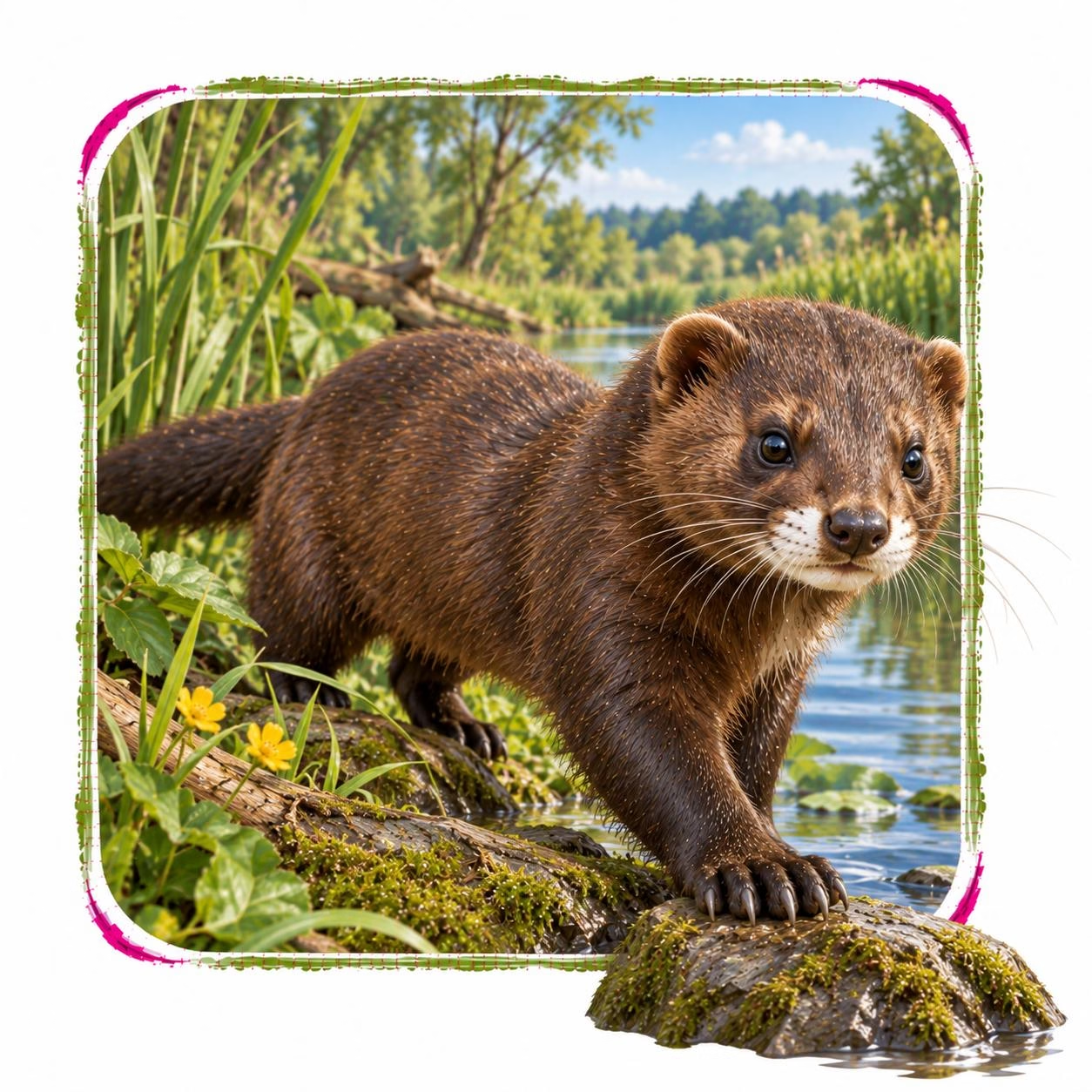
European Mink in its natural Forest streams, slow rivers, marshes, reedbeds, floodplains, oxbow lakes, river islands, and densely vegetated riparian banks in small fragmented parts of Europe habitat