
European Robin Facts for Kids
The European Robin, Erithacus rubecula, is a small songbird found across Europe, western Asia, and North Africa. Adults have an orange face and breast, brown upperparts, a pale belly, thin legs, and large dark eyes. European Robins live in woodland undergrowth, hedgerows, parks, gardens, scrub, and shaded forest edges. They search mostly near the ground for insects, spiders, worms, and other invertebrates, adding berries and seeds when animal food becomes scarce.
Quick European Robin Facts
- Animal Type: Bird
- Group: Old World flycatcher in the family Muscicapidae
- Known For: Orange breast, year-round song, fierce territories, ground feeding, garden familiarity, and partial migration
- Habitat: Woodland, forest undergrowth, hedgerows, parks, gardens, scrub, and shaded edges
- Diet: Insects, spiders, worms, snails, berries, fruit, and seeds
What You’ll Learn
Discover 10 cheerful european robin facts for kids about orange-red chests, songs, insects, nests, and garden life, with a quiz, glossary, and activity
These facts are explained simply for kids, parents, teachers, and curious little fact-finders.
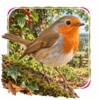
10 Fun European Robin Facts for Kids
1. It Is Not Closely Related to the American Robin
The European Robin belongs to the Old World flycatcher family, Muscicapidae. The American Robin is a much larger thrush that received the same common name mainly because both birds have orange-colored underparts.
Kid Decode: Two orange-chested birds share a name while living on distant branches of the songbird family tree.
2. Adults Wear an Orange Face and Breast
The bright area covers the face, throat, and upper breast rather than only the chest. Adult males and females look very similar, so plumage alone usually cannot separate the sexes.
Kid Decode: The famous redbreast is really an orange face-and-apron worn by both adults.
3. Juveniles Begin Without Orange Feathers
Young robins leave the nest covered in mottled brown and buff plumage. The pattern helps hide them in leaf litter, and orange feathers appear gradually during the first molt.
Kid Decode: The youngster wears woodland camouflage before receiving the bright adult badge.
4. Both Sexes Can Sing in Winter
Male and female robins defend separate feeding territories outside the breeding season and may sing through winter. The winter song is often softer and more wistful than the richer spring performance.
Kid Decode: Cold weather does not silence the robin; it turns song into a musical boundary fence.
5. The Orange Breast Is a Territorial Signal
Robins respond strongly to the orange-red breast of another adult. A rival’s color patch can trigger threat postures, chasing, and physical fights when it appears inside a defended area.
Kid Decode: One flash of orange can turn a quiet garden corner into a feathered border dispute.
6. They Hunt Close to the Ground
European Robins hop beneath shrubs and pause with the head tilted while watching for movement. They seize beetles, spiders, worms, snails, and other small animals from soil and leaf litter.
Kid Decode: The bird patrols the forest floor like a tiny detective listening for a worm beneath the leaves.
7. Gardeners Can Reveal Hidden Food
Robins often follow gardeners, digging animals, or scratching birds because disturbed soil exposes worms and insects. In more remote forests they are usually less trusting of people.
Kid Decode: A moving spade becomes a dinner bell without the gardener deliberately serving anything.
8. Nests Hide Low in Banks and Crevices
The female builds a cup from moss, leaves, grass, hair, and fine roots. It is commonly tucked near the ground in a bank, root cavity, wall opening, log pile, climbing plant, or sheltered container.
Kid Decode: The nursery disappears into a small shadow where roots, moss, and old leaves meet.
9. Cold Nights Are Energetically Expensive
A robin may lose a noticeable fraction of its body mass during one freezing night while burning stored fat to stay warm. Puffed feathers trap insulating air, and daytime feeding must rebuild the energy reserve.
Kid Decode: The tiny bird runs an overnight furnace and wakes needing an urgent breakfast refill.
10. Migration Depends on Where the Bird Lives
Many robins in mild western and southern regions remain year-round. Birds breeding farther north and east often travel toward western or southern Europe, North Africa, and milder coastal areas for winter.
Kid Decode: The species includes garden residents and travelers carrying their orange badges across borders.
The Weirdest European Robin Fact
A European Robin may attack a model, reflection, or bundle of feathers carrying an orange-red breast patch because the color can trigger an intense territorial response.
Try This European Robin Activity
European Robin Territory-and-Nest Activity
Draw an adult European Robin singing from a woodland branch. Add an orange face and breast, brown back, pale belly, large dark eyes, thin legs, an orange territory-display panel, a ground-feeding trail with worms and beetles, a gardener turning soil, a low cup nest hidden in a bank or crevice, mottled brown juveniles, winter berries, puffed cold-weather feathers, and a partial-migration map.
Quick European Robin Quiz
- Which bird family contains the European Robin? Answer: Muscicapidae, the Old World flycatcher family.
- Do juveniles hatch with an orange breast? Answer: No, they begin with mottled brown plumage.
- Why do robins sing in winter? Answer: To defend feeding territories.
- What do they eat in summer? Answer: Mainly ground-dwelling invertebrates.
- Do all European Robins migrate? Answer: No, some migrate while others remain resident.
Mini Glossary
- Passerine: A perching bird in the large order Passeriformes.
- Territory: An area an animal defends against others of its species.
- Partial Migrant: A species in which some individuals migrate while others remain resident.
- Fledge: To grow flight feathers and leave the nest.
- Understory: The shrubs, young trees, and low vegetation beneath a forest canopy.
 Scorpion Facts for Kids
 Freshwater Eel Facts for Kids
 Monocled Cobra Facts for Kids
 Pikaia Facts for Kids
More Animal Facts for Kids
Visit the full animal facts library or explore a focused animal group.
More Extinct Animal Facts for Kids
Discover dinosaurs, Ice Age giants, prehistoric sea creatures, recently extinct species, and other animals from the past.
Fact check note: Fact checked with BirdLife International’s Erithacus rubecula species factsheet, Cornell Lab of Ornithology’s European Robin overview, Woodland Trust and RSPB breeding and identification resources, and ornithological research on year-round song, female winter song, territorial color signals, ground feeding, nesting, migration, and cold-weather survival.

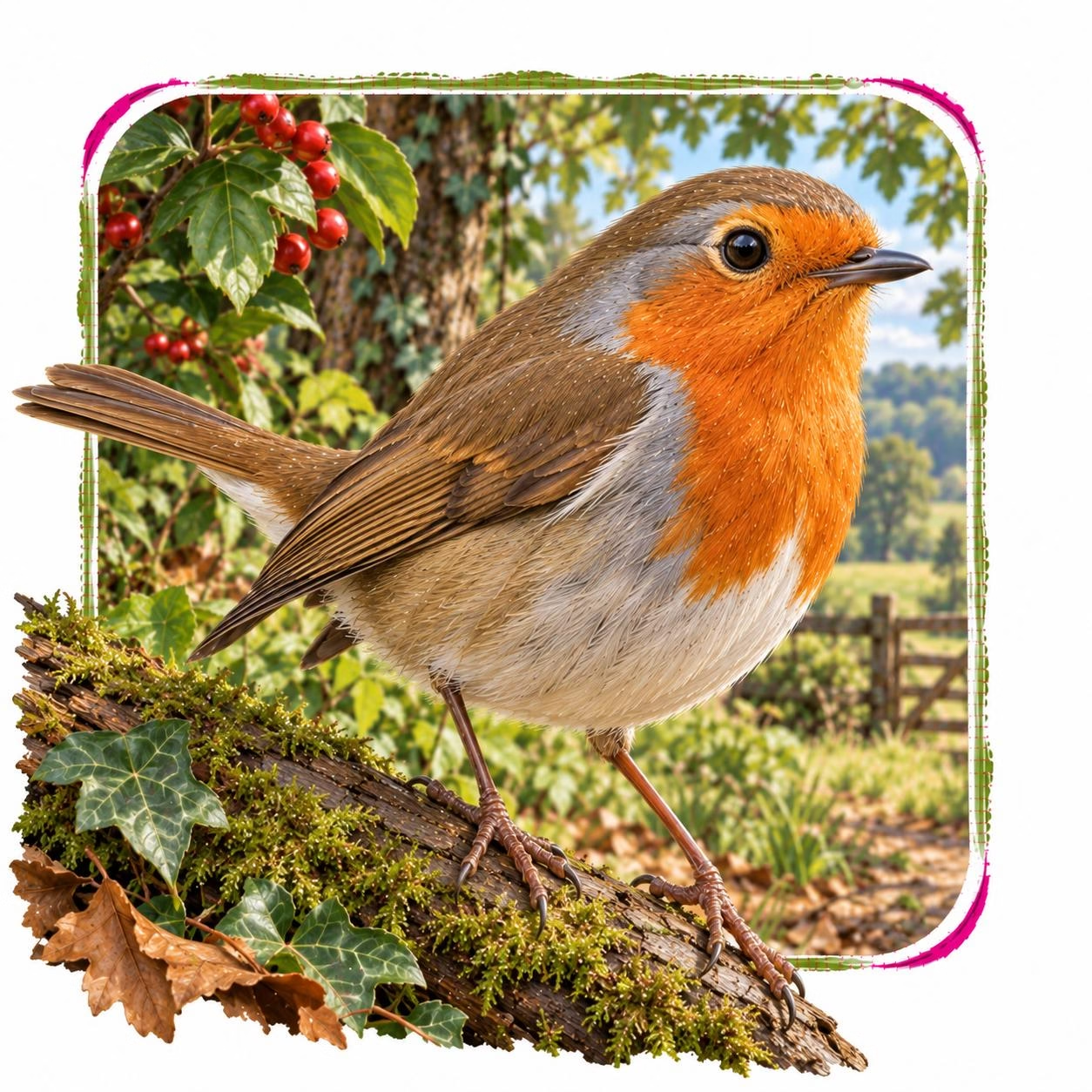
European Robin in its natural Woodland undergrowth, forest edges, hedgerows, scrub, parks, gardens, orchards, banks, and shaded habitats across Europe, western Asia, and North Africa habitat