
European Wildcat Facts for Kids
The European Wildcat, Felis silvestris, is a sturdy wild feline native to scattered parts of Europe, Turkey, and the Caucasus. It has thick gray-brown fur, dark stripes on the head and body, a clear black line along the back, and a thick blunt tail marked with dark rings and a black tip. European Wildcats usually live alone in forests, scrub, grassland mosaics, rocky country, and quiet farmland edges. They hunt rodents, rabbits, birds, reptiles, and other small animals.
Quick European Wildcat Facts
- Animal Type: Mammal
- Group: Small wild cat in the family Felidae
- Known For: Thick striped coat, blunt ringed tail, solitary forest hunting, scent marking, domestic-cat hybridization, and fragmented populations
- Habitat: Deciduous and mixed forest, woodland edges, scrub, rocky slopes, grassland mosaics, and quiet farmland
- Diet: Rodents, rabbits, hares, birds, reptiles, amphibians, insects, and occasional carrion
What You’ll Learn
Explore 10 fascinating european wildcat facts for kids about striped coats, forest hunting, sharp senses, wildcat relatives, and conservation, plus a quiz, glossary, and activity
Easy explanations make them great for children, families, teachers, and young animal lovers.

10 Fun European Wildcat Facts for Kids
1. It Is a Separate Wild Cat Species
Modern cat taxonomy recognizes the European Wildcat as Felis silvestris. The Afro-Asiatic Wildcat, Felis lybica, and the domestic cat, Felis catus, are treated separately.
Kid Decode: Three similar cats carry different evolutionary passports despite sharing the same striped-cat silhouette.
2. Domestic Cats Did Not Descend From It
Genetic and archaeological evidence shows that domestic cats descend mainly from Afro-Asiatic Wildcats that lived near early farming settlements. European Wildcats can interbreed with domestic cats but were not their original ancestor.
Kid Decode: The forest cat is a close relative of pets, not the founder of the household-cat dynasty.
3. The Tail Is a Key Field Clue
A typical European Wildcat has a thick bushy tail with a blunt end, several distinct dark rings, and a fully black tip. Domestic tabby tails are often thinner, more tapered, or patterned differently.
Kid Decode: The tail resembles a furry striped club rather than a long tapering question mark.
4. Its Winter Coat Becomes Especially Thick
Dense underfur and long guard hairs create a bulky gray-brown winter appearance. Dark stripes break up the outline among tree trunks, dead leaves, shadows, and rocky ground.
Kid Decode: Cold weather turns the cat into a padded bundle wrapped in forest camouflage.
5. Adults Usually Live Alone
Outside mating and family periods, wildcats occupy separate home ranges. They advertise presence with urine, droppings, cheek rubbing, scratches, and scent left on prominent routes.
Kid Decode: The solitary cat builds a neighborhood from invisible messages instead of fences.
6. Rodents Form the Core of Many Diets
Voles, mice, and rats are major prey across much of the range. Rabbits, hares, birds, reptiles, amphibians, insects, and carrion become more important where locally available.
Kid Decode: The nightly menu begins with mice but changes whenever the forest pantry offers something else.
7. Hunting Relies on Silence and Surprise
A wildcat listens and watches from cover, approaches with slow steps, and finishes with a short pounce or rush. It is an ambush hunter rather than a long-distance pursuit predator.
Kid Decode: Several minutes of stillness can end in one spring-loaded leap through the leaves.
8. One Animal Uses Several Shelters
European Wildcats rest in hollow trees, root cavities, rock crevices, dense vegetation, abandoned burrows, and quiet buildings. Females choose secure dens for raising kittens.
Kid Decode: The cat’s home range contains a secret hotel chain of roots, rocks, logs, and hidden chambers.
9. Kittens Learn Through a Long Apprenticeship
Females usually raise one litter during spring or early summer. Kittens begin blind and helpless, then play, stalk, handle prey, and explore with their mother before dispersing.
Kid Decode: A tiny striped kitten turns play into hunting practice one leaf, paw, and pounce at a time.
10. Hybridization Can Erase Distinct Populations
Free-ranging domestic cats can mate with European Wildcats and produce fertile descendants. Repeated introgression can make small wildcat populations genetically less distinct, while disease, roads, habitat fragmentation, and persecution add further pressure.
Kid Decode: The greatest threat may arrive looking almost exactly like another cat rather than like a predator.
The Weirdest European Wildcat Fact
A cat that looks like a perfect European Wildcat may still be a domestic-cat hybrid, so conservation teams often need DNA rather than eyesight alone to confirm its ancestry.
Try This European Wildcat Activity
European Wildcat Forest-ID Activity
Draw a European Wildcat moving through mixed forest. Add a broad head, wide-set ears, thick gray-brown coat, dark head and leg stripes, a clear dorsal line, and a bushy blunt tail with several dark rings and a black tip. Include silent rodent hunting, scent spraying and scratching, several daytime shelters, a den with kittens, a domestic tabby comparison, a DNA sample from hair, a wildlife corridor, and road and hybridization threat panels.
Quick European Wildcat Quiz
- What is the European Wildcat’s scientific name? Answer: Felis silvestris.
- What shape is its tail? Answer: Thick, blunt-ended, ringed, and black-tipped.
- Is it the main ancestor of domestic cats? Answer: No, domestic cats descend mainly from the Afro-Asiatic Wildcat.
- What prey forms much of its diet? Answer: Rodents and rabbits.
- Why is hybridization a conservation problem? Answer: It can dilute genetically distinct wildcat populations.
Mini Glossary
- Felid: A member of the cat family, Felidae.
- Hybridization: Reproduction between animals from different species or genetically distinct populations.
- Introgression: The movement of genes from one population into another through repeated hybrid breeding.
- Home Range: The area an animal regularly uses for hunting, shelter, and reproduction.
- Genetic Monitoring: Using DNA to identify animals, ancestry, diversity, and hybridization.


 Raccoon Facts for Kids
 Bittern Facts for Kids
 Frog Facts for Kids
 Irish Elk Facts for Kids
More Animal Facts for Kids
Visit the full animal facts library or explore a focused animal group.
More Extinct Animal Facts for Kids
Discover dinosaurs, Ice Age giants, prehistoric sea creatures, recently extinct species, and other animals from the past.
Fact check note: Fact checked with the Mammal Diversity Database’s Felis silvestris taxonomy, IUCN Cat Specialist Group’s European Wildcat account, the IUCN Red List and Green Status materials, and peer-reviewed studies of morphology, diet, home ranges, reproduction, domestic-cat hybridization, genetic monitoring, road mortality, disease, and regional recovery.

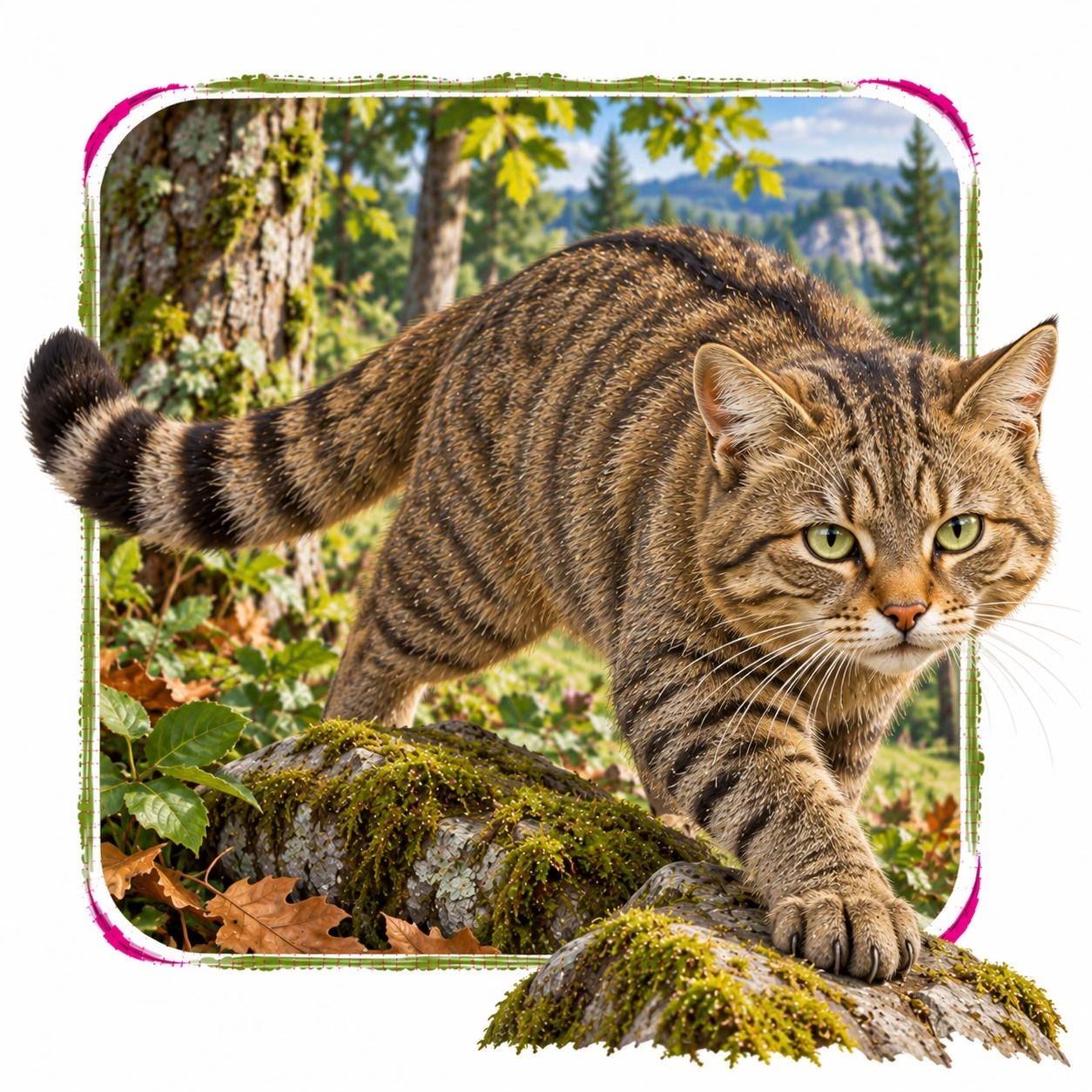
European Wildcat in its natural Deciduous and mixed forest, woodland edges, scrub, rocky slopes, grassland mosaics, river valleys, and low-disturbance farmland across fragmented parts of Europe, Turkey, and the Caucasus habitat