
Fishing Cat Facts for Kids
The Fishing Cat, Prionailurus viverrinus, is a stocky medium-sized wild cat of South and Southeast Asian wetlands. It has gray or olive-brown fur patterned with dark spots and stripes, a broad head, small rounded ears, powerful short legs, and a thick tail much shorter than that of most cats. Fishing Cats hunt alone around rivers, marshes, mangroves, reedbeds, swamps, fishponds, and flooded grasslands. Fish are important prey, but these adaptable hunters also catch frogs, crustaceans, birds, reptiles, and small mammals.
Quick Fishing Cat Facts
- Animal Type: Mammal
- Group: Small wild cat in the genus Prionailurus and family Felidae
- Known For: Strong swimming, wetland hunting, spotted camouflage, short muscular tail, partly exposed claws, and fish-heavy diet
- Habitat: Rivers, marshes, mangroves, swamps, reedbeds, oxbow lakes, flooded grasslands, and fishpond landscapes
- Diet: Fish, frogs, crustaceans, mollusks, birds, reptiles, rodents, and other small animals
What You’ll Learn
Discover 10 remarkable fishing cat facts for kids about swimming, webbed-looking paws, wetland hunting, spotted coats, and Asian habitats, with a quiz, glossary, and activity
Clear explanations make them fun for children, families, teachers, and little fact-hunters.

10 Fun Fishing Cat Facts for Kids
1. It Is a Stocky Wetland Cat
Fishing Cats are larger and more powerfully built than many small Asian cats. Males are substantially heavier than females, and both sexes have broad heads, short legs, and compact muscular bodies.
Kid Decode: The wetland hunter is built more like a furry wrestler than a long-legged forest sprinter.
2. Spots and Stripes Break Up the Body
Dark spots cover the body and limbs, while markings on the head, neck, and shoulders merge into short stripes. Gray or olive-brown colors blend with mud, reeds, ripples, and shadow.
Kid Decode: The coat scatters the cat into spots, streaks, water reflections, and broken marsh light.
3. The Tail Is Unusually Short
The thick tail measures only about one-third of the head-and-body length and carries dark rings near the tip. It helps with balance but is far shorter than the tail of a leopard cat.
Kid Decode: The cat carries a sturdy striped steering handle instead of a long forest-cat rope.
4. The Coat Has Two Protective Layers
Dense underfur traps warmth and helps keep water away from the skin, while longer guard hairs provide color, pattern, and an outer barrier. The coat supports repeated swimming in cool wetlands.
Kid Decode: One fur layer keeps the cat warm while the outer layer wears the camouflage.
5. The Feet Are Not Tiny Duck Paddles
Fishing Cat hind feet have some webbing, but it is not much more developed than in certain land cats. Strong limbs, flexible joints, claws, and swimming technique matter at least as much as the webbing.
Kid Decode: The paws whisper water-cat rather than shouting duck feet.
6. Claws Remain Partly Visible
The claw sheaths are incomplete, so the claws are not fully hidden when retracted. This may improve traction and gripping, although the feature is not unique to fishing.
Kid Decode: The cat keeps the tips of its climbing and gripping hooks permanently on standby.
7. They Hunt Above and Below the Surface
Fishing Cats stalk shallows, paw at prey, scoop fish from water, and dive or swim after animals. They appear to favor many shallow-water hunts because prolonged submersion loses body heat.
Kid Decode: The hunter can fish from the bank, wade like a heron, or vanish beneath the surface.
8. Fish Are Important but Not the Whole Menu
Studies have found fish, birds, frogs, rodents, snakes, crabs, snails, and other prey in the diet. Local wetlands determine which foods are easiest to catch.
Kid Decode: The name highlights fish, but the marsh pantry contains feathers, scales, shells, and fur.
9. Adults Usually Hunt Alone
Fishing Cats are generally solitary and use scent marks to communicate. Male home ranges tend to overlap those of several females and are often larger, although range size changes with habitat and season.
Kid Decode: Invisible scent messages connect cats that rarely share the same hunting path.
10. Wetland Loss Breaks the Range Apart
Drainage, mangrove clearing, aquaculture, farming, pollution, roads, prey depletion, trapping, and retaliation have removed or damaged habitat. Protecting connected wetlands and reducing conflict are central to recovery.
Kid Decode: Saving the cat means saving the watery maze that supplies cover, prey, and travel routes.
The Weirdest Fishing Cat Fact
Despite its watery lifestyle, the Fishing Cat’s toe webbing is not dramatically greater than that of some ordinary land cats, so its swimming skill comes from its whole muscular body rather than duck-like paws.
Try This Fishing Cat Activity
Fishing Cat Wetland-Hunter Activity
Draw a Fishing Cat moving through a mangrove or reedbed. Add olive-gray spotted fur, dark head stripes, small rounded ears with white spots behind them, powerful short legs, modest toe webbing, partly exposed claws, a short ringed tail, a two-layer water-resistant coat, shallow-water paw fishing, underwater swimming, fish and frog prey, scent marks, kittens in dense cover, and a wetland-loss conservation panel.
Quick Fishing Cat Quiz
- Where do Fishing Cats live? Answer: In wetlands across parts of South and Southeast Asia.
- Is their tail long or short for a cat? Answer: Short and muscular.
- Are their feet shaped like duck feet? Answer: No, the webbing is modest rather than extreme.
- What prey is especially important? Answer: Fish.
- What is their global conservation category? Answer: Vulnerable.
Mini Glossary
- Felid: A member of the cat family, Felidae.
- Semi-Aquatic: Living and hunting both in water and on land.
- Mangrove: A salt-tolerant coastal forest growing in tidal water.
- Home Range: The area an animal regularly uses for hunting, resting, and reproduction.
- Fragmentation: The breaking of continuous habitat into smaller isolated patches.

 Crested Gecko Facts for Kids
 Scorpion Facts for Kids
 European Beaver Facts for Kids
 Pyrotherium Facts for Kids
More Animal Facts for Kids
Visit the full animal facts library or explore a focused animal group.
More Extinct Animal Facts for Kids
Discover dinosaurs, Ice Age giants, prehistoric sea creatures, recently extinct species, and other animals from the past.
Fact check note: Fact checked with the Mammal Diversity Database’s Prionailurus viverrinus taxonomy, the IUCN SSC Cat Specialist Group’s updated Fishing Cat account, and field studies of wetland habitat, swimming, shallow-water hunting, diet, home ranges, activity, reproduction, road mortality, conflict, and habitat fragmentation.

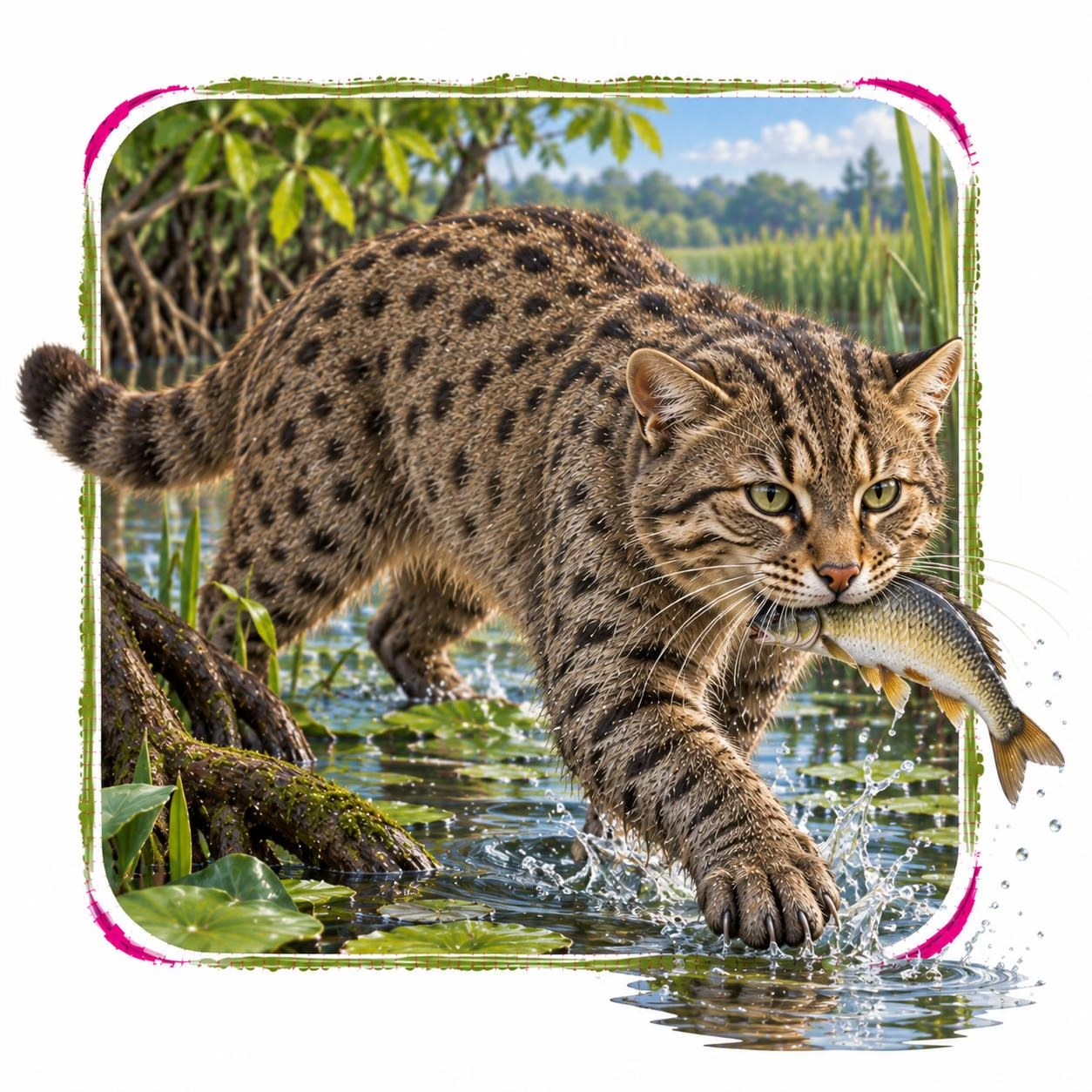
Fishing Cat in its natural Rivers, streams, marshes, mangroves, swamps, reedbeds, oxbow lakes, flooded grasslands, coastal wetlands, and fishpond landscapes in fragmented parts of South and Southeast Asia habitat