
Flat-Headed Cat Facts for Kids
The Flat-Headed Cat, Prionailurus planiceps, is a tiny, poorly known wild cat of the Sunda region in Southeast Asia. It survives in scattered wetlands on Sumatra, Borneo, and the Malay Peninsula, with its status in southern Thailand uncertain. The cat has a long narrow head, flattened forehead, large close-set eyes, small rounded ears, reddish-brown silvery fur, long narrow feet, visible claws, and a short furry tail. It is strongly associated with rivers, peat swamps, marshes, lakes, and lowland forests near water.
Quick Flat-Headed Cat Facts
- Animal Type: Mammal
- Group: Small wild cat in the genus Prionailurus and family Felidae
- Known For: Flattened forehead, close-set eyes, long narrow webbed feet, visible claws, sharp premolars, riverbank hunting, and extreme rarity
- Habitat: Peat-swamp forest, freshwater swamp, rivers, streams, lakes, marshes, mangroves, and riparian lowland forest
- Diet: Mainly fish and frogs, plus crustaceans, rodents, birds, and possibly other small foods
What You’ll Learn
Explore 10 rare flat-headed cat facts for kids about its unusual head, webbed toes, wetland hunting, fish, and Southeast Asian habitats, plus a quiz, glossary, and activity
These easy facts are made for kids, parents, teachers, and curious young learners.
10 Fun Flat-Headed Cat Facts for Kids
1. The Head Is Long, Narrow, and Flat
A stretched skull and flattened forehead give the species its name. The shape produces a civet-like profile unlike the rounder heads of most small cats.
Kid Decode: The face looks gently pressed and pulled forward into a tiny riverside spearhead.
2. Close-Set Eyes Improve Overlapping Vision
The large eyes sit unusually close together and face forward. Their visual fields overlap strongly, which may improve distance judgment during low-light hunting near water.
Kid Decode: Two moon-sized eyes share a wide patch of the same dark river scene.
3. Long Feet Carry Noticeable Webbing
The toes are more extensively webbed than those of the Fishing Cat. Long narrow feet and pads appear suited to soft wet ground and movement in shallow water.
Kid Decode: The small cat carries narrow marsh shoes stitched with more webbing than its larger cousin.
4. Most of Each Claw Stays Visible
The fleshy claw sheaths are shortened, covering only part of a retracted claw. Visible sharp tips may help grip slippery banks and aquatic prey.
Kid Decode: The claws never disappear completely into their pockets.
5. Sharp Premolars Grip Slippery Prey
The front upper premolars are unusually long, pointed, and well developed. This dental shape can help hold fish and frogs that would otherwise wriggle free.
Kid Decode: The mouth carries tiny fish-gripping spikes behind the main canine teeth.
6. Silvery Fur Covers a Reddish Body
The thick soft coat is reddish brown with gray tones, and many hairs end in white tips that create a silver wash. The crown is brighter red, while the chin, muzzle, and belly are pale.
Kid Decode: Rust-colored fur glitters with a dusting of silver along the night riverbank.
7. The Species Stays Close to Lowland Water
Most records come from peat swamps, rivers, lakes, marshes, and riverine forest below about 100 metres. Dry uplands and heavily converted plantations appear much less suitable.
Kid Decode: The cat’s known world hugs blue lines and soggy green patches near sea level.
8. Fish May Be Carried Away From the Water
Observations suggest the cat catches fish with its head submerged and carries prey several metres inland before eating. Moving away from the edge may prevent a slippery meal from escaping.
Kid Decode: Dinner is hauled away from the emergency exit before the first bite.
9. Its Private Life Is Still a Mystery
Camera traps suggest mostly nocturnal and crepuscular activity, but direct observations are rare. Reproduction is especially poorly known, with only limited captive records and reports of very small litters.
Kid Decode: Scientists know the shape of the cat better than the details of its family calendar.
10. Wetland Destruction Is the Main Threat
Peat drainage, oil-palm expansion, logging, dams, settlements, pollution, overfishing, snares, and trade damage habitat and prey. Protecting connected lowland wetlands is essential for survival.
Kid Decode: When a swamp becomes a dry plantation, the cat loses its road, pantry, shelter, and swimming pool together.
The Weirdest Flat-Headed Cat Fact
When scent marking, a Flat-Headed Cat has been observed crouching and walking forward while spraying, leaving a trail along the ground unlike the usual backward spray of many cats.
Try This Flat-Headed Cat Activity
Flat-Headed Cat Riverbank Activity
Draw a Flat-Headed Cat beside a peat-swamp stream. Add a long narrow head, flattened forehead, large close-set eyes, small low-set ears, reddish-brown silvery fur, white chin and muzzle, long narrow partly webbed feet, visible claws, sharp premolars, a short furry tail, underwater fish capture, prey carried away from the bank, unusual forward-moving scent marking, a kitten mystery panel, and wetland threats from drainage, pollution, dams, and oil-palm conversion.
Quick Flat-Headed Cat Quiz
- Where does the Flat-Headed Cat live? Answer: In wetlands of Sumatra, Borneo, and the Malay Peninsula.
- What shape is its forehead? Answer: Flattened and elongated.
- Are its claws completely hidden when retracted? Answer: No, much of each claw remains visible.
- What prey is especially important? Answer: Fish and frogs.
- What is its global conservation category? Answer: Endangered.
Mini Glossary
- Sunda Region: The Southeast Asian area including the Malay Peninsula, Borneo, Sumatra, Java, and nearby islands.
- Riparian: Relating to the banks of a river or stream.
- Piscivorous: Adapted to eating fish.
- Binocular Vision: Overlapping vision from both eyes that helps judge distance.
- Monotypic: Treated as a species without recognized living subspecies.
 Polecat Facts for Kids
 Skate Facts for Kids
 Black-Capped Chickadee Facts for Kids
 Allosaurus Facts for Kids
More Animal Facts for Kids
Visit the full animal facts library or explore a focused animal group.
More Extinct Animal Facts for Kids
Discover dinosaurs, Ice Age giants, prehistoric sea creatures, recently extinct species, and other animals from the past.
Fact check note: Fact checked with the Mammal Diversity Database’s Prionailurus planiceps taxonomy, the IUCN SSC Cat Specialist Group’s Flat-Headed Cat account, and research on Sunda wetland distribution, camera-trap records, aquatic morphology, prey handling, nocturnal activity, scent marking, habitat suitability, oil-palm conversion, pollution, and conservation.

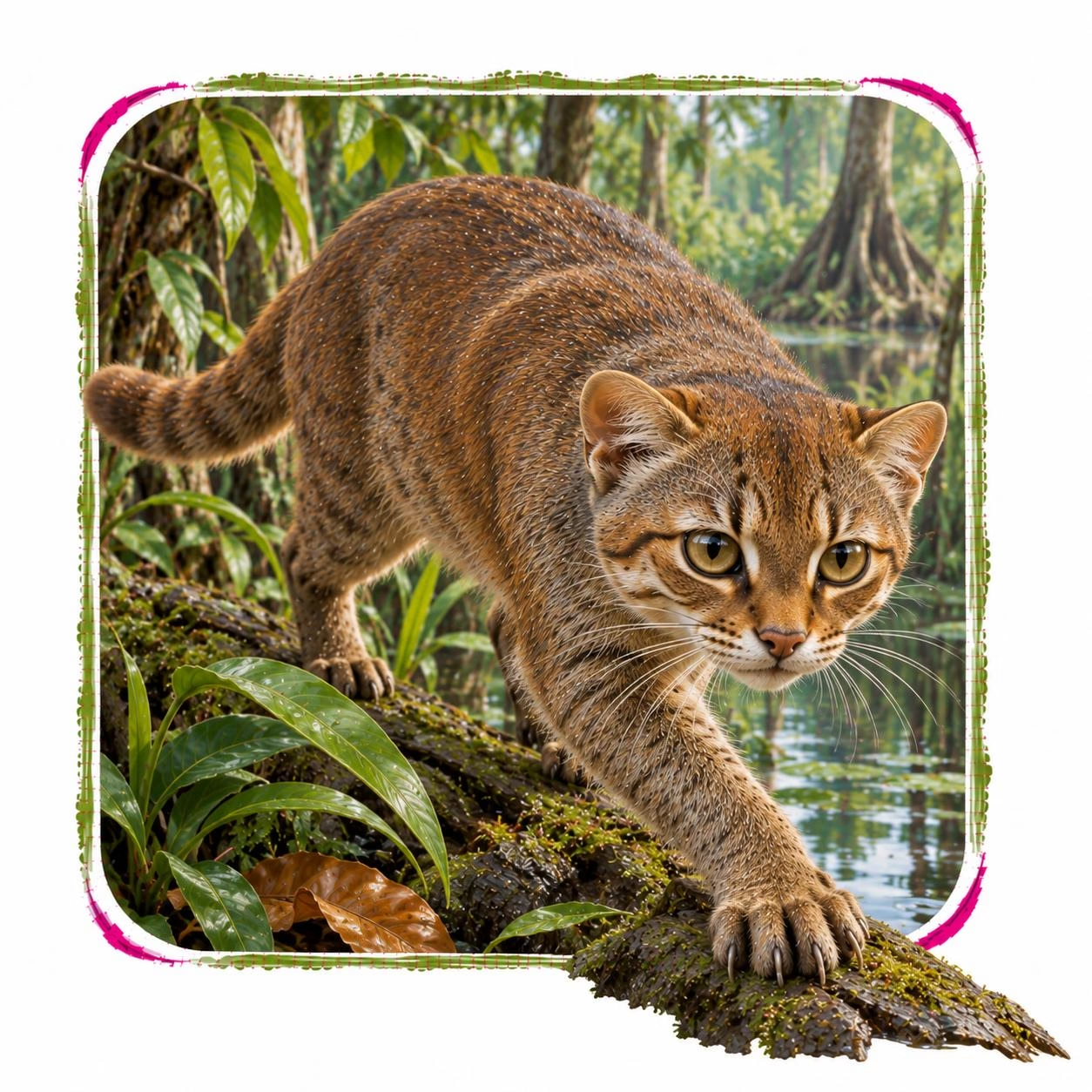
Flat-Headed Cat in its natural Tropical lowland rainforest, peat-swamp forest, freshwater swamp, riverine forest, mangroves, marshes, streams, rivers, and lake edges in fragmented parts of Sumatra, Borneo, and the Malay Peninsula habitat