
Fly Facts for Kids
Flies are insects in the enormous order Diptera, a name meaning two wings. The group includes house flies, hoverflies, mosquitoes, midges, crane flies, robber flies, fruit flies, blow flies, horse flies, and thousands of less familiar forms. Most adult flies use one pair of front wings for flight, while the hindwings have become tiny balancing organs called halteres. Flies live worldwide in almost every terrestrial and freshwater habitat, and their feeding habits range from nectar drinking and pollination to predation, decomposition, plant feeding, and blood feeding.
Quick Fly Facts
- Animal Type: Insect
- Group: True flies in the order Diptera
- Known For: One functional wing pair, haltere balancing organs, rapid flight control, complete metamorphosis, legless larvae, and huge ecological variety
- Habitat: Freshwater, soil, flowers, forests, deserts, farms, caves, carrion, dung, homes, Arctic tundra, and tropical rainforest
- Diet: Nectar, pollen, sap, microbes, decaying matter, plants, fungi, blood, and animal prey depending on species and life stage
What You’ll Learn
Learn 10 buzzing fly facts for kids about wings, compound eyes, life cycles, feeding, and the huge variety of flies, with a quiz, glossary, and activity
Simple explanations make them great for children, families, teachers, and young insect explorers.
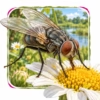
10 Fun Fly Facts for Kids
1. True Flies Belong to Diptera
Only members of the order Diptera are true flies. Dragonflies, butterflies, mayflies, and fireflies carry fly in their names but belong to completely different insect orders.
Kid Decode: The word fly is a crowded nickname, but Diptera is the scientific guest list.
2. Most Adults Use One Pair of Wings
The front wings generate lift and thrust, while the hindwings no longer serve as ordinary wings. A few parasitic, island, or alpine fly lineages have lost the front wings as well.
Kid Decode: Most flies race on two wings, while a few unusual relatives have parked flight completely.
3. Halteres Act Like Motion Sensors
The tiny club-shaped hindwings vibrate during flight and detect body rotation through the Coriolis effect. Nerves use the information to correct turns, rolls, and wobbles within fractions of a second.
Kid Decode: Two miniature drumsticks tell the fly exactly how its body is tumbling through space.
4. Compound Eyes Build a Wide View
Many flies have enormous compound eyes made from hundreds or thousands of visual units. The design detects movement rapidly, although eye size, color vision, and visual sharpness differ greatly among families.
Kid Decode: A mosaic of tiny windows notices motion before one large eye might finish blinking.
5. Mouthparts Come in Many Designs
House flies sponge liquid food, mosquitoes pierce, horse flies cut and lap blood, hoverflies drink nectar, and robber flies stab insect prey. Adult flies generally take liquids, but they obtain them in very different ways.
Kid Decode: One insect order carries straws, sponges, needles, and tiny hunting daggers.
6. The Life Cycle Has Four Main Stages
Flies undergo complete metamorphosis: egg, larva, pupa, and adult. The larva specializes in feeding and growth, while the pupa rebuilds the body into a winged reproductive adult.
Kid Decode: The animal changes from egg to worm-like eater to sealed rebuilding chamber to aerial adult.
7. Larvae Are Legless but Not All Identical
All fly larvae lack true jointed legs. Many advanced forms are headless-looking maggots, while mosquitoes, crane flies, and other groups have recognizable heads or specialized aquatic bodies.
Kid Decode: The word maggot fits many fly babies, but the larval wardrobe contains far more than one shape.
8. Many Flies Pollinate Flowers
Hoverflies, bee flies, blow flies, midges, and other groups carry pollen while drinking nectar or feeding on flowers. Flies are especially important pollinators in cool, wet, high-altitude, and northern habitats.
Kid Decode: A flower may hire a fly when the weather is too chilly or damp for the usual bee crew.
9. Larvae Recycle and Control Other Insects
Many larvae break down dung, carrion, rotting plants, fungi, and wet organic material, returning nutrients to ecosystems. Others prey on aphids or develop as parasitoids inside pest insects.
Kid Decode: One maggot cleans nature’s leftovers while another becomes an undercover aphid hunter.
10. Only Some Species Are Dangerous to People
Mosquitoes and certain other flies can carry pathogens, and some species bite, damage crops, or contaminate food. Most fly species do none of these things and instead serve as pollinators, decomposers, predators, prey, or research animals.
Kid Decode: A few notorious relatives gave a vast and mostly useful insect order a terrible public reputation.
The Weirdest Fly Fact
A fly’s missing second wing pair did not vanish completely; it evolved into two vibrating halteres that work as high-speed motion sensors and help the insect steer through the air.
Try This Fly Activity
Fly Flight-and-Life-Cycle Activity
Draw a generalized true fly from above and the side. Label the head, compound eyes, antennae, proboscis, thorax, one pair of clear wings, two club-shaped halteres, six legs, and segmented abdomen. Add egg, legless larva, pupa, and adult stages; a hoverfly pollinating a flower; a robber fly catching prey; a maggot decomposing dead material; an aquatic mosquito larva; and a myth panel explaining that not every fly bites, carries disease, or lives in rubbish.
Quick Fly Quiz
- What insect order contains true flies? Answer: Diptera.
- How many functional wing pairs do most adult flies have? Answer: One pair.
- What are halteres? Answer: Modified hindwings that sense movement and aid balance.
- What are many fly larvae called? Answer: Maggots.
- Do all flies bite or spread disease? Answer: No.
Mini Glossary
- Dipteran: An insect belonging to the order Diptera.
- Haltere: A small vibrating balance organ evolved from a fly’s hindwing.
- Maggot: A legless worm-like larva of many advanced flies.
- Complete Metamorphosis: Development through egg, larva, pupa, and adult stages.
- Vector: An organism that carries a disease-causing agent from one host to another.

 Chimpanzee Facts for Kids
 Jackal Facts for Kids
 Tamarin Facts for Kids
 Eurypterid Facts for Kids
More Animal Facts for Kids
Visit the full animal facts library or explore a focused animal group.
More Extinct Animal Facts for Kids
Discover dinosaurs, Ice Age giants, prehistoric sea creatures, recently extinct species, and other animals from the past.
Fact check note: Fact checked with the Smithsonian Institution’s True Flies overview, North Carolina State University’s Diptera identification and ecology guide, university entomology resources on complete metamorphosis and mouthparts, and research on haltere sensing, flight control, pollination, decomposition, biological control, disease transmission, and Drosophila genetics.

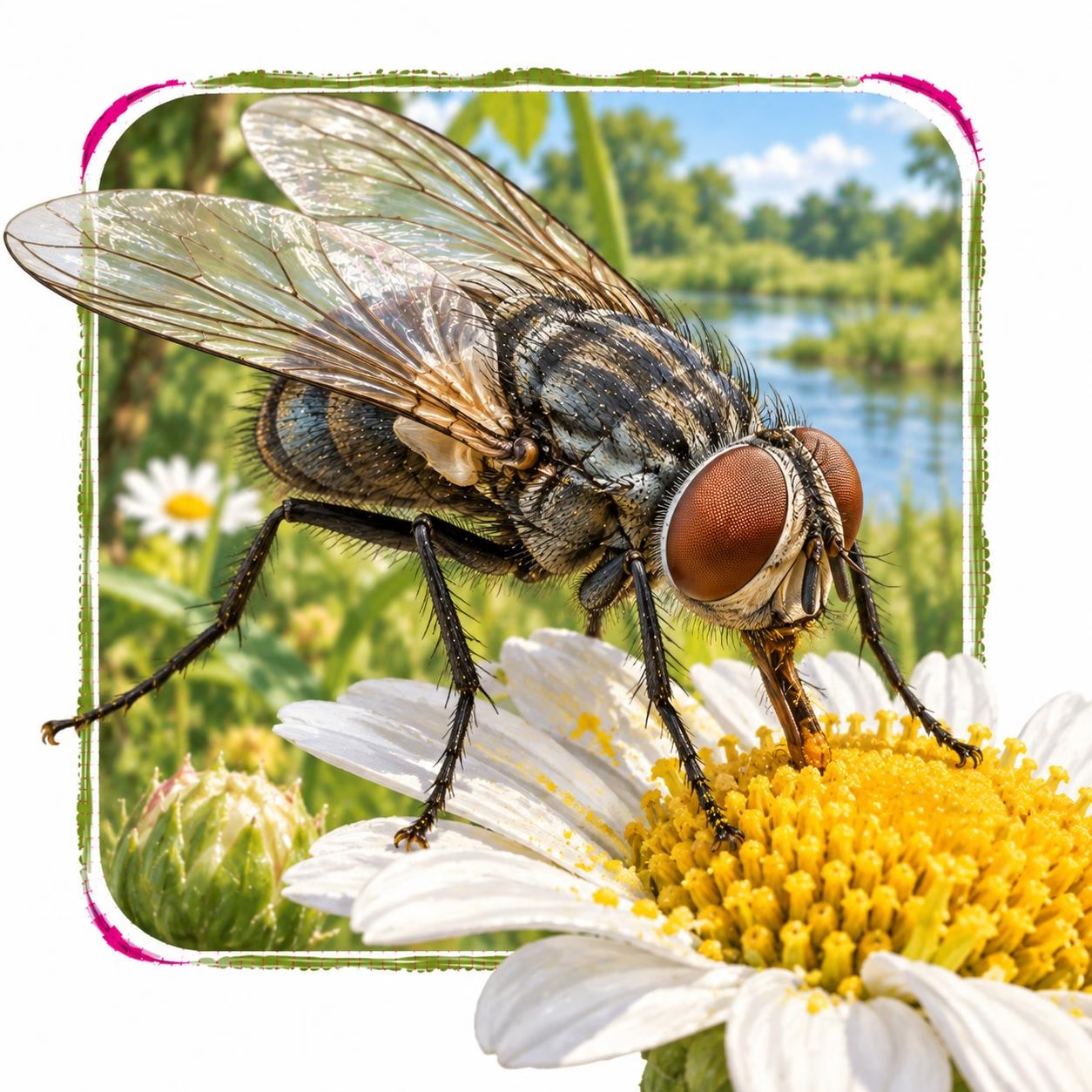
Fly in its natural Freshwater, wet soil, forests, grasslands, deserts, tundra, caves, flowers, plants, fungi, carrion, dung, animal nests, farms, cities, and homes worldwide habitat