
Fruit Bat Facts for Kids
Fruit bats are Old World bats in the family Pteropodidae, also called flying foxes or megabats. They live naturally across tropical and subtropical Africa, Asia, Australia, and Pacific and Indian Ocean islands. The family includes tiny nectar-feeding bats and huge flying foxes with wingspans wider than a child’s height. Most use large eyes and an excellent sense of smell to find fruit, flowers, nectar, pollen, and leaves, helping forests by carrying seeds and pollen over long distances.
Quick Fruit Bat Facts
- Animal Type: Mammal
- Group: Old World fruit bats in the family Pteropodidae
- Known For: Fox-like faces, large eyes, strong smell, finger-supported wings, fruit and nectar diets, seed dispersal, pollination, and large roosts
- Habitat: Tropical rainforest, mangroves, savannas, dry forest, plantations, gardens, caves, islands, and urban trees
- Diet: Fruit, nectar, pollen, flowers, leaves, sap, and other plant foods depending on species
What You’ll Learn
Learn 10 fascinating fruit bat facts for kids about giant wings, fruit diets, roosts, keen senses, and rainforest life, plus a quiz, glossary, and activity
These simple facts are written for kids, parents, teachers, and curious young minds.
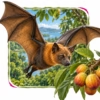
10 Fun Fruit Bat Facts for Kids
1. They Are Old World Fruit Bats
Pteropodids occur naturally in Africa, Asia, Australia, and nearby islands. Fruit-eating bats in the Americas belong to other families and evolved similar diets independently.
Kid Decode: Two tropical bat worlds discovered fruit separately on opposite sides of the planet.
2. The Family Includes Tiny Bats and Giant Flying Foxes
Some nectar bats weigh only a few dozen grams, while the largest flying foxes approach one and a half kilograms and have wingspans around one and a half metres.
Kid Decode: One family contains both palm-sized flower visitors and wings wider than a child is tall.
3. Wings Are Built From Enormous Fingers
A bat wing is a living membrane stretched across an elongated arm and hand. Most pteropodids also have a claw on the thumb, and many have a second claw on the index finger for climbing.
Kid Decode: The bat flies by turning one giant many-jointed hand into an airfoil.
4. Large Eyes and Noses Guide Night Flight
Most fruit bats rely heavily on vision in dim light and sensitive smell to locate ripe fruit, flowering trees, roosts, and companions. They are not blind.
Kid Decode: The night sky is navigated with wide eyes and a nose tuned to flowering forests.
5. Rousettes Click Their Tongues
Rousettus fruit bats make sharp tongue clicks and analyze returning echoes inside dark caves. Their system differs from the laryngeal ultrasonic echolocation used by most insect-eating bats.
Kid Decode: A cave fruit bat turns its tongue into a clicking sonar machine.
6. Fruit Is Often Squeezed for Juice
Many species bite soft fruit, press it against ridged mouth surfaces, swallow juice and small particles, and spit or drop a dry fibrous pellet. Others swallow larger pieces and later disperse seeds in droppings.
Kid Decode: A piece of fruit can leave the mouth as juice inside and a tidy fibre pellet outside.
7. Flowers Provide Nectar and Pollen
Long-tongued species visit night-blooming flowers for nectar and pollen. Their furry faces and bodies pick up pollen and carry it to the next flower, enabling plant reproduction.
Kid Decode: The bat becomes a flying paintbrush dusted with pollen under moonlight.
8. Seeds Travel Far From Parent Trees
Fruit bats carry fruit away, drop seeds in flight, or pass small seeds through digestion. Long flights can move plant genes and seedlings across clearings, islands, and damaged forest.
Kid Decode: One midnight meal may plant tomorrow’s tree kilometres away from its parent.
9. Roosts Range From One Bat to Huge Colonies
Some fruit bats roost alone or in small family groups, while flying foxes may gather by thousands in trees. Other species use caves, rock shelters, foliage, palms, or buildings.
Kid Decode: The daytime bedroom may be one folded leaf or an entire tree city of hanging bats.
10. Mothers Usually Raise One Pup
Many pteropodids give birth to a single large pup after a long pregnancy. Newborns cling to the mother, nurse on milk, and may ride during early flights before remaining at the roost while she forages.
Kid Decode: A baby bat begins life as a furry passenger hanging from a flying mother.
The Weirdest Fruit Bat Fact
Rousette fruit bats navigate dark caves by clicking their tongues and listening to echoes, an echolocation system independently different from the laryngeal sonar of most smaller bats.
Try This Fruit Bat Activity
Fruit Bat Night-Forest Activity
Draw several fruit bats leaving a tropical roost at dusk. Add a large flying fox, a tiny long-tongued nectar bat, a rousette clicking inside a cave, finger-supported wings, large eyes, strong-smell trail, fruit chewing and juice swallowing, pollen on a muzzle, seeds dropped far from a tree, upside-down roosts, a mother carrying one pup, and a forest before-and-after seed-dispersal panel.
Quick Fruit Bat Quiz
- Which family contains Old World fruit bats? Answer: Pteropodidae.
- Where do fruit bats naturally live? Answer: Africa, Asia, Australia, and nearby tropical islands.
- Are fruit bats blind? Answer: No.
- Do all fruit bats lack echolocation? Answer: No, rousettes use tongue-click echolocation.
- How do many fruit bats help forests? Answer: By pollinating flowers and dispersing seeds.
Mini Glossary
- Pteropodid: A member of the Old World fruit-bat family Pteropodidae.
- Flying Fox: A common name for many large fruit bats with fox-like faces.
- Echolocation: Detecting objects by producing sounds and interpreting returning echoes.
- Pollination: Moving pollen so flowering plants can reproduce.
- Seed Dispersal: Carrying seeds away from the parent plant to places where they may grow.
 Prawn Facts for Kids
 Pigeon Facts for Kids
 European Beaver Facts for Kids
 Kauaʻi ʻŌʻō Facts for Kids
More Animal Facts for Kids
Visit the full animal facts library or explore a focused animal group.
More Extinct Animal Facts for Kids
Discover dinosaurs, Ice Age giants, prehistoric sea creatures, recently extinct species, and other animals from the past.
Fact check note: Fact checked with the Mammal Diversity Database’s Pteropodidae taxonomy and phylogenetic references, Animal Diversity Web’s Old World fruit-bat family account, IUCN bat conservation materials, and research on vision, smell, rousette tongue-click echolocation, feeding, pollination, seed dispersal, roosting, migration, reproduction, heat stress, and conflict.

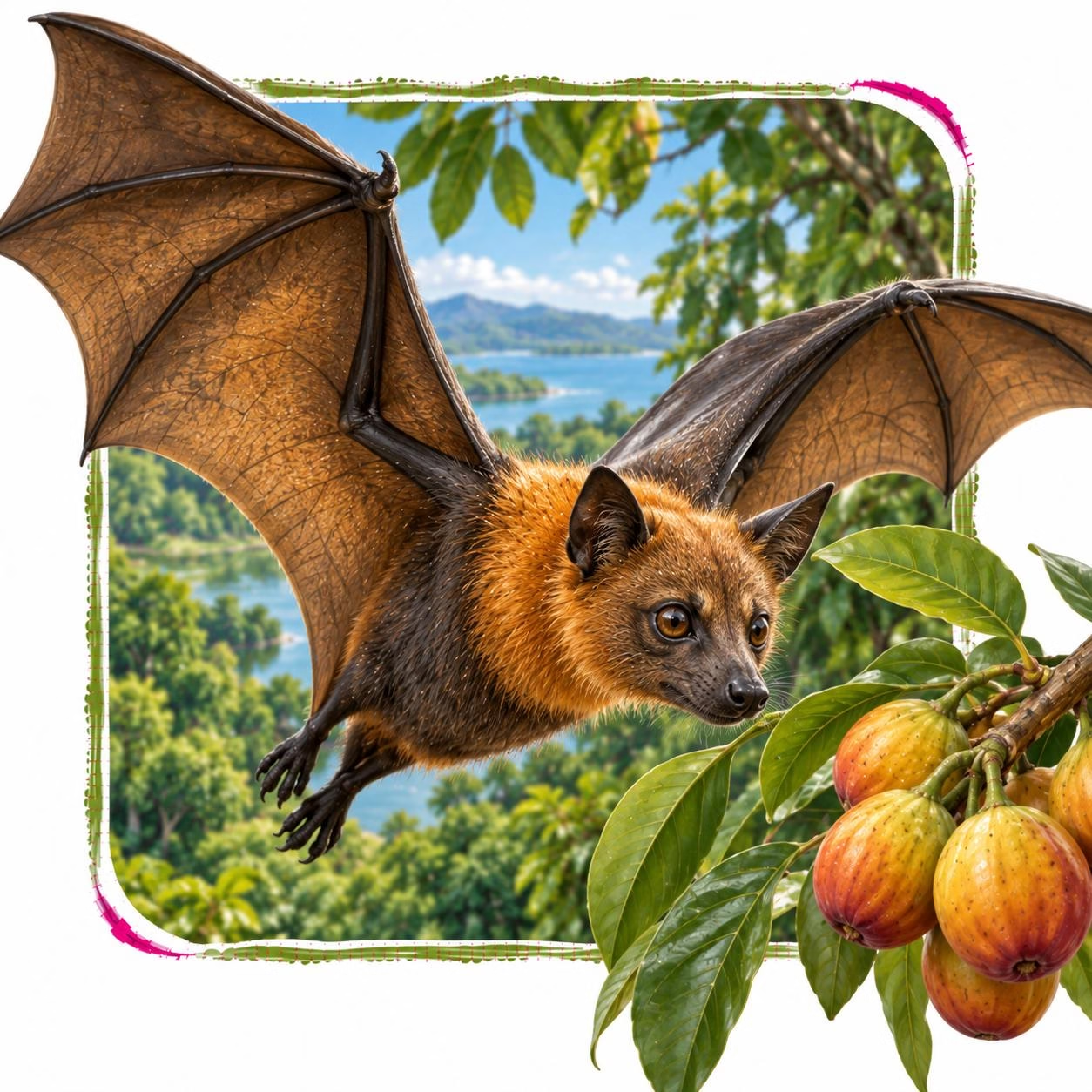
Fruit Bat in its natural Tropical and subtropical rainforest, mangroves, savannas, dry forest, orchards, plantations, gardens, caves, islands, and urban tree roosts across Africa, Asia, Australia, and Oceania habitat