
Gannet Facts for Kids
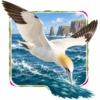
Gannets are large fish-eating seabirds in the genus Morus and the family Sulidae. Three living species exist: the Northern Gannet of the North Atlantic, the Cape Gannet of southern Africa, and the Australasian Gannet of Australia and New Zealand. Adults are mostly white with black flight feathers, long pointed wings, streamlined bodies, strong webbed feet, and dagger-like bills. Gannets are famous for folding their wings and plunging from the air into the sea to catch schooling fish and squid.
Quick Gannet Facts
- Animal Type: Bird
- Group: Three gannet species in the genus Morus and family Sulidae
- Known For: High-speed plunge dives, internal nostrils, impact-cushioning air sacs, underwater pursuit, huge colonies, and one-egg nests
- Habitat: Open ocean, productive coastal seas, continental shelves, rocky islands, sea cliffs, and exposed headlands
- Diet: Schooling fish such as sardines, anchovies, mackerel, herring, and sandeels, plus squid
What You’ll Learn
Discover 10 spectacular gannet facts for kids about plunge-diving, long wings, ocean fishing, colonies, and coastal nests, with a quiz, glossary, and activity
Clear explanations make them ideal for children, families, teachers, and little fact-hunters.
10 Fun Gannet Facts for Kids
1. There Are Three Living Species
The Northern Gannet breeds around the North Atlantic, the Cape Gannet along southern Africa, and the Australasian Gannet around Australia and New Zealand. All belong to Morus but have distinct ranges, markings, and conservation histories.
Kid Decode: The gannet map forms three ocean kingdoms: northern Atlantic, southern African, and Australasian.
2. A Dive Begins High Above the Sea
Gannets scan the surface while flying and then tip into steep dives when fish appear. They adjust direction with wings and tail before locking the wings against the body just before impact.
Kid Decode: The seabird changes from glider to feathered spear in the final heartbeat above the waves.
3. Air Sacs Cushion the Impact
Air-filled spaces beneath the skin around the face, chest, and body compress when a gannet enters the water. These sacs help absorb impact and may also influence buoyancy underwater.
Kid Decode: The bird wears invisible bubble wrap beneath its feathers.
4. Nostrils Open Inside the Bill
Unlike many birds, gannets do not have obvious external nostril openings on the bill surface. The nasal passages open internally, reducing the chance of water being forced inside during a plunge.
Kid Decode: The nose doors moved indoors so the ocean cannot slam through them.
5. Forward Eyes Judge Distance
The eyes are angled toward the front, creating strong binocular overlap for a seabird. This helps estimate the position of fish and the distance to the water before committing to a dive.
Kid Decode: Two ocean-watch eyes combine their pictures into one diving target map.
6. They Pursue Fish Underwater
Momentum carries a gannet below the surface, and it can continue swimming with its wings and webbed feet. Prey may be captured during descent or as the bird turns and rises.
Kid Decode: The aerial spear becomes an underwater swimmer without changing vehicles.
7. Colonies Pack Nests Closely Together
Gannets breed in dense colonies called gannetries on cliffs, islands, and headlands. Pairs defend a tiny nest territory with calls, bill gestures, and jabs because neighboring nests may be only a bill-length away.
Kid Decode: Thousands of seabirds squeeze into a noisy apartment city where every doorstep has borders.
8. One Egg Is Warmed With the Feet
A pair usually lays one chalky blue egg that becomes stained as incubation continues. Gannets lack a typical bare brood patch and warm the egg beneath highly supplied webbed feet.
Kid Decode: The egg sits beneath two living hot-water bottles shaped like webbed feet.
9. Young Birds Change Color for Years
New chicks are naked and later grow white down, while fledged juveniles are dark brown with pale spots. Each molt adds more white until adult plumage develops after several years.
Kid Decode: The young gannet slowly trades a starry brown coat for the white uniform of an ocean diver.
10. Conservation Differs Among Species
Northern and Australasian Gannets remain widespread, but Cape Gannets have declined and are Endangered. Food shortages, changing fish stocks, fishing gear, pollution, plastic, disturbance, and disease can all affect colonies.
Kid Decode: The same diving design can be common in one ocean and in serious trouble in another.
The Weirdest Gannet Fact
Gannets carry air pockets beneath the skin of the face and chest that work like biological bubble wrap when the bird strikes the sea during a high-speed dive.
Try This Gannet Activity
Gannet Plunge-Dive Activity
Draw Northern, Cape, and Australasian Gannets beside matching ocean regions. Add long pointed wings, black flight feathers, forward-facing eyes, internal nostrils, a third eyelid, air sacs around the face and chest, a dive sequence with folded wings, underwater pursuit using wings and webbed feet, a crowded gannetry, one egg warmed by the feet, a dark juvenile changing toward white, and a conservation panel for fishing gear, food shortages, plastic, and disease.
Quick Gannet Quiz
- How many living gannet species exist? Answer: Three.
- What do gannets do just before hitting the water? Answer: Fold their wings tightly against the body.
- Where are their nostril openings? Answer: Inside the bill rather than opening directly outside.
- How many eggs does a gannet usually lay? Answer: One.
- Which gannet species is globally Endangered? Answer: The Cape Gannet.
Mini Glossary
- Sulid: A seabird in the family containing gannets and boobies.
- Plunge Diving: Entering water directly from flight to catch prey.
- Binocular Vision: Overlapping vision from both eyes that improves distance judgment.
- Gannetry: A breeding colony of gannets.
- Nictitating Membrane: A transparent or translucent third eyelid that protects the eye.
 King Penguin Facts for Kids
 Warbler Facts for Kids
 Caecilian Facts for Kids
 Cave Hyena Facts for Kids
More Animal Facts for Kids
Visit the full animal facts library or explore a focused animal group.
More Extinct Animal Facts for Kids
Discover dinosaurs, Ice Age giants, prehistoric sea creatures, recently extinct species, and other animals from the past.
Fact check note: Fact checked with Smithsonian Ocean’s Diving Gannets overview, Cornell Lab of Ornithology’s Northern Gannet account, BirdLife International species factsheets for Northern, Cape, and Australasian Gannets, and seabird research on plunge-diving biomechanics, air sacs, underwater pursuit, colony behavior, incubation, juvenile plumage, fisheries interactions, and avian influenza.

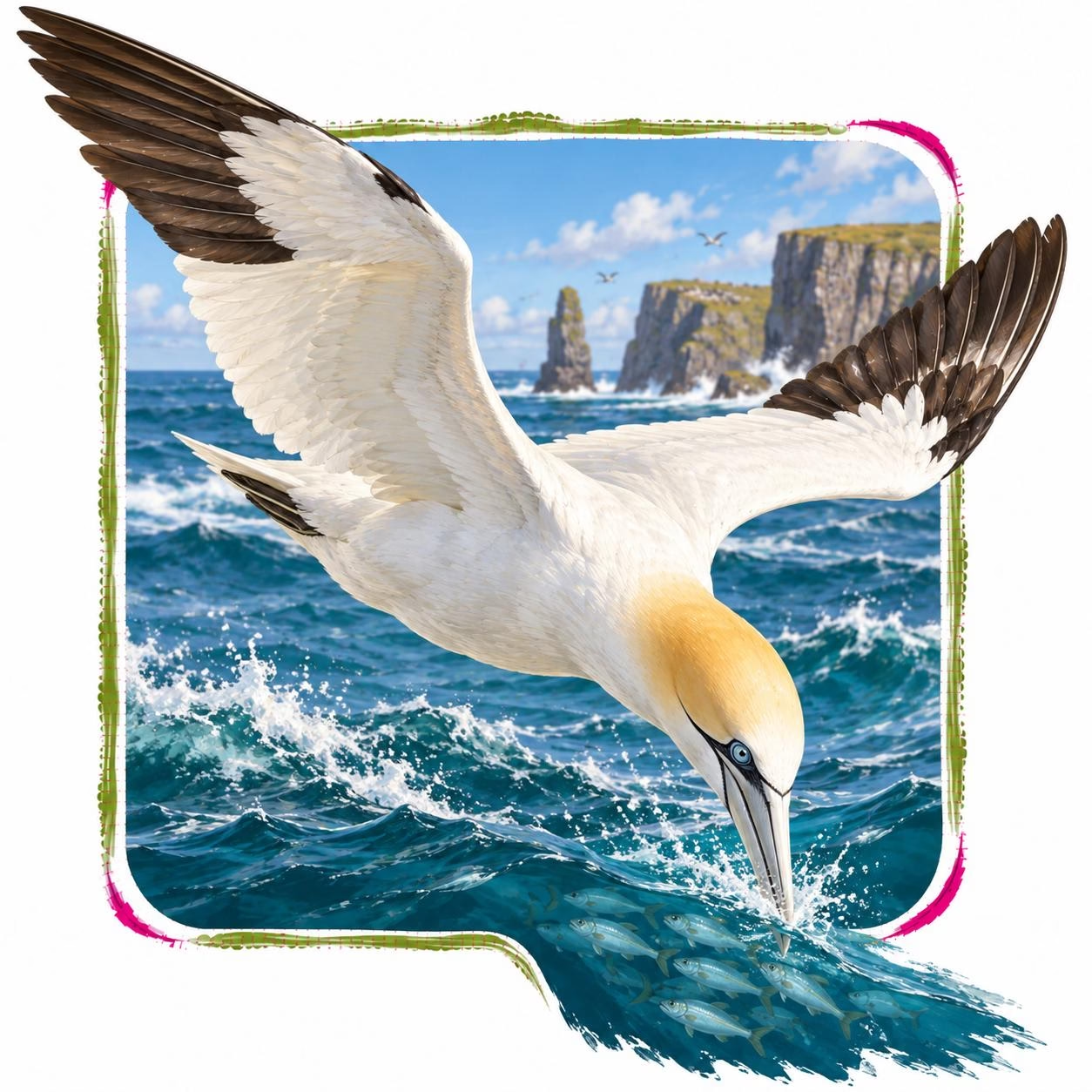
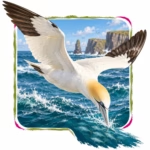
Gannet in its natural Open ocean, productive coastal waters, continental shelves, rocky islands, sea cliffs, and exposed headlands across the North Atlantic, southern African coast, Australia, and New Zealand habitat