
Gaur Facts for Kids
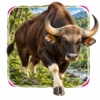
The gaur, Bos gaurus, is the largest living species of wild cattle. It is native to forests, grasslands, and wooded hills across South and Southeast Asia. Adult bulls can be massive, with dark brown or nearly black coats, high muscular shoulders, a raised ridge along the front of the back, pale gray foreheads, thick curved horns, and white lower legs that look like stockings. Cows and young animals are smaller and usually lighter brown. Gaur graze and browse in forest-edge mosaics close to water.
Quick Gaur Facts
- Animal Type: Mammal
- Group: Wild cattle in the genus Bos and family Bovidae
- Known For: Enormous size, dark muscular bulls, pale forehead ridge, curved horns, white stocking legs, social herds, and loud bellows
- Habitat: Tropical and subtropical forest, woodland, bamboo, grassland, forest clearings, hill country, and river valleys
- Diet: Grasses, bamboo, herbs, leaves, shoots, bark, twigs, fruit, and other vegetation
What You’ll Learn
Explore 10 powerful gaur facts for kids about huge bodies, curved horns, herd life, grazing, and Asian forests, plus a quiz, glossary, and activity
These easy facts are made for kids, parents, teachers, and curious young learners.
10 Fun Gaur Facts for Kids
1. It Is the Largest Living Wild Cattle
Gaur bulls can stand close to two metres at the shoulder and weigh around a tonne or more, although average size varies by region. Cows are substantially smaller but still powerful.
Kid Decode: The wild-cattle family built its heavyweight champion on towering legs and enormous shoulders.
2. It Is Not a True Bison
The common name Indian bison is misleading. Gaur belong to the cattle genus Bos and are closer to banteng and other wild cattle than to American or European bison.
Kid Decode: The animal wears a bison nickname while carrying a wild-cattle family passport.
3. White Stockings Mark the Legs
The lower legs are sharply pale from the knees or hocks downward, contrasting with the dark body. Young calves develop the distinctive pale stockings as they grow.
Kid Decode: Four bright socks make the forest giant look formally dressed from the knees down.
4. Both Sexes Carry Curved Horns
Bulls and cows grow permanent horns that rise from the sides of the head and curve upward, with darker tips. Bulls usually have thicker horn bases and a more massive forehead.
Kid Decode: Every adult can carry a pair of polished hooks, though the bull’s set is usually heavier.
5. The Shoulders Rise Above the Rump
Long vertebral spines beneath the front back create a visible dorsal ridge, and powerful shoulder muscles add height. A convex forehead ridge and dewlap make mature bulls look even more imposing.
Kid Decode: The body climbs toward a muscular front-end mountain before sloping toward the hindquarters.
6. They Graze and Browse
Gaur eat grasses, herbs, bamboo, leaves, shoots, twigs, bark, and fruit. Their diet changes with season and habitat, and they often feed where forest cover lies close to productive openings and water.
Kid Decode: The menu moves between meadow salad, bamboo shoots, leafy branches, and woody snacks.
7. Microbes Help Them Chew Cud
Like other bovids, gaur use a multi-chambered stomach where microbes ferment fibrous plants. Food can return to the mouth as cud for another round of chewing.
Kid Decode: One bite of grass receives a second appointment with the teeth.
8. Herds Center on Cows and Calves
Typical groups contain related females, calves, and young animals. Mature bulls may live alone or in bachelor groups and join female herds during breeding periods, though social patterns vary.
Kid Decode: The everyday herd is a nursery led by experienced cows, with giant bulls arriving and departing.
9. Bellows Travel Through the Forest
Bulls produce deep resonant calls during the breeding season, and gaur also snort, whistle, or stamp when alarmed. Calls and posture help settle many encounters without direct fighting.
Kid Decode: A forest bull can send a low announcement rolling farther than the eye can see.
10. One Calf Receives Strong Protection
A cow usually gives birth to a single calf after a pregnancy lasting about nine months. Mothers may separate briefly to give birth, then return with the calf to the protection of the herd.
Kid Decode: The future giant begins as one reddish calf tucked beside several tonnes of watchful relatives.
The Weirdest Gaur Fact
The domestic gayal or mithun has a complicated ancestry involving gaur and domestic cattle, so it is not simply a tame gaur wearing a different name.
Try This Gaur Activity
Gaur Forest-Giant Activity
Draw a gaur herd where tropical forest meets a grassy clearing. Add a huge dark bull, lighter cows, one reddish calf, pale forehead ridges, horns on both sexes, muscular shoulders, a dorsal ridge, dewlap, white stocking legs, grazing and browsing, cud chewing, a bull bellowing, an alarm circle around calves, a tiger at a safe distance, and conservation panels for forest loss, hunting, roads, and cattle disease.
Quick Gaur Quiz
- What kind of animal is a gaur? Answer: Wild cattle in the family Bovidae.
- Is it a true bison? Answer: No.
- Which sexes have horns? Answer: Both males and females.
- What do the pale lower legs resemble? Answer: White stockings.
- What is the gaur’s global conservation category? Answer: Vulnerable.
Mini Glossary
- Bovid: A member of the family containing cattle, bison, buffalo, antelopes, sheep, and goats.
- Ruminant: A plant eater that regurgitates and rechews partly digested food.
- Dewlap: A loose fold of skin hanging beneath the throat and chest.
- Dorsal Ridge: A raised line along the back.
- Gayal: A domesticated bovine of Northeast India and nearby regions with complex gaur and cattle ancestry.
 Pig Facts for Kids
 European Hornet Facts for Kids
 Golden Snub-Nosed Monkey Facts for Kids
 Mastodonsaurus Facts for Kids
More Animal Facts for Kids
Visit the full animal facts library or explore a focused animal group.
More Extinct Animal Facts for Kids
Discover dinosaurs, Ice Age giants, prehistoric sea creatures, recently extinct species, and other animals from the past.
Fact check note: Fact checked with the Mammal Diversity Database’s Bos gaurus and Bos frontalis taxonomy, the IUCN Red List’s current Vulnerable assessment for gaur, the Mammalian Species review of Bos gaurus and Bos frontalis, and field studies of morphology, diet, herd structure, communication, reproduction, predators, livestock disease, habitat loss, and gayal ancestry.

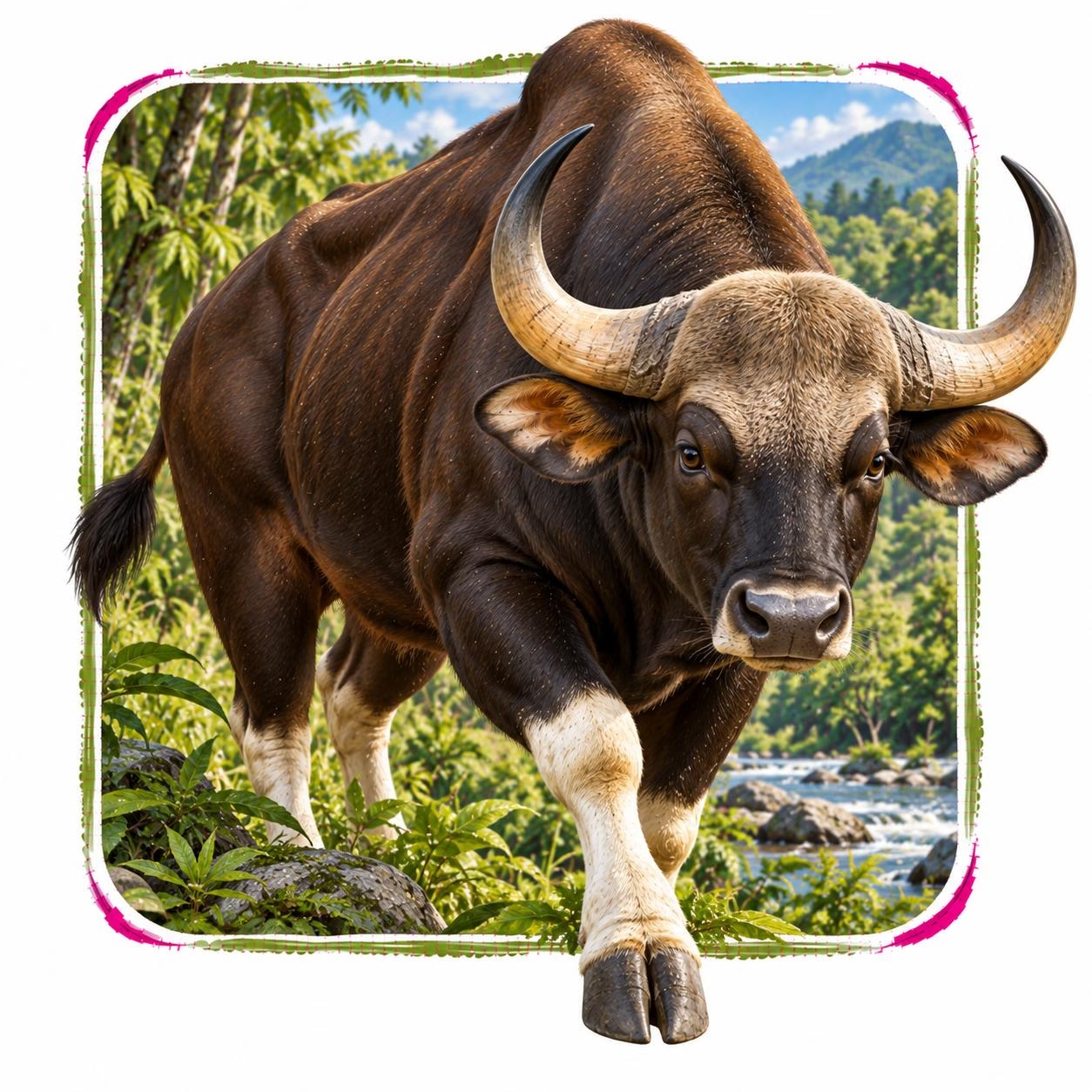
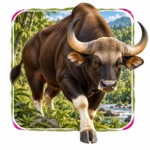
Gaur in its natural Tropical and subtropical forest, evergreen and deciduous woodland, bamboo, grassland, forest clearings, wooded hills, and river valleys across fragmented parts of South and Southeast Asia habitat