
Gharial Facts for Kids
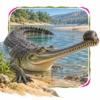
The gharial, Gavialis gangeticus, is a long-snouted crocodilian of large rivers in the northern Indian subcontinent. It belongs to the family Gavialidae and is one of the most aquatic living crocodilians. Adults have narrow jaws lined with many interlocking teeth, raised eyes and nostrils, short legs, webbed hind feet, and a powerful flattened tail. Mature males develop a bulbous growth called a ghara at the snout tip. Gharials feed mainly on fish and are globally Critically Endangered.
Quick Gharial Facts
- Animal Type: Reptile
- Group: Crocodilian in the family Gavialidae
- Known For: Extremely narrow snout, more than 100 interlocking teeth, male ghara, superb swimming, sandbank nests, guarded hatchlings, and Critically Endangered status
- Habitat: Deep flowing rivers with sandbanks, pools, channels, and abundant fish
- Diet: Mainly fish; young animals also eat insects, crustaceans, frogs, and other small prey
What You’ll Learn
Learn 10 incredible gharial facts for kids about long narrow jaws, sharp teeth, swimming, fish-eating, and Asian rivers, with a quiz, glossary, and activity
Simple explanations make them great for children, families, teachers, and young reptile fans.
10 Fun Gharial Facts for Kids
1. It Belongs to Its Own Crocodilian Family
The gharial is the living species of Gavialis and belongs to Gavialidae. It is a crocodilian relative of crocodiles and alligators but carries a far more specialized skull and lifestyle.
Kid Decode: The river reptile sits on its own slender-snouted branch of the crocodilian family tree.
2. The Snout Is Built for Catching Fish
Long narrow jaws move through water with less resistance than a broad crocodile snout. More than 100 fine interlocking teeth form a trap for slippery fish rather than a crushing tool for large land prey.
Kid Decode: The jaws work like a low-drag fish rack lined with needles.
3. A Male Grows a Ghara
A mature male develops a hollow bulb at the tip of the snout. The structure resembles an Indian earthenware pot called a ghara and helps amplify sounds and create bubbles during courtship and territorial displays.
Kid Decode: The nose grows a buzzing bubble-making instrument found on no female.
4. It Is One of the Longest Crocodilians
Large males may exceed five metres, while females are usually smaller. The body is long and streamlined, but it is lighter and less massively built than the largest broad-snouted crocodiles.
Kid Decode: The gharial wins length with a river-spear body rather than with bulky armor and muscle.
5. The Tail Provides Most of the Power
A deep flattened tail sweeps from side to side and drives the animal through water. Webbed hind feet steer and stabilize, while the short legs contribute much less to fast swimming.
Kid Decode: The giant tail is the engine and the webbed feet become underwater rudders.
6. Land Movement Is Awkward
Adult gharials are highly aquatic and cannot lift the body into the strong high walk used by many crocodiles. They usually slide or push themselves across sand to bask and nest.
Kid Decode: The river champion becomes a slow belly-dragging visitor when it leaves the water.
7. Young Gharials Eat Smaller Prey
Hatchlings and juveniles take insects, crustaceans, frogs, and tiny fish before becoming increasingly fish-specialized. Adults may occasionally capture other vertebrates, but fish dominate the normal diet.
Kid Decode: The menu grows from insect snacks to a nearly full-time fish restaurant.
8. Females Dig Nests in Dry Sandbanks
During the dry season, females excavate deep holes above the waterline and lay clutches of large eggs. Suitable sand must remain dry enough for incubation but close enough for hatchlings to reach water.
Kid Decode: A temporary beach becomes an underground nursery balanced between flood and drought.
9. Adults Guard Hatchling Crèches
Hatchlings call from inside the nest, and females may help uncover them. Adults guard groups of young in shallow water, and males have been observed defending large crèches, but narrow jaws prevent normal crocodile-style baby carrying.
Kid Decode: The long-jawed father can guard a floating nursery even though his mouth cannot become a baby taxi.
10. River Changes Threaten Every Life Stage
Dams, barrages, water extraction, sand mining, riverbank farming, pollution, fishing nets, and depleted fish populations remove nesting banks and break connected habitat. Nest protection, captive rearing, releases, and river restoration support recovery.
Kid Decode: A gharial needs an entire working river, not merely one protected patch of water.
The Weirdest Gharial Fact
Adult males grow a hollow pot-shaped ghara on the nose that helps make buzzing calls and bubbling displays, turning the snout tip into a visual and acoustic signal.
Try This Gharial Activity
Gharial River-Life Activity
Draw a gharial in a wide South Asian river. Add a very long narrow snout, more than 100 needle-like interlocking teeth, raised eyes and nostrils, a male ghara making bubbles, short legs, webbed hind feet, a powerful flattened tail, side-swiping fish capture, a sandbank nest with large eggs, hatchlings calling from the nest, adults guarding a crèche, and conservation panels for dams, water extraction, sand mining, fishing nets, pollution, and river restoration.
Quick Gharial Quiz
- What is the gharial’s scientific name? Answer: Gavialis gangeticus.
- What is a ghara? Answer: The bulbous structure on an adult male’s snout.
- What does an adult gharial mainly eat? Answer: Fish.
- Where are the eggs laid? Answer: In holes dug into dry river sandbanks.
- What is the gharial’s global conservation category? Answer: Critically Endangered.
Mini Glossary
- Crocodilian: A member of the reptile order containing crocodiles, alligators, caimans, and gharials.
- Ghara: The hollow bulbous growth on the snout of an adult male gharial.
- Piscivorous: Specialized for eating fish.
- Crèche: A group of young animals cared for or guarded together.
- Sand Mining: Removal of river sand, which can destroy basking and nesting habitat.
 Carpenter Bee Facts for Kids
 Butterflyfish Facts for Kids
 Black Rhino Facts for Kids
 Compsognathus Facts for Kids
More Animal Facts for Kids
Visit the full animal facts library or explore a focused animal group.
More Extinct Animal Facts for Kids
Discover dinosaurs, Ice Age giants, prehistoric sea creatures, recently extinct species, and other animals from the past.
Fact check note: Fact checked with the IUCN SSC Crocodile Specialist Group’s Gavialis gangeticus species account and conservation-status resources, the Reptile Database’s gharial diagnosis, IUCN reports on river threats and recovery, and field research on fish-specialized feeding, ghara displays, swimming, nesting, egg size, hatchling calls, crèche guarding, fishing-net mortality, sand mining, and reintroduction.

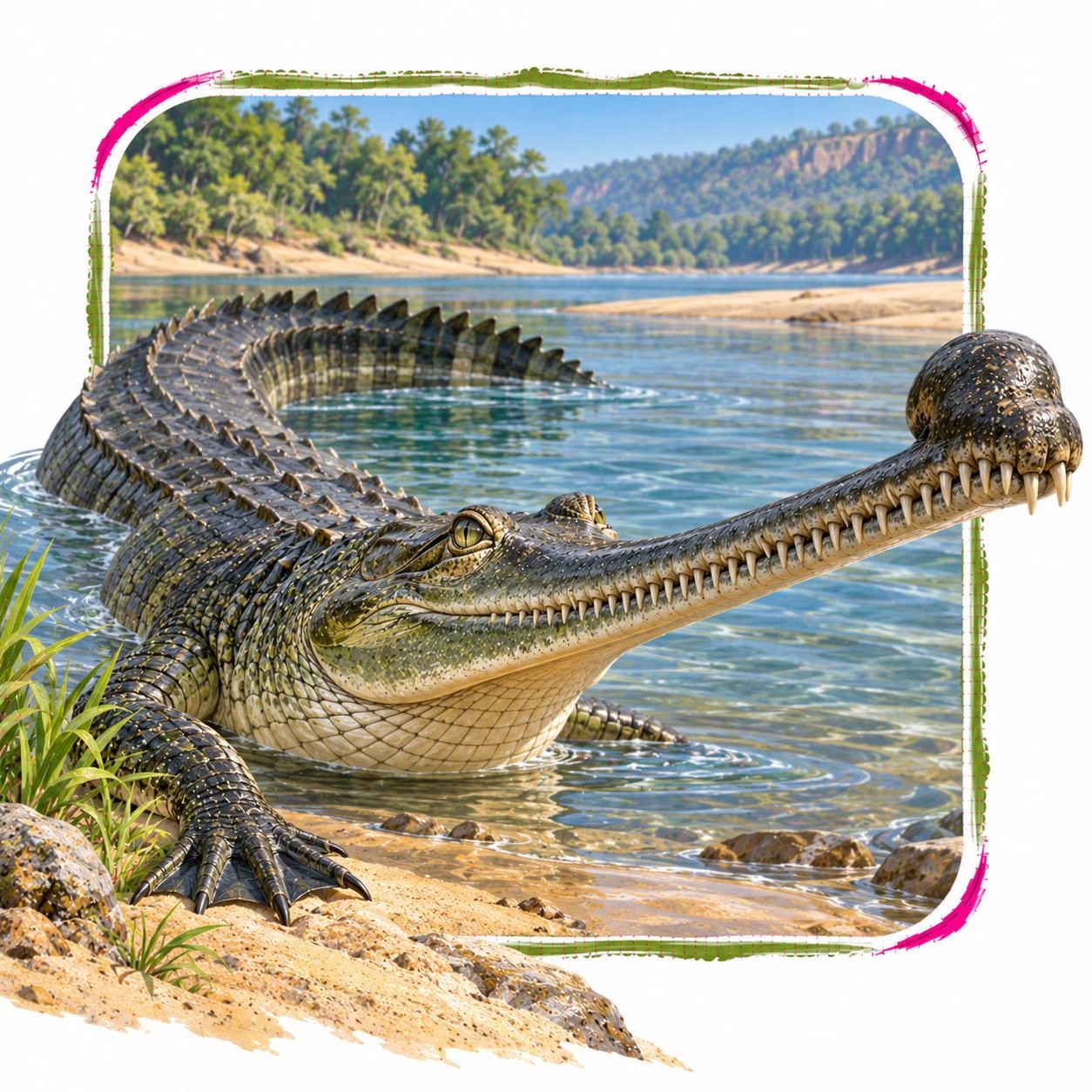
Gharial in its natural Large deep freshwater rivers with flowing channels, quiet pools, exposed sandbanks, and abundant fish in fragmented parts of the northern Indian subcontinent habitat