
Giant Centipede Facts for Kids
The Giant Centipede, Scolopendra gigantea, is also called the Amazonian Giant Centipede or Peruvian Giant Yellow-Leg Centipede. It is the world’s largest well-documented living centipede and can reach about 30 centimetres in length. Verified native records come from northern South America and southern Caribbean islands. This flattened nocturnal predator hides in damp leaf litter, caves, rotting wood, rock cracks, and sheltered buildings. It uses powerful venom-delivering forcipules to capture insects, spiders, frogs, lizards, mice, and even bats.
Quick Giant Centipede Facts
- Animal Type: Invertebrate
- Group: Centipede in the class Chilopoda, order Scolopendromorpha, and family Scolopendridae
- Known For: Enormous size, 21 or 23 leg pairs, venomous forcipules, fast movement, cave climbing, bat predation, and maternal egg guarding
- Habitat: Tropical and subtropical forest, dry forest, caves, leaf litter, rotting logs, rock crevices, and other damp shelters
- Diet: Insects, spiders, worms, snails, scorpions, frogs, lizards, snakes, birds, mice, and bats
What You’ll Learn
Explore 10 amazing giant centipede facts for kids about many legs, venom claws, hunting, hiding places, and tropical habitats, with a quiz, glossary, and activity
Easy explanations make them fun for children, families, teachers, and young arthropod explorers.
10 Fun Giant Centipede Facts for Kids
1. It Can Reach About 30 Centimetres
Scolopendra gigantea is the largest well-documented living centipede species. Exceptional adults can approach the length of a school ruler, although many are smaller.
Kid Decode: One centipede can stretch almost from one end of a classroom ruler to the other.
2. It Never Has Exactly 100 Legs
Adults usually carry 21 or 23 pairs of walking legs, producing 42 or 46 walking legs. Centipedes have an odd number of leg-bearing segments, so exactly 50 pairs is impossible.
Kid Decode: The animal called hundred-legger mathematically refuses to wear one hundred legs.
3. Each Segment Carries One Leg Pair
Centipedes belong to Chilopoda and place one walking-leg pair on each leg-bearing trunk segment. Millipedes usually carry two pairs on most apparent segments, making the two groups easy to separate.
Kid Decode: One pair per segment writes the centipede rule down the whole flattened body.
4. Forcipules Are Venomous Front Legs
The curved structures beneath the head are not ordinary jaws. They evolved from the first trunk-leg pair and pierce prey while delivering venom from internal glands.
Kid Decode: The first legs abandoned walking and became two folding venom tools.
5. Moisture Is Essential
The exoskeleton lacks the heavy waterproofing of many insects, so the animal loses water readily. It hides beneath logs, rocks, bark, litter, and cave surfaces and emerges mainly in humid darkness.
Kid Decode: A damp crack becomes both bedroom and life-support system for the easily dried hunter.
6. Antennae Replace Sharp Eyesight
Simple eyes provide limited visual information. Long head antennae and sensory terminal legs detect touch, vibration, air movement, obstacles, prey, and danger in dark spaces.
Kid Decode: The animal feels its night world from both the front and the rear.
7. It Can Overpower Vertebrates
Large individuals capture frogs, lizards, small snakes, birds, mice, and bats as well as insects, spiders, scorpions, worms, and snails. Venom immobilizes prey while many legs hold the struggling meal.
Kid Decode: Dozens of gripping feet turn one flexible hunter into a living restraint system.
8. Some Hunt Bats From Cave Ceilings
In Venezuela, Giant Centipedes have been observed climbing cave roofs, anchoring themselves with rear legs, and seizing passing or roosting bats with the front body and forcipules.
Kid Decode: The cave hunter becomes a many-legged fishing line dangling into a river of bats.
9. Growth Requires Molting
A rigid exoskeleton cannot stretch forever. The centipede forms a new covering underneath, sheds the old shell, expands, and remains soft and vulnerable until the replacement hardens.
Kid Decode: The giant grows by climbing out of one suit of armor and waiting for the next to solidify.
10. Mothers Guard Eggs and Young
After sperm transfer, a female lays eggs in a sheltered chamber and coils around them. She cleans, protects, and humidifies the clutch and may remain with newly hatched young until they disperse.
Kid Decode: The fierce night predator becomes a living shelter wrapped around a pearl-like clutch.
The Weirdest Giant Centipede Fact
Giant Centipedes have been observed hanging from Venezuelan cave ceilings by their rear legs while seizing bats that weigh much more than they do.
Try This Giant Centipede Activity
Giant Centipede Night-Hunter Activity
Draw a Scolopendra gigantea moving through damp rainforest leaf litter. Add a reddish-brown head, flattened segmented trunk, 21 or 23 pairs of legs, one pair per leg-bearing segment, long antennae, sensory terminal legs, venomous forcipules beneath the head, spiracles, a molting exoskeleton, insects and frogs as prey, a cave-ceiling bat-hunting scene, a female coiled around eggs and young, and a safety panel showing hands kept away and an adult contacting medical help after a serious bite.
Quick Giant Centipede Quiz
- What is the Giant Centipede’s scientific name? Answer: Scolopendra gigantea.
- Does it have exactly 100 legs? Answer: No, adults usually have 21 or 23 leg pairs.
- What are forcipules? Answer: Modified front legs that inject venom.
- Why does it hide in damp places? Answer: Its body loses water easily.
- Should a wild Giant Centipede be handled? Answer: No.
Mini Glossary
- Chilopod: A centipede belonging to the class Chilopoda.
- Forcipule: A venom-delivering modified first pair of legs beneath the head.
- Exoskeleton: A hard outer covering that supports and protects an arthropod.
- Desiccation: Dangerous drying caused by water loss.
- Brooding: Guarding and caring for eggs or newly hatched young.
 Bird-of-Paradise Facts for Kids
 Cod Facts for Kids
 Harlequin Duck Facts for Kids
 Pyrotherium Facts for Kids
More Animal Facts for Kids
Visit the full animal facts library or explore a focused animal group.
More Extinct Animal Facts for Kids
Discover dinosaurs, Ice Age giants, prehistoric sea creatures, recently extinct species, and other animals from the past.
Fact check note: Fact checked with Shelley and Kiser’s taxonomic diagnosis and verified distribution of Scolopendra gigantea; the University of the West Indies Online Guide to the Animals of Trinidad and Tobago; Molinari and colleagues’ documented bat-predation observations; current GBIF and NCBI taxonomy; and centipede research on forcipules, sensory terminal legs, moisture dependence, molting, venom, spermatophore transfer, and maternal brooding.

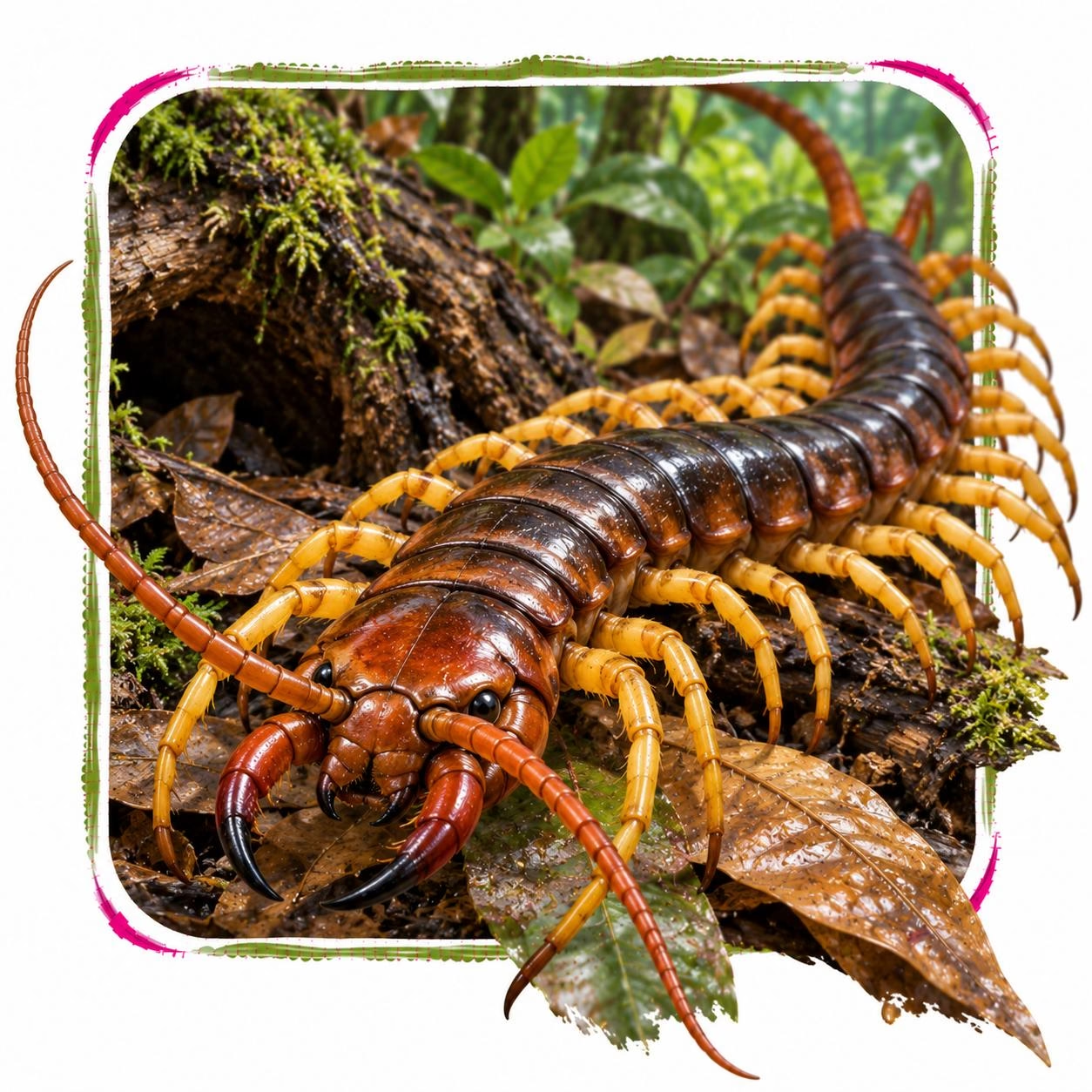
Giant Centipede in its natural Tropical and subtropical rainforest, tropical dry forest, caves, leaf litter, rotting wood, rock crevices, gardens, and damp shelters in northern South America and southern Caribbean islands habitat