
Giant Panda Facts for Kids
The Giant Panda, Ailuropoda melanoleuca, is a black-and-white bear found only in mountain forests of central China. Wild populations survive mainly in Sichuan, Shaanxi, and Gansu, where dense bamboo grows beneath cool temperate forest. Giant Pandas have powerful jaws, broad molars, thick fur, strong climbing claws, and a false thumb made from an enlarged wrist bone. Although they belong to the meat-eating order Carnivora, bamboo forms nearly all of their natural diet.
Quick Giant Panda Facts
- Animal Type: Mammal
- Group: Bear in the family Ursidae and only living species of Ailuropoda
- Known For: Black-and-white fur, bamboo diet, false thumb, powerful jaws, solitary scent communication, climbing, tiny cubs, and conservation recovery
- Habitat: Cool mountain bamboo forest, mixed conifer forest, broadleaf forest, valleys, and seasonal slopes
- Diet: Mainly bamboo leaves, stems, and shoots, with occasional other plants or animal matter
What You’ll Learn
Learn 10 adorable giant panda facts for kids about bamboo, climbing, black-and-white fur, cubs, and Chinese mountain forests, plus a quiz, glossary, and activity
These simple facts are written for kids, parents, teachers, and curious young minds.

10 Fun Giant Panda Facts for Kids
1. It Is a True Bear
DNA and anatomy place the Giant Panda in Ursidae with other bears. The Red Panda belongs to a separate family and is much more closely related to musteloid mammals than to the Giant Panda.
Kid Decode: The black-and-white bamboo eater is a bear, while the red namesake lives on another family branch.
2. Bamboo Dominates the Diet
Wild Giant Pandas eat leaves, stems, and shoots from many bamboo species and switch plant parts with the seasons. They may occasionally consume other plants or animal matter, but bamboo provides nearly all food.
Kid Decode: The menu contains many bamboo species, served as shoots, stems, and leafy bundles.
3. A False Thumb Grips Stems
Five true digits work against an enlarged radial sesamoid wrist bone covered by a fleshy pad. This pseudo-thumb clamps bamboo while the panda strips leaves or positions a stem for biting.
Kid Decode: The paw turns one wrist bone into a built-in bamboo clamp.
4. The Gut Still Resembles a Carnivore’s
Unlike cows or leaf-eating monkeys, pandas lack a long specialized fermentation system. A simple stomach and relatively short intestine digest bamboo fibre inefficiently, so much food passes through.
Kid Decode: A bear-shaped bamboo specialist still runs its meals through carnivore plumbing.
5. Eating Takes Most of the Day
Because bamboo provides modest nutrition and is poorly digested, pandas spend many hours feeding and consume large daily amounts. Long eating sessions alternate with naps that conserve energy.
Kid Decode: The daily timetable is mostly bamboo, nap, bamboo, nap, and more bamboo.
6. Black-and-White Fur May Serve Two Jobs
Researchers have proposed that white areas provide camouflage against snow while black limbs blend with deep forest shade. Dark facial and ear markings may also support communication or recognition.
Kid Decode: One coat may hide the body in two backgrounds while keeping the face easy for pandas to read.
7. Scent Messages Organize Solitary Lives
Adults usually travel alone but exchange information through anal-gland scent rubbed onto trees, rocks, and ground. Marks can reveal identity, sex, reproductive condition, and recent presence.
Kid Decode: The quiet forest contains a panda message board written in invisible perfume.
8. They Can Climb and Swim
Giant Pandas climb trees to rest, escape danger, inspect scent, or help young animals stay safe. They are also capable swimmers, although most daily activity occurs on forested slopes and valley floors.
Kid Decode: The round bamboo bear can become both a tree climber and a river paddler.
9. Cubs Are Astonishingly Tiny
A newborn weighs only about 85 to 140 grams, is pink, nearly hairless, blind, and roughly one nine-hundredth of its mother’s mass. The mother provides almost constant warmth and care during the earliest weeks.
Kid Decode: A full-grown bear begins as a pink bundle smaller than a stick of butter.
10. Recovery Still Depends on Connected Forest
Forest protection and reserve expansion helped the species improve from Endangered to Vulnerable, with about 1,864 counted in the fourth national survey. Roads, farms, isolated populations, bamboo loss, and climate change still threaten long-term recovery.
Kid Decode: The panda comeback needs green bridges between mountain islands, not merely more dots on a population chart.
The Weirdest Giant Panda Fact
A Giant Panda grips bamboo with five true digits plus a false thumb made from an enlarged wrist bone, giving the paw a six-fingered appearance.
Try This Giant Panda Activity
Giant Panda Bamboo-Forest Activity
Draw a Giant Panda sitting in a Chinese mountain forest. Add black ears and eye patches, black shoulders and legs, white body, five true digits and a wrist-bone pseudo-thumb grasping bamboo, broad crushing molars, a simple carnivore-like digestive tract, scent marks on trees, climbing and swimming panels, seasonal movement between bamboo shoots and leaves, a mother with one tiny pink cub, and wildlife corridors linking fragmented reserves.
Quick Giant Panda Quiz
- Which animal family contains the Giant Panda? Answer: Ursidae, the bear family.
- What forms the false thumb? Answer: An enlarged wrist bone with a fleshy pad.
- What food makes up nearly all of the natural diet? Answer: Bamboo.
- How small is a newborn cub compared with its mother? Answer: About one nine-hundredth of her size.
- What is the current global conservation category? Answer: Vulnerable.
Mini Glossary
- Ursid: A member of the bear family, Ursidae.
- Pseudo-Thumb: A thumb-like grasping structure formed from an enlarged wrist bone.
- Delayed Implantation: A pause before a fertilized embryo attaches to the uterus and develops.
- Fragmentation: The splitting of continuous habitat into smaller isolated patches.
- Wildlife Corridor: Connected habitat that allows animals to move safely between populations.

 Bluefin Tuna Facts for Kids
 Triggerfish Facts for Kids
 Common Snapping Turtle Facts for Kids
 Nothosaurus Facts for Kids
More Animal Facts for Kids
Visit the full animal facts library or explore a focused animal group.
More Extinct Animal Facts for Kids
Discover dinosaurs, Ice Age giants, prehistoric sea creatures, recently extinct species, and other animals from the past.
Fact check note: Fact checked with the Mammal Diversity Database’s current Ailuropoda melanoleuca taxonomy; Smithsonian’s National Zoo giant-panda biology and conservation resources; the IUCN Red List’s current Vulnerable assessment; and research on the radial-sesamoid pseudo-thumb, bamboo selection, carnivore-like digestion, scent communication, climbing, delayed implantation, cub development, habitat fragmentation, corridors, and climate threats.

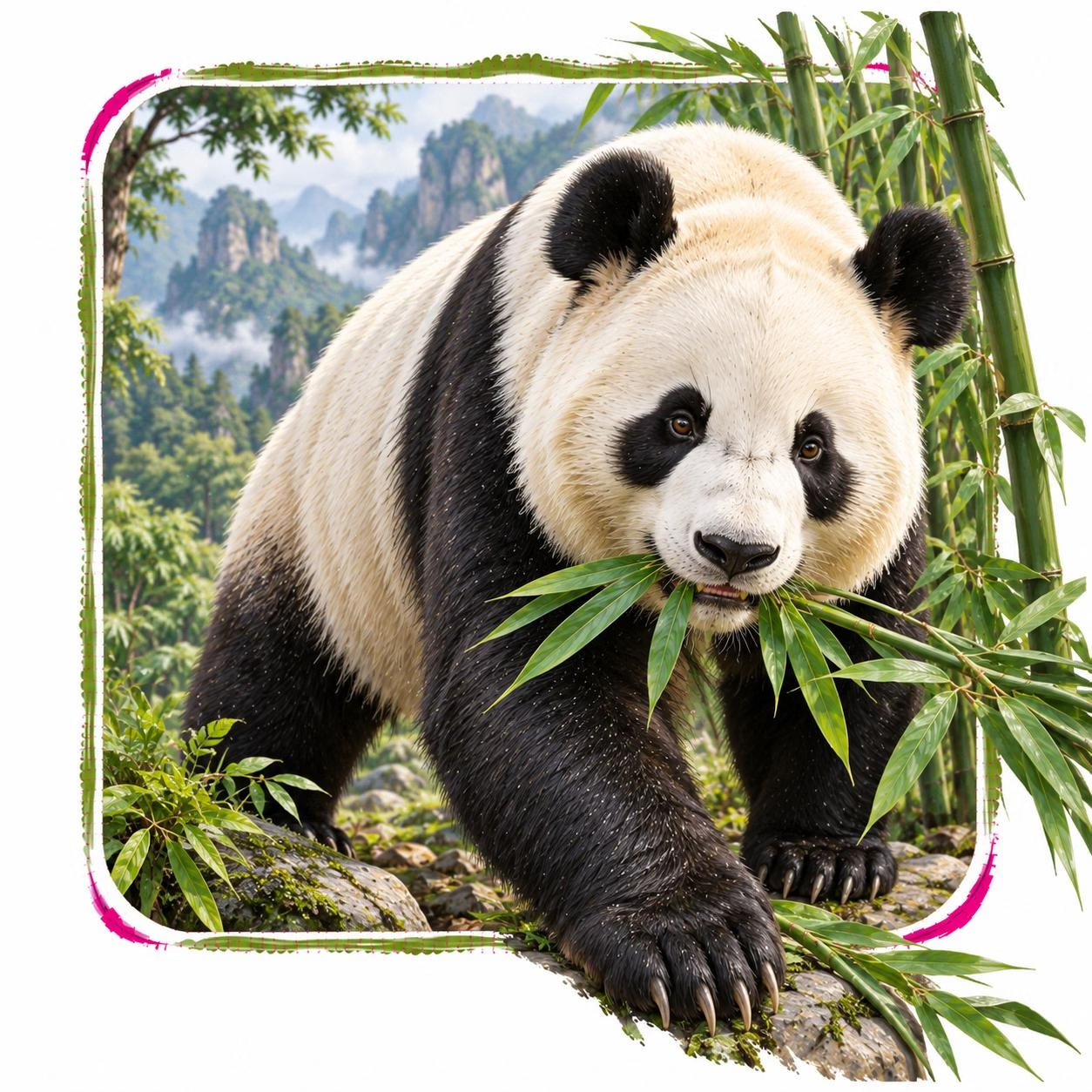
Giant Panda in its natural Cool temperate bamboo forest, mixed conifer and broadleaf mountain forest, valleys, and seasonal slopes in fragmented ranges of Sichuan, Shaanxi, and Gansu, China habitat