
Glass Lizard Facts for Kids
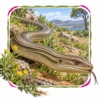
Glass lizards are long, mostly legless lizards in the anguid subfamily Anguinae. The name is used especially for species in Ophisaurus of North America, Pseudopus of Europe and western Asia, Dopasia of Asia, and Hyalosaurus of North Africa. They resemble snakes but have movable eyelids, visible ear openings, stiff armored skin, and long fragile tails. Most hunt insects and other small animals in grassland, woodland, dunes, scrub, farms, and rocky habitats. The tail can break into several wriggling pieces, giving the group its glass-like name.
Quick Glass Lizard Facts
- Animal Type: Reptile
- Group: Mostly legless anguid lizards in the subfamily Anguinae
- Known For: Movable eyelids, ear openings, lateral skin grooves, armored scales, extremely long breakable tails, and snake-like movement
- Habitat: Grassland, open woodland, forest edges, dunes, scrub, rocky slopes, farms, gardens, and dry or moist soils
- Diet: Insects, spiders, snails, slugs, worms, eggs, small reptiles, amphibians, and young rodents depending on species
What You’ll Learn
Learn 10 surprising glass lizard facts for kids about legless bodies, movable eyelids, long tails, burrowing, and their lizard features, with a quiz, glossary, and activity
Simple explanations make them fun for children, families, teachers, and young reptile fans.
10 Fun Glass Lizard Facts for Kids
1. They Are Lizards, Not Snakes
Glass lizards belong to Anguidae within the lizard branch of Squamata. Their legless shape evolved independently from snakes, producing a striking case of convergent evolution.
Kid Decode: A snake-shaped body can be invented twice by two different reptile family trees.
2. Movable Eyelids Blink
Glass lizards can close movable eyelids over their eyes. Snakes have a transparent fixed spectacle covering each eye and cannot blink in the same way.
Kid Decode: One quick blink reveals the lizard hiding inside the snake-like costume.
3. External Ear Openings Remain Visible
A small ear opening sits behind each eye, connecting to the middle ear. Snakes lack external ear openings even though they detect ground vibration and some airborne sound.
Kid Decode: Two tiny ear holes provide a second clue before the animal disappears into grass.
4. The Tail Forms Most of the Length
In many species, the body ends relatively close behind the internal organs and the tail makes up more than half, sometimes about two-thirds, of total length.
Kid Decode: Much of the apparent snake is actually one extraordinarily long emergency tail.
5. The Tail Can Shatter Into Pieces
Special fracture zones allow the tail to detach when grabbed. It may break into several wriggling sections that distract a predator while the lizard escapes.
Kid Decode: One tail becomes a pile of moving decoys while the important end slips away.
6. A Regrown Tail Is Never Quite the Same
Cartilage replaces the original chain of tail vertebrae, and the new section is usually shorter, smoother, and differently colored. Complete regrowth can take months or years.
Kid Decode: The replacement is a practical patch, not a factory-perfect original part.
7. Armored Skin Makes the Body Stiff
Small bony osteoderms strengthen the rectangular scales. Flexible lateral grooves along the sides allow the body to expand for breathing, feeding, and carrying eggs despite the armor.
Kid Decode: The lizard wears a tiled corset with two stretchy seams.
8. Some Species Keep Tiny Limb Remnants
Most glass lizards are entirely legless, but the European Glass Lizard retains small flap-like hind-limb remnants beside the vent. These vestiges do not support ordinary walking.
Kid Decode: Two tiny evolutionary bookmarks remain where working hind legs once stood.
9. They Crush and Swallow Small Prey
Glass lizards hunt insects, spiders, snails, slugs, worms, eggs, and small vertebrates. Their jaws do not spread as widely as a snake’s, limiting the size of prey they can swallow whole.
Kid Decode: The hunter handles crunchy snails and insects but cannot unzip its mouth around a giant meal.
10. Some Mothers Guard Their Eggs
Many glass lizards lay soft leathery eggs in soil, leaf litter, or hidden chambers. Females of some species coil around the clutch and defend it until hatching.
Kid Decode: The supposedly fragile lizard becomes a living fortress wrapped around leathery eggs.
The Weirdest Glass Lizard Fact
When threatened, one long tail may break into several separately wriggling pieces, creating the illusion that the lizard has shattered like dropped glass.
Try This Glass Lizard Activity
Glass Lizard or Snake Activity
Draw a glass lizard beside a harmless snake and label the differences. Add movable eyelids, visible ear openings, a thick unforked-to-shallow-forked tongue, stiff armored scales, lateral grooves, a body ending at the cloaca, a very long tail forming most of the total length, tiny vestigial hind-limb flaps on a European species, tail autotomy with several wriggling pieces, a shorter regrown tail, leathery eggs guarded by a female, and insect, snail, worm, and small-lizard prey.
Quick Glass Lizard Quiz
- Are glass lizards snakes? Answer: No, they are lizards.
- Name one feature snakes lack but glass lizards have. Answer: Movable eyelids or visible ear openings.
- Why are they called glass lizards? Answer: Their fragile tails can break into several pieces.
- What body part makes up much of their length? Answer: The tail.
- What do they mostly eat? Answer: Insects and other small animals.
Mini Glossary
- Anguid: A lizard in the family Anguidae.
- Autotomy: Deliberately shedding a body part, usually the tail, to escape danger.
- Osteoderm: A bony plate embedded within the skin.
- Lateral Groove: A flexible fold running along each side of many glass lizards.
- Vestigial: Reduced from a structure that was larger or more useful in ancestors.

 Horned Lizard Facts for Kids
 Blue Jay Facts for Kids
 Mugger Crocodile Facts for Kids
 Diprotodon Facts for Kids
More Animal Facts for Kids
Visit the full animal facts library or explore a focused animal group.
More Extinct Animal Facts for Kids
Discover dinosaurs, Ice Age giants, prehistoric sea creatures, recently extinct species, and other animals from the past.
Fact check note: Fact checked with the Reptile Database’s current Ophisaurus, Pseudopus, Dopasia, and Hyalosaurus taxonomy; Smithsonian National Zoo glass-lizard breeding observations; Animal Diversity Web’s Anguidae account; and herpetological research on eyelids, ear openings, osteoderms, lateral grooves, limb reduction, locomotion, tail autotomy, regeneration, diet, egg laying, maternal guarding, and conservation.

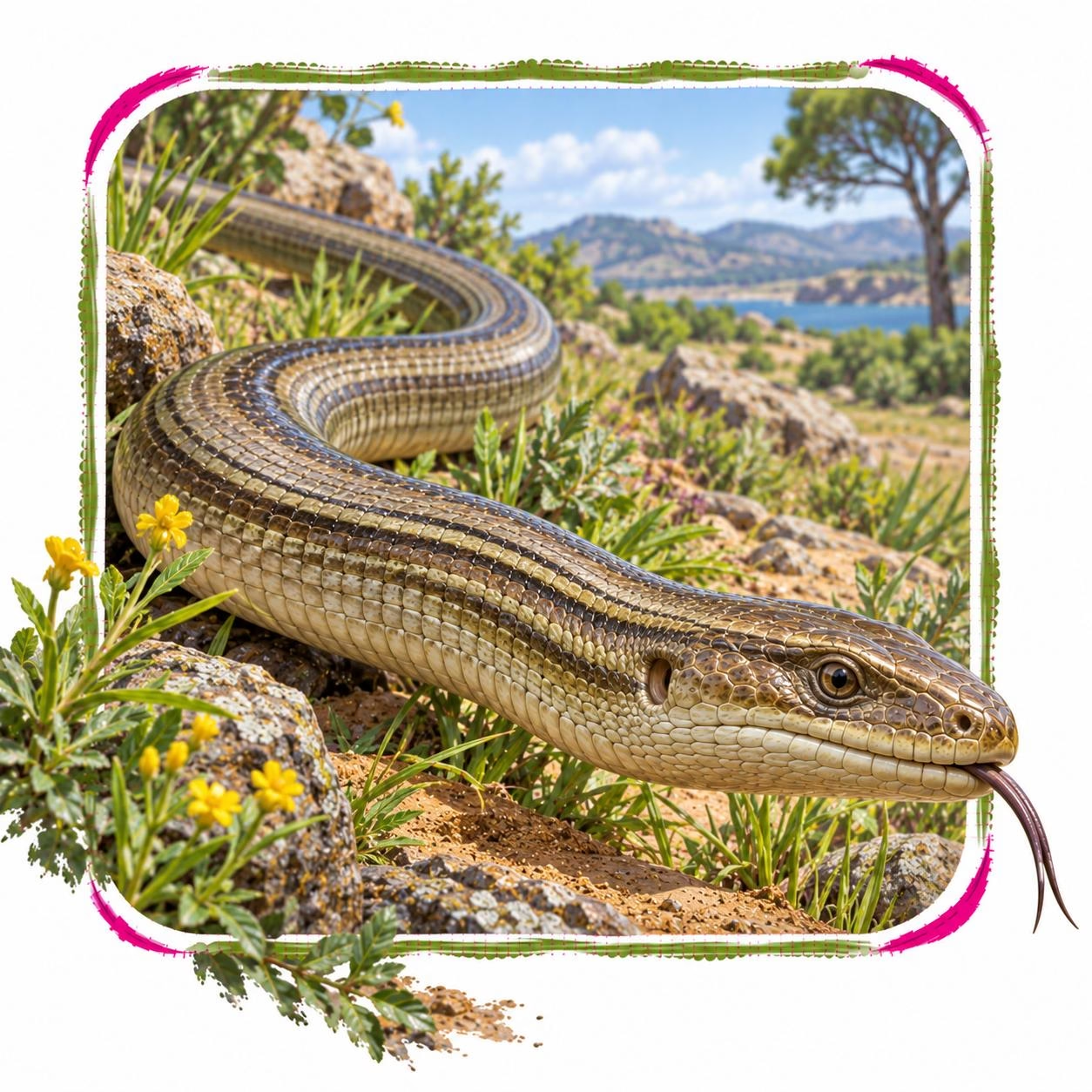
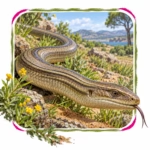
Glass Lizard in its natural Grasslands, open woodland, forest edges, dunes, scrub, rocky slopes, farms, gardens, and loose soils across parts of North America, Europe, Asia, and North Africa habitat