
Glowworm Facts for Kids
Glowworm is a common name for several unrelated insects that produce visible light. In Europe and much of Asia, the best-known glowworms are firefly beetles in the family Lampyridae, especially wingless glowing females and predatory larvae. In New Zealand and parts of Australia, glowworms are luminous larvae of fungus gnats in the genus Arachnocampa. Beetle glowworms often shine to attract mates, while cave-dwelling fungus-gnat larvae use blue-green light above sticky silk threads to lure tiny flying prey.
Quick Glowworm Facts
- Animal Type: Invertebrate
- Group: A common-name group including luminous beetles and glowing fungus-gnat larvae
- Known For: Bioluminescence, wingless beetle females, snail-hunting larvae, sticky silk snares, cave ceilings, and nighttime signals
- Habitat: Grassland, woodland edges, hedgerows, caves, ravines, stream banks, damp forest, and sheltered rock faces
- Diet: Snails, slugs, worms, insects, and other small invertebrates depending on the glowworm group and life stage
What You’ll Learn
Discover 10 glowing glowworm facts for kids about bioluminescence, larvae, nighttime signals, feeding, and the different animals called glowworms, with a quiz, glossary, and activity
These facts are explained simply for kids, parents, teachers, and curious little fact-finders.
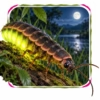
10 Fun Glowworm Facts for Kids
1. Glowworms Are Insects, Not Worms
The name describes a worm-like glowing body, not an animal relationship. Many familiar glowworms are beetle larvae or wingless adult beetles, while others are fly larvae.
Kid Decode: The glowing worm costume hides either a future beetle or a future gnat.
2. The Same Name Belongs to Different Lineages
Lampyrid glowworms are close relatives of fireflies, while Arachnocampa glowworms belong to fungus gnats in Diptera. Their light-producing abilities evolved on separate insect branches.
Kid Decode: Two distant insect families independently installed tiny night-lights.
3. Bioluminescence Makes Cool Light
A chemical reaction involving a light-producing molecule, oxygen, and enzymes releases photons with very little heat. The exact molecules and organs differ between beetles and fungus gnats.
Kid Decode: The body runs a lantern without cooking the insect inside it.
4. Wingless Females Signal Flying Males
In the common European glow-worm, an adult female climbs vegetation and points a steady yellow-green abdominal light upward. Winged males search from the air for the brightest suitable signal.
Kid Decode: A flightless female turns one grass stem into a glowing airport beacon.
5. Beetle Larvae Hunt Snails
Common glow-worm larvae follow slime trails and bite snails or slugs, releasing chemicals that immobilize and begin digesting the prey. One meal may take many hours.
Kid Decode: A small glowing hunter tackles a shell-carrying animal larger than itself.
6. Cave Glowworms Build Sticky Fishing Lines
Arachnocampa larvae spin silk threads dotted with mucus droplets beneath a sheltered ceiling. Tiny flying insects become stuck, and the larva reels the line into its mouth.
Kid Decode: The cave roof becomes a ceiling full of vertical fishing rods.
7. Blue-Green Light Lures Prey
The New Zealand glowworm’s light attracts insects that may mistake it for open sky or moonlight. Hungrier larvae often glow more strongly, improving the chance of catching food.
Kid Decode: An empty stomach turns the cave lamp brighter and the trap more tempting.
8. Humidity Keeps the Traps Working
Arachnocampa snares depend on damp, still air because their mucus droplets and silk can dry out or tangle. Cave entrances, stream banks, and wet ravines provide suitable conditions.
Kid Decode: The glowing fishing gear needs a room that behaves like a cool natural bathroom.
9. The Life Cycle Includes a Pupa
Both beetle and fungus-gnat glowworms undergo complete metamorphosis through egg, larva, pupa, and adult. The glowing larval stage may last far longer than the brief adult stage.
Kid Decode: Most of the animal’s calendar belongs to the glowing youngster rather than the adult.
10. Dark Habitats Are Part of Their Survival
Artificial light can overpower courtship signals, alter activity, and reduce mating success in beetle glowworms. Habitat loss, pesticides, drying, trampling, and cave disturbance can also damage populations.
Kid Decode: To protect living lights, people sometimes need to switch their own lights off.
The Weirdest Glowworm Fact
A European glowworm is usually a beetle, while a New Zealand glowworm is the larva of a fungus gnat, so two very different insects share the same glowing nickname.
Try This Glowworm Activity
Two Kinds of Glowworm Activity
Split a page into two nighttime habitats. On one side draw a European beetle glowworm with a wingless glowing female on grass, a winged male, eggs, snail-hunting larvae, and yellow-green abdominal light. On the other side draw an Arachnocampa larva in a damp cave tube with blue-green light, sticky beaded silk threads, trapped midges, a hanging pupa, and a short-lived adult gnat. Add a light-pollution panel showing a dark safe habitat beside an overlit one.
Quick Glowworm Quiz
- Are glowworms true worms? Answer: No, they are insects.
- Which insect family contains European beetle glowworms? Answer: Lampyridae, the firefly family.
- What is a New Zealand glowworm? Answer: The glowing larva of a fungus gnat.
- What do Arachnocampa larvae hang below their shelters? Answer: Sticky silk fishing lines.
- How can artificial light harm beetle glowworms? Answer: It can hide their mating signals and make partners harder to find.
Mini Glossary
- Bioluminescence: Light produced by a chemical reaction inside a living organism.
- Lampyrid: A beetle in the firefly family, Lampyridae.
- Larviform: Having an adult body that still resembles a larva.
- Luciferase: An enzyme that helps produce biological light.
- Silk Snare: A sticky thread used by some insect larvae to trap prey.
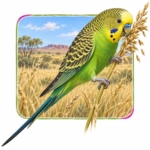 Budgerigar Facts for Kids
 Black Rhino Facts for Kids
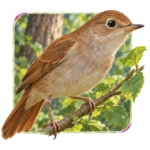 Nightingale Facts for Kids
 Bubal Hartebeest Facts for Kids
More Animal Facts for Kids
Visit the full animal facts library or explore a focused animal group.
More Extinct Animal Facts for Kids
Discover dinosaurs, Ice Age giants, prehistoric sea creatures, recently extinct species, and other animals from the past.
Fact check note: Fact checked with the Natural History Museum’s overview of lampyrid glowworms and Lampyris noctiluca biology, Te Ara’s detailed account of New Zealand Arachnocampa luminosa life history and sticky snares, and research on beetle bioluminescence, snail predation, fungus-gnat prey attraction, cave humidity, mating signals, and artificial-light impacts.

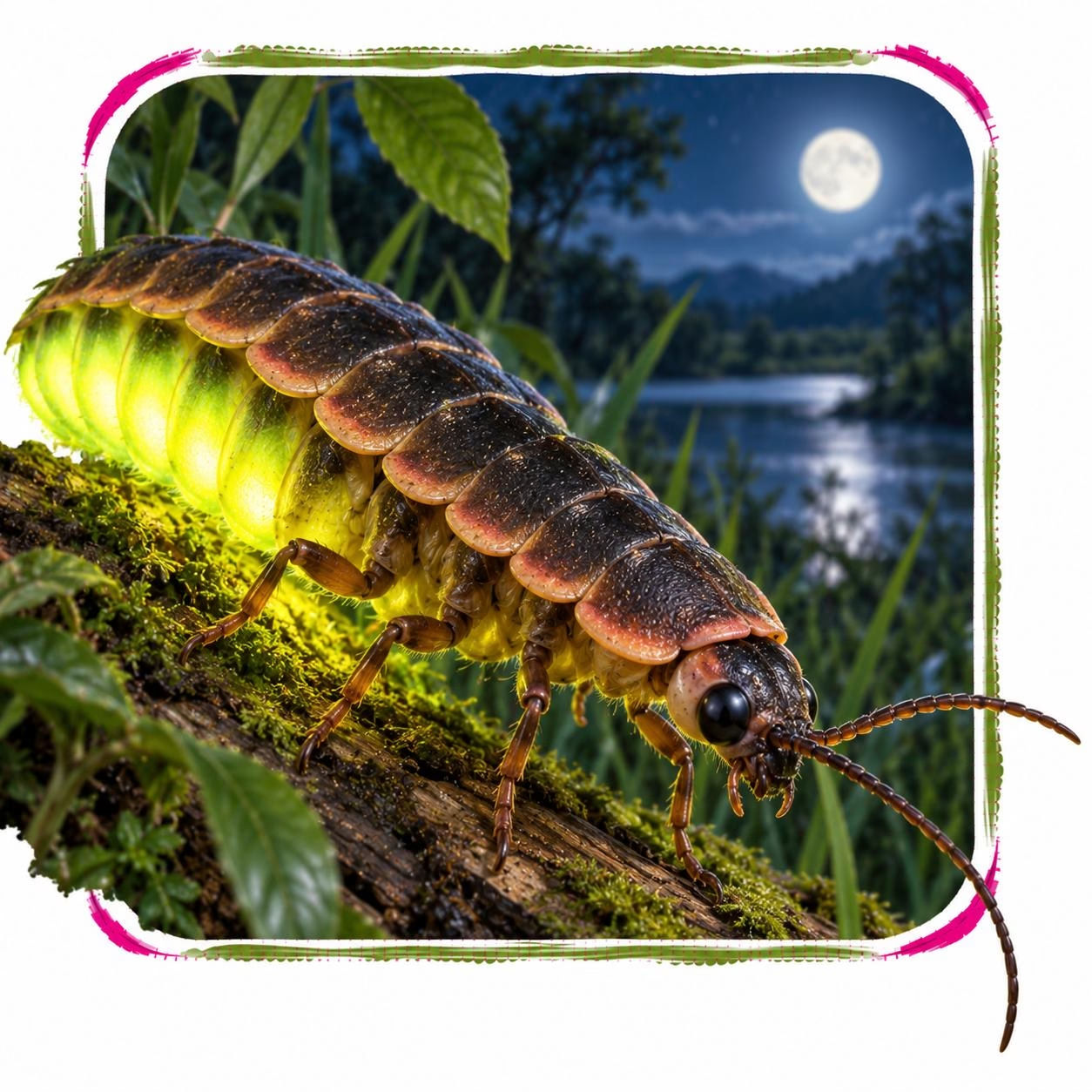
Glowworm in its natural Grasslands, woodland edges, hedgerows, heath, cliffs, caves, ravines, stream banks, damp forests, and sheltered rock faces in Europe, Asia, Australia, New Zealand, and other regions with luminous insect groups habitat