
Gnat Facts for Kids
Gnat is a loose common name for many tiny flies rather than one scientific group. The word often includes fungus gnats, wood gnats, gall gnats, black flies, biting midges, non-biting midges, and eye gnats from several different families. Like other true flies, adult gnats have six legs, one functional pair of wings, and balancing organs called halteres. Their larvae may live in soil, fungi, rotting wood, plants, streams, ponds, mud, or other damp places, where they act as decomposers, predators, plant feeders, and food for larger animals.
Quick Gnat Facts
- Animal Type: Insect
- Group: A loose common-name group of small true flies in several Diptera families
- Known For: Tiny bodies, long antennae in many groups, mating swarms, damp larval habitats, complete metamorphosis, and enormous ecological variety
- Habitat: Soil, fungi, rotting wood, freshwater, mud, wetlands, gardens, forests, caves, farms, homes, and plant tissues
- Diet: Fungi, algae, microbes, decaying matter, plant tissue, nectar, animal fluids, or prey depending on family and life stage
What You’ll Learn
Explore 10 tiny gnat facts for kids about small wings, swarms, larvae, feeding, and their many different species, plus a quiz, glossary, and activity
Easy explanations make them great for children, families, teachers, and young insect explorers.
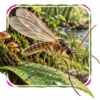
10 Fun Gnat Facts for Kids
1. Gnat Is a Nickname, Not a Taxon
Entomologists and the public use gnat for several families of very small flies. There is no one feature, habitat, or diet shared by every insect carrying the name.
Kid Decode: The word labels a tiny-fly crowd rather than one branch of the family tree.
2. They Are True Flies With Two Wings
Most adult gnats fly with one functional wing pair. Their modified hindwings vibrate as halteres and detect body rotation, helping the insect control turns and stay stable.
Kid Decode: Two visible wings fly while two tiny invisible-looking paddles run the balance desk.
3. Many Have Long Beaded Antennae
Fungus gnats, midges, and other nematoceran flies often carry long antennae with many segments. Males of some species have feathery antennae that detect female wingbeat sounds.
Kid Decode: One tiny head may carry two radio masts built from strings of beads or feathers.
4. Swarms Are Often Mating Arenas
Male gnats may hover over a landmark such as a bush, puddle, path, or bright patch of sky. Females enter the swarm briefly to choose or encounter mates.
Kid Decode: The floating cloud is usually a speed-dating dance rather than an organized attack.
5. Fungus-Gnat Larvae Live in Damp Soil
Many larvae feed on fungi, algae, microbes, roots, and decaying organic matter. They have translucent bodies and dark head capsules and thrive where soil remains continuously wet.
Kid Decode: A damp flowerpot can hide a miniature underground crew eating fungus and soft debris.
6. Other Larvae Grow Underwater
Non-biting midges, black flies, and related tiny flies develop in ponds, mud, streams, tree holes, or other water. Their body shapes and feeding methods match currents, oxygen, and available food.
Kid Decode: The airborne adult may begin as a swimmer, mud burrower, or streamside filter feeder.
7. Some Make Plant Galls
Gall gnats lay eggs in plant tissues, and the larvae trigger swelling chambers where they feed. Other family members prey on mites, aphids, or insect eggs and can help control pests.
Kid Decode: One tiny larva persuades a leaf to grow a room, while another hunts garden pests.
8. Only Certain Gnats Bite
Female biting midges and black flies need blood for egg production in many species, while fungus gnats, eye gnats, wood gnats, and most non-biting midges do not bite people. Males generally feed on sugar or do not feed.
Kid Decode: A few branches own cutting mouthparts, while most of the gnat crowd remains harmless.
9. Gnats Help Flowers and Decomposition
Adults of some groups visit flowers and carry pollen. Larvae consume fungi, microbes, dead plants, dung, carrion, or other organic material, returning nutrients to soil and water.
Kid Decode: The tiny nuisance label hides pollinators and recycling crews working below eye level.
10. They Feed Entire Ecosystems
Fish, amphibians, spiders, dragonflies, predatory insects, birds, and bats eat gnat larvae or adults. Enormous seasonal swarms can move aquatic nutrients onto land.
Kid Decode: A cloud of tiny flies becomes a flying bridge between pond mud and hungry sky hunters.
The Weirdest Gnat Fact
The word gnat has no single scientific address: two insects both called gnats may belong to different fly families and have completely different diets, larvae, and behavior.
Try This Gnat Activity
Build a Gnat Family Gallery
Draw a fungus gnat, wood gnat, non-biting midge, biting midge, black fly, gall gnat, and eye gnat in separate labeled boxes. Add one pair of wings, two halteres, six legs, antenna differences, a mating swarm, fungus-gnat larvae in damp potting soil, aquatic midge larvae in a pond, a gall inside a leaf, nectar feeding, a fish eating larvae, and a myth panel saying most insects called gnats do not bite people.
Quick Gnat Quiz
- Is gnat one exact scientific group? Answer: No, it is a loose common name for many small flies.
- How many functional wing pairs does an adult gnat have? Answer: One pair.
- What are halteres? Answer: Modified hindwings that help the fly balance.
- Why do many adult gnats form clouds? Answer: The swarms help them find mates.
- Do all gnats bite people? Answer: No.
Mini Glossary
- Dipteran: An insect in the true-fly order Diptera.
- Haltere: A vibrating balance organ formed from a fly’s hindwing.
- Fungus Gnat: A small fly whose larvae commonly live with fungi or damp organic material.
- Swarm: A temporary group of flying insects, often formed for mating.
- Detritivore: An animal that feeds on dead organic material and associated microbes.
 Emperor Penguin Facts for Kids
 Sun Bear Facts for Kids
 Babirusa Facts for Kids
 Eotriceratops Facts for Kids
More Animal Facts for Kids
Visit the full animal facts library or explore a focused animal group.
More Extinct Animal Facts for Kids
Discover dinosaurs, Ice Age giants, prehistoric sea creatures, recently extinct species, and other animals from the past.
Fact check note: Fact checked with Smithsonian Diptera collection resources, university entomology guides to fungus gnats, midges, black flies, eye gnats, wood gnats, and gall gnats, and research on halteres, mating swarms, complete metamorphosis, fungal and aquatic larvae, biting behavior, pollination, decomposition, plant galls, and food-web importance.

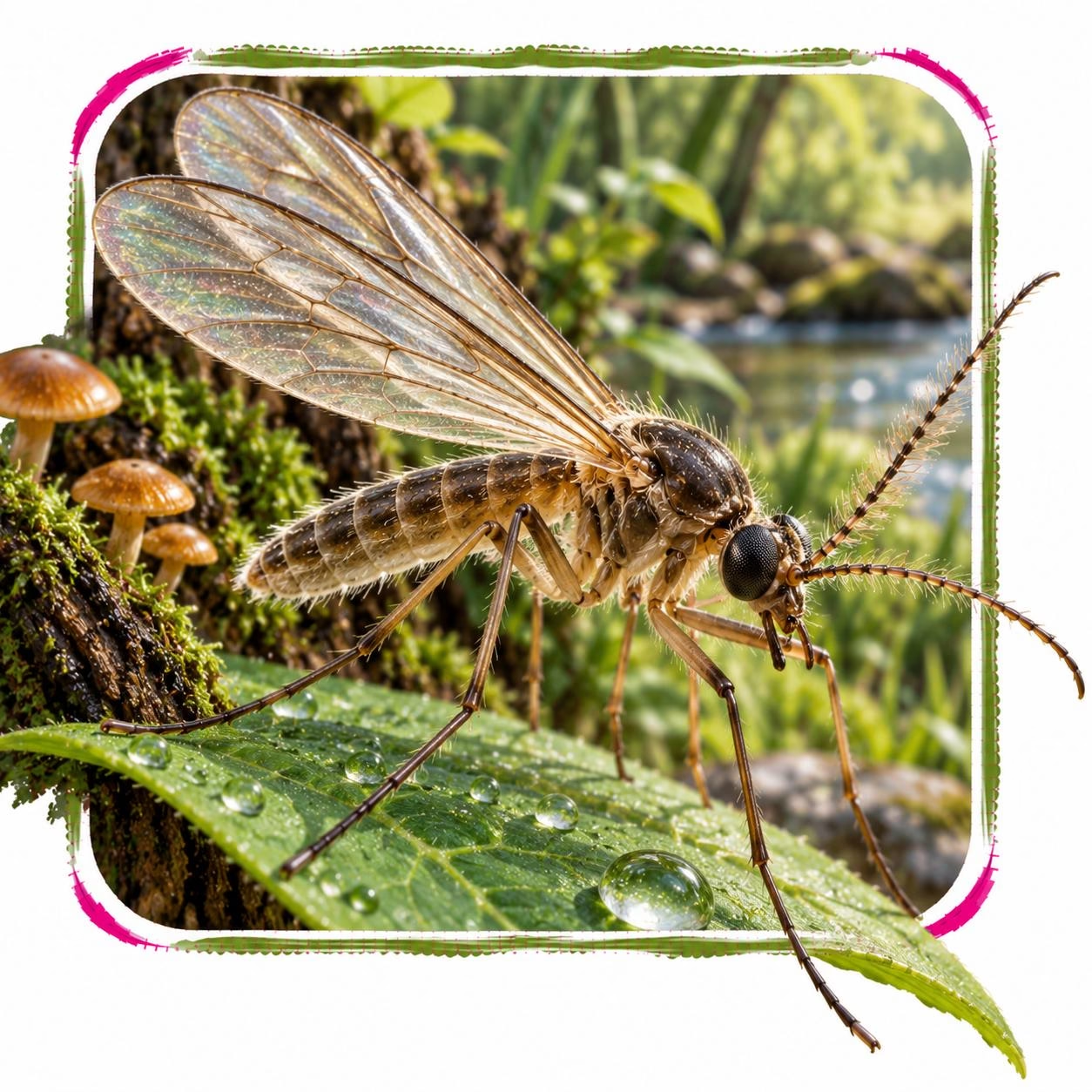
Gnat in its natural Damp soil, fungi, rotting wood, freshwater, mud, wetlands, caves, forests, grasslands, gardens, farms, homes, animal shelters, and living plant tissues worldwide habitat