
Golden Snub-Nosed Monkey Facts for Kids
The Golden Snub-Nosed Monkey, Rhinopithecus roxellana, is an Endangered Old World monkey found only in mountain forests of central China. Populations survive in Sichuan, Gansu, Shaanxi, and Hubei. Adults have blue-gray faces, strongly upturned nostrils, thick golden-orange fur, long tails, and dense winter coats. These monkeys live in complex multilevel societies that may gather hundreds of animals. They eat lichens, leaves, buds, bark, flowers, seeds, and fruit, using a specialized multi-chambered stomach to ferment tough plant foods.
Quick Golden Snub-Nosed Monkey Facts
- Animal Type: Mammal
- Group: Old World monkey and Asian colobine in the family Cercopithecidae
- Known For: Golden fur, blue face, upturned nose, snowy mountain habitat, lichen eating, fermented leaves, enormous bands, and social huddling
- Habitat: Temperate broadleaf, mixed, coniferous, and bamboo mountain forest
- Diet: Lichens, leaves, buds, bark, flowers, fruit, seeds, herbs, and occasional other foods
What You’ll Learn
Learn 10 amazing golden snub-nosed monkey facts for kids about golden fur, unusual noses, social groups, cold forests, and Chinese habitats, with a quiz, glossary, and activity
These simple facts are written for kids, parents, teachers, and curious young minds.

10 Fun Golden Snub-Nosed Monkey Facts for Kids
1. It Lives Only in China
Wild Golden Snub-Nosed Monkeys occupy separated mountain ranges in Sichuan, Gansu, Shaanxi, and Hubei. No natural population occurs outside China.
Kid Decode: The entire wild species fits inside four mountainous Chinese provinces.
2. The Face Is Blue and the Nose Turns Up
Adults have bare blue-gray facial skin, large lips, and a very short nose with forward-facing nostrils. Skin folds partly cover the openings and may help protect them in freezing weather.
Kid Decode: A sky-blue face carries a nose tucked upward against mountain cold.
3. Males Wear Longer Golden Capes
Adult males are much larger and develop long brilliant golden guard hairs across the back and sides. Females are smaller with shorter, browner coats, and young animals change color as they mature.
Kid Decode: The mature male grows a flowing sunrise-colored cape over his winter coat.
4. They Survive Snowy Primate Winters
These monkeys live through deep snow and temperatures far below freezing. Dense fur, large bodies, sheltered sleeping sites, movement, and tight social huddles reduce heat loss.
Kid Decode: Several furry bodies merge into one warm golden blanket after sunset.
5. Lichens Become Winter Staples
When fruit and young leaves disappear, groups eat lichens, bark, buds, and mature leaves. Diet differs among mountain ranges, but lichens are especially important in many northern winter habitats.
Kid Decode: The cold-season pantry hangs as gray-green crusts and ribbons from tree branches.
6. Microbes Ferment Tough Plants
Like other colobines, the monkey has a divided stomach containing bacteria that break down cellulose and neutralize some plant chemicals. Fermentation allows leaves, bark, and lichens to provide usable energy.
Kid Decode: A hidden stomach community turns woody mountain food into monkey fuel.
7. Small Families Join Enormous Bands
The core unit usually contains one adult male, several females, and their offspring. Many units travel with bachelor groups and solitary males in coordinated bands that can number hundreds.
Kid Decode: A handful of family rooms connect into a moving primate city.
8. Groups Split and Rejoin
Food, season, danger, and social relationships influence group size. Units can separate while foraging and later regroup, creating a flexible fission-fusion pattern within the multilevel society.
Kid Decode: The monkey city opens into neighborhoods and closes again without losing its map.
9. Infants Receive Extra Care
A mother usually gives birth to one pale infant after a pregnancy of about six to seven months. Other females may carry, groom, protect, or nurse young, a cooperative behavior called allomothering.
Kid Decode: One baby can collect a whole circle of temporary aunts.
10. Connected Forest Is Essential
Logging, farming, roads, railways, settlements, tourism, past hunting, and climate change have divided habitat and isolated groups. Protected areas, reforestation, patrols, and corridors can reconnect populations.
Kid Decode: The future of the golden bands depends on stitching mountain forests back together.
The Weirdest Golden Snub-Nosed Monkey Fact
Several family units, bachelor groups, and solitary males can combine into a multilevel society numbering hundreds of monkeys, then split again without losing the larger social network.
Try This Golden Snub-Nosed Monkey Activity
Golden Monkey Mountain-Society Activity
Draw Golden Snub-Nosed Monkeys in a snowy Chinese mountain forest. Add a large male with long golden guard hairs, smaller females, a blue-gray face, upturned nostrils, thick winter fur, long tails, lichen and bark feeding, a multi-chambered stomach diagram, a huddling group, one-male family units joining a giant band, bachelor males nearby, mothers and helpers caring for pale infants, seasonal movement down a mountain, and conservation panels for roads, logging, farms, tourism, and wildlife corridors.
Quick Golden Snub-Nosed Monkey Quiz
- Where does the Golden Snub-Nosed Monkey live? Answer: In mountain forests of central China.
- What unusual food is important in winter? Answer: Lichens.
- What helps digest leaves and bark? Answer: A multi-chambered fermenting stomach.
- What is the basic family unit? Answer: Usually one adult male, several females, and their young.
- What is its global conservation category? Answer: Endangered.
Mini Glossary
- Colobine: A leaf-eating Old World monkey with a specialized fermenting digestive system.
- Lichen: A partnership between a fungus and photosynthetic organisms growing on bark, rock, or soil.
- Foregut Fermentation: Digestion by microbes in stomach chambers before food reaches the intestine.
- Multilevel Society: A social system in which small stable units join into progressively larger groups.
- Allomothering: Infant care provided by females other than the mother.

 Pudu Facts for Kids
 Snow Goose Facts for Kids
 Roseate Spoonbill Facts for Kids
 Torvosaurus Facts for Kids
More Animal Facts for Kids
Visit the full animal facts library or explore a focused animal group.
More Extinct Animal Facts for Kids
Discover dinosaurs, Ice Age giants, prehistoric sea creatures, recently extinct species, and other animals from the past.
Fact check note: Fact checked with the Mammal Diversity Database’s Rhinopithecus roxellana taxonomy, the IUCN Red List’s current Endangered and decreasing assessment, Primate Info Net and Animal Diversity Web species accounts, and research on cold adaptation, nostril folds, seasonal diet, lichen feeding, foregut fermentation, multilevel societies, huddling, vocal communication, infant care, habitat fragmentation, and conservation.

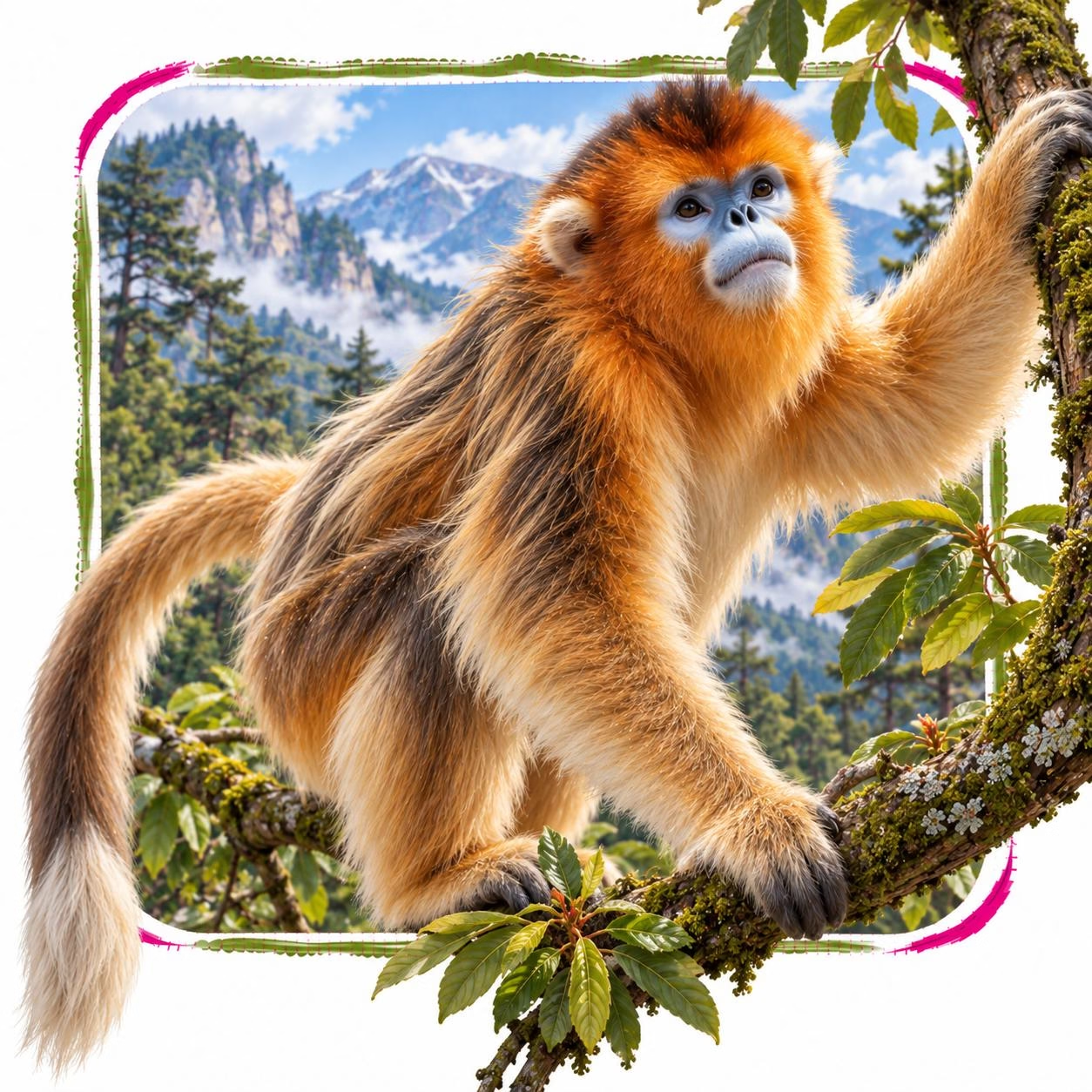
Golden Snub-Nosed Monkey in its natural Temperate broadleaf, mixed, coniferous, and bamboo mountain forests at roughly 1,500 to 4,000 metres in Sichuan, Gansu, Shaanxi, and Hubei, China habitat