
Gopher Facts for Kids
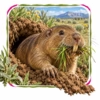
Pocket gophers are stout burrowing rodents in the family Geomyidae. They are usually called simply gophers, although people sometimes use that name incorrectly for ground squirrels. Nearly 50 living pocket-gopher species occur only in North and Central America. They spend most of their lives inside sealed tunnel systems, using powerful claws and exposed front teeth to dig. Fur-lined cheek pouches carry roots, stems, bulbs, and nesting material without opening into the mouth.
Quick Gopher Facts
- Animal Type: Mammal
- Group: Pocket gophers in the rodent family Geomyidae
- Known For: External cheek pockets, enormous digging claws, exposed incisors, plugged tunnels, fan-shaped soil mounds, and almost completely underground lives
- Habitat: Prairie, grassland, desert, woodland, mountain meadow, farmland, gardens, and other places with diggable soil
- Diet: Roots, tubers, bulbs, stems, leaves, grasses, crops, and other plant material
What You’ll Learn
Discover 10 burrowing gopher facts for kids about giant front teeth, tunnels, cheek pouches, digging, and underground life, plus a quiz, glossary, and activity
Clear explanations make them fun for children, families, teachers, and little fact-hunters.
10 Fun Gopher Facts for Kids
1. Gophers Are Pocket Gophers
True pocket gophers belong to Geomyidae and occur only in North and Central America. Ground squirrels and prairie dogs are members of the squirrel family, even when local people call them gophers.
Kid Decode: The real gopher carries pockets on its face rather than a squirrel family membership card.
2. The Pockets Sit Outside the Mouth
A fur-lined pouch opens on each side of the face and extends backward toward the shoulders. Muscles expand, empty, and partly turn the pockets inside out while the mouth remains free for gnawing.
Kid Decode: Two grocery bags are sewn into the cheeks without opening into the dining room.
3. Lips Close Behind the Incisors
Pocket gophers can use their continually growing front teeth to loosen hard soil and roots. Fleshy lips seal behind the incisors, preventing dirt from pouring into the mouth.
Kid Decode: The digging teeth work outside while the mouth door stays firmly shut behind them.
4. Claws and Teeth Share the Digging
Large front claws rake loose earth, while incisors tackle roots, compacted soil, and small obstacles. Powerful shoulders push material backward through the tunnel.
Kid Decode: The underground construction crew carries four shovels and two self-sharpening cutters.
5. Tunnel Entrances Are Usually Plugged
Fresh soil is pushed through a temporary side opening and spread into a fan-shaped mound. The gopher then seals the opening, helping control tunnel temperature, humidity, and intruders.
Kid Decode: A mound marks the worksite, but the front door vanishes beneath a soil plug.
6. Most Adults Live Alone
Pocket gophers defend individual tunnel systems and usually meet only to breed. Mothers share a burrow briefly with dependent pups, but crowded colonies are not the normal arrangement.
Kid Decode: One tunnel maze usually has one owner and a strict no-roommates policy.
7. Whiskers and Tails Guide Dark Travel
Sensitive facial whiskers detect tunnel walls and air movement. The short tail can feel surfaces behind the body, helping a gopher reverse rapidly without turning around.
Kid Decode: The animal navigates forward with whiskers and backward with a built-in rear feeler.
8. Plants Can Be Pulled Underground
Gophers eat roots and tubers from inside feeding tunnels and may clip plants near an opening, then drag them below. Surplus food is carried in cheek pouches to storage chambers.
Kid Decode: A perfectly healthy plant can suddenly disappear through the floor into a hidden pantry.
9. Burrowing Rebuilds the Soil
Excavation brings deeper soil upward, buries surface material, changes drainage, and redistributes nutrients. These effects can damage crops while also creating patches used by different plants and animals.
Kid Decode: The same paws that annoy a farmer can remix an entire underground ecosystem.
10. Pups Begin in a Deep Nest Chamber
Females line protected chambers with dry vegetation and usually raise one litter at a time. Newborns are hairless and helpless before growing claws, teeth, fur, and independent tunnel systems.
Kid Decode: Every master digger starts as a pink passenger inside a grass-lined underground nursery.
The Weirdest Gopher Fact
A pocket gopher’s fur-lined cheek pockets open outside the mouth and can be turned partly inside out, letting the animal unload food without swallowing a mouthful of soil.
Try This Gopher Activity
Build a Pocket Gopher Tunnel Map
Draw a cutaway view of a pocket gopher beneath a grassland. Add powerful front claws, exposed orange-yellow incisors, lips closing behind the teeth, external cheek pouches filled with roots, tiny eyes and ears, whiskers, a sensitive short tail, main tunnels, side feeding tunnels, a nest chamber, food stores, plugged entrances, fan-shaped soil mounds, plant roots being clipped, and other small animals using an abandoned tunnel.
Quick Gopher Quiz
- Which animal family contains pocket gophers? Answer: Geomyidae.
- Where are their cheek pockets located? Answer: Outside the mouth.
- How do the lips help during digging? Answer: They close behind the incisors to keep soil out.
- What shape are many fresh gopher mounds? Answer: Fan-shaped or crescent-shaped.
- Do pocket gophers usually share one burrow system? Answer: No, most adults are solitary and territorial.
Mini Glossary
- Fossorial: Adapted for living and digging underground.
- Geomyid: A member of the pocket-gopher family Geomyidae.
- Incisor: A front tooth specialized for cutting or gnawing.
- Cheek Pouch: A pocket used for carrying food or nesting material.
- Bioturbation: Mixing and moving soil or sediment by living organisms.
 Purple Finch Facts for Kids
 Bumblebee Facts for Kids
 Leatherback Sea Turtle Facts for Kids
 Carolina Parakeet Facts for Kids
More Animal Facts for Kids
Visit the full animal facts library or explore a focused animal group.
More Extinct Animal Facts for Kids
Discover dinosaurs, Ice Age giants, prehistoric sea creatures, recently extinct species, and other animals from the past.
Fact check note: Fact checked with the Mammal Diversity Database’s current Geomyidae taxonomy, University of California Integrated Pest Management’s updated pocket-gopher biology and identification resources, Utah State University Extension’s pocket-gopher account, and ecological research on digging anatomy, external cheek pouches, sealed burrows, solitary territories, plant feeding, reproduction, soil mixing, and use of abandoned tunnels by other wildlife.

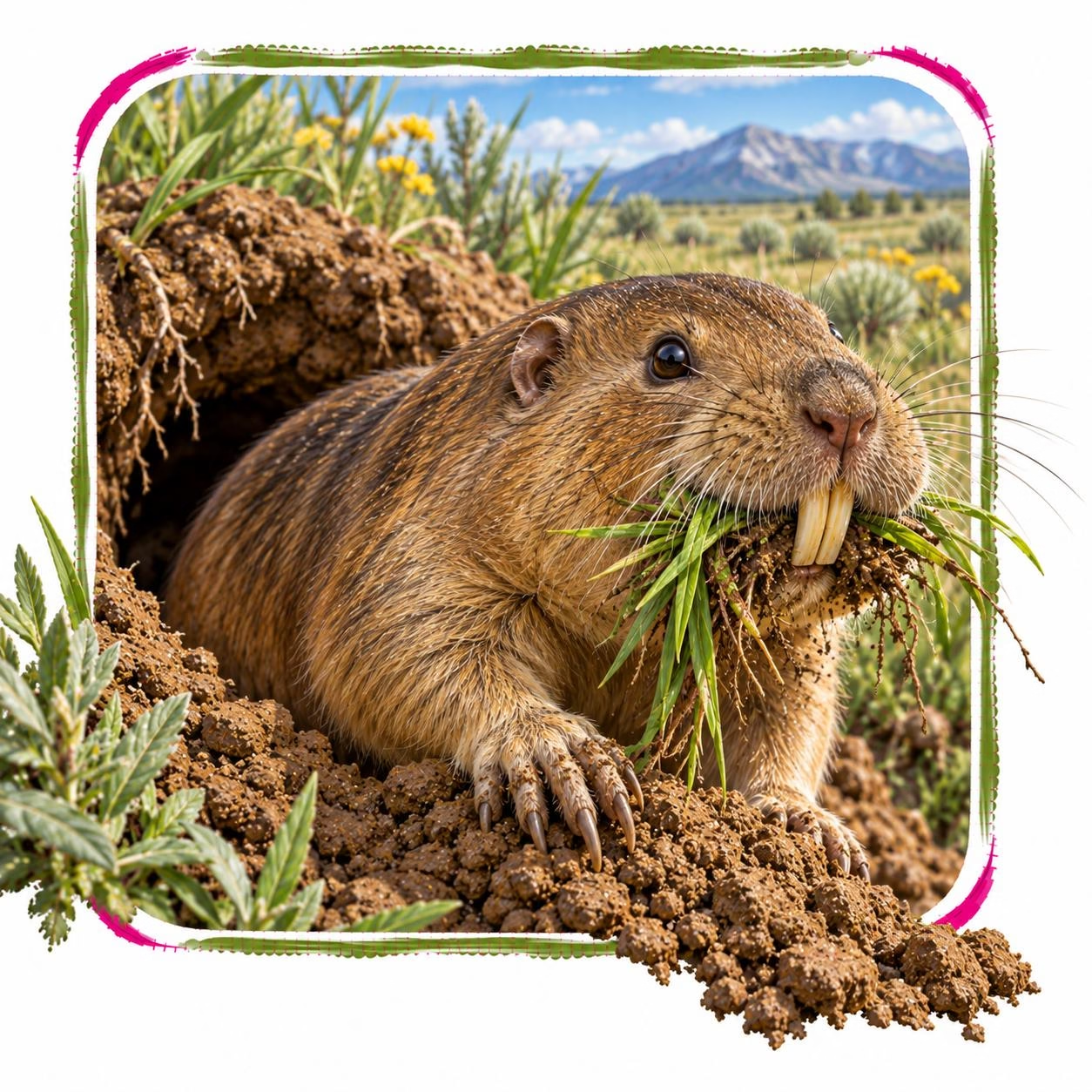
Gopher in its natural Prairies, grasslands, deserts, woodland, shrubland, mountain meadows, farms, gardens, roadsides, and other habitats with diggable soil across North and Central America habitat