
Grass Snake Facts for Kids
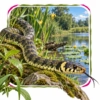
Grass snake is a common name used for several closely related nonvenomous European snakes in the genus Natrix. This page focuses on the Common Grass Snake, Natrix natrix; the Barred Grass Snake, Natrix helvetica; and the Red-Eyed or Iberian Grass Snake, Natrix astreptophora. They live around ponds, rivers, marshes, meadows, woodland edges, gardens, and farms across Europe and into western Asia and northwestern Africa. Grass snakes are strong swimmers that mainly hunt frogs, toads, newts, and other small animals.
Quick Grass Snake Facts
- Animal Type: Reptile
- Group: Nonvenomous natricine snakes in the Natrix natrix species complex
- Known For: Pale neck collars, strong swimming, amphibian hunting, large females, warm compost nests, foul-smelling musk, hissing, and dramatic death feigning
- Habitat: Ponds, rivers, canals, marshes, wet meadows, woodland edges, hedgerows, farms, gardens, and dry basking sites near water
- Diet: Frogs, toads, newts, fish, tadpoles, small mammals, birds, and other small prey depending on species and age
What You’ll Learn
Learn 10 fascinating grass snake facts for kids about swimming, camouflage, hunting amphibians, harmless defenses, and European wetlands, plus a quiz, glossary, and activity
Simple explanations make them great for children, families, teachers, and young nature fans.
10 Fun Grass Snake Facts for Kids
1. One Old Species Became Three
Genetic and anatomical studies separated the Iberian Natrix astreptophora and western Natrix helvetica from Natrix natrix. Older books therefore use Natrix natrix for grass snakes that now carry different names.
Kid Decode: The familiar snake changed from one broad passport into three neighboring species documents.
2. Britain Has the Barred Grass Snake
Grass snakes in Britain are Natrix helvetica, named for dark vertical bars along the sides. The Common Grass Snake, Natrix natrix, occurs farther east across much of continental Europe and western Asia.
Kid Decode: A British garden visitor gained a new scientific name without moving one centimetre.
3. The Collar Is Helpful but Not Universal
Many young and adult grass snakes display pale yellow, cream, or white patches behind the head, bordered by black. The marking may fade with age, differ among species, or disappear in dark melanistic individuals.
Kid Decode: The famous necklace is a clue, not a compulsory uniform.
4. Females Grow Much Larger
Adult females commonly reach greater lengths and heavier bodies than males because larger bodies can carry more eggs. Males remain slimmer and have proportionally longer tails beyond the cloaca.
Kid Decode: The egg-producing sex becomes the heavyweight champion of the pond edge.
5. They Swim and Dive With Ease
Grass snakes move across ponds and rivers using side-to-side body waves and can remain underwater while searching or escaping. They also travel widely over land between feeding, basking, nesting, and winter sites.
Kid Decode: The same body becomes a water ribbon and a cross-country trail traveler.
6. Amphibians Form the Main Menu
Frogs, toads, and newts are especially important prey, with fish, tadpoles, small mammals, birds, and other animals taken less often. Prey is grabbed and swallowed alive rather than envenomated or constricted.
Kid Decode: A pond-side frog disappears through a harmless-looking mouth with no venom or squeeze required.
7. Compost Heaps Become Incubators
Females lay leathery eggs in warm rotting vegetation, manure, sawdust, or compost. Microbial decomposition supplies steady heat, and several females may use the same especially suitable mound.
Kid Decode: A garden compost heap can become a solar-free reptile nursery powered by microbes.
8. Winter Is Spent in Frost-Free Shelters
Grass snakes retreat into deep root systems, mammal burrows, rock piles, banks, buildings, or compost where temperatures remain above freezing. Several snakes and other reptiles may share one hibernaculum.
Kid Decode: The solitary summer hunter may join a hidden winter reptile sleepover.
9. Defense Is Mostly Theater and Smell
A threatened snake usually flees but may hiss, flatten the neck, strike with the mouth closed, regurgitate food, or release pungent musk from glands near the tail. Actual defensive bites are uncommon.
Kid Decode: The harmless snake performs a noisy, smelly stage show while searching for an exit.
10. Some Pretend to Be Dead
Grass snakes may roll over, gape, let the tongue hang out, lose muscle tone, and remain motionless. Research found this dramatic thanatosis in many handled wild individuals but not every snake.
Kid Decode: The final escape plan is an award-worthy performance as a limp, rotten-smelling corpse.
The Weirdest Grass Snake Fact
A frightened grass snake may roll onto its back, hang its tongue from an open mouth, become completely limp, and release a terrible smell to make a predator believe it is dead and rotten.
Try This Grass Snake Activity
Grass Snake Wetland-Life Activity
Draw Common, Barred, and Red-Eyed Grass Snakes beside matching map regions. Add olive, gray, brown, or black bodies, pale yellow or cream neck collars where present, dark side bars on Natrix helvetica, red eyes on Natrix astreptophora, a much larger female, swimming and diving, a frog hunt without venom or constriction, eggs inside a warm compost heap, hatchlings, a shared winter hibernaculum, skin shedding, foul-smelling musk, and a dramatic play-dead pose.
Quick Grass Snake Quiz
- Are grass snakes venomous? Answer: No.
- Which British species was separated from Natrix natrix? Answer: The Barred Grass Snake, Natrix helvetica.
- What prey is especially important? Answer: Frogs, toads, and other amphibians.
- Where are eggs often laid? Answer: In warm rotting vegetation, manure, or compost.
- What is death feigning? Answer: Pretending to be dead to discourage a predator.
Mini Glossary
- Natricine: A member of a snake group containing many water-associated species.
- Nonvenomous: Lacking a venom-injection system dangerous to prey or people.
- Oviparous: Reproducing by laying eggs.
- Thanatosis: Feigning death as a defensive behavior.
- Hibernaculum: A sheltered place used by animals during winter dormancy.
 Fly Facts for Kids
 Anaconda Facts for Kids
 Rhinoceros Beetle Facts for Kids
 American Cheetah Facts for Kids
More Animal Facts for Kids
Visit the full animal facts library or explore a focused animal group.
More Extinct Animal Facts for Kids
Discover dinosaurs, Ice Age giants, prehistoric sea creatures, recently extinct species, and other animals from the past.
Fact check note: Fact checked with the Reptile Database’s current Natrix natrix, Natrix helvetica, and Natrix astreptophora taxonomy; The Wildlife Trusts and Woodland Trust grass-snake accounts; peer-reviewed integrative-taxonomy studies separating the Iberian and barred grass snakes; and research on swimming, amphibian diets, sexual size differences, compost-heap nesting, hibernation, musking, neck flattening, and death feigning.

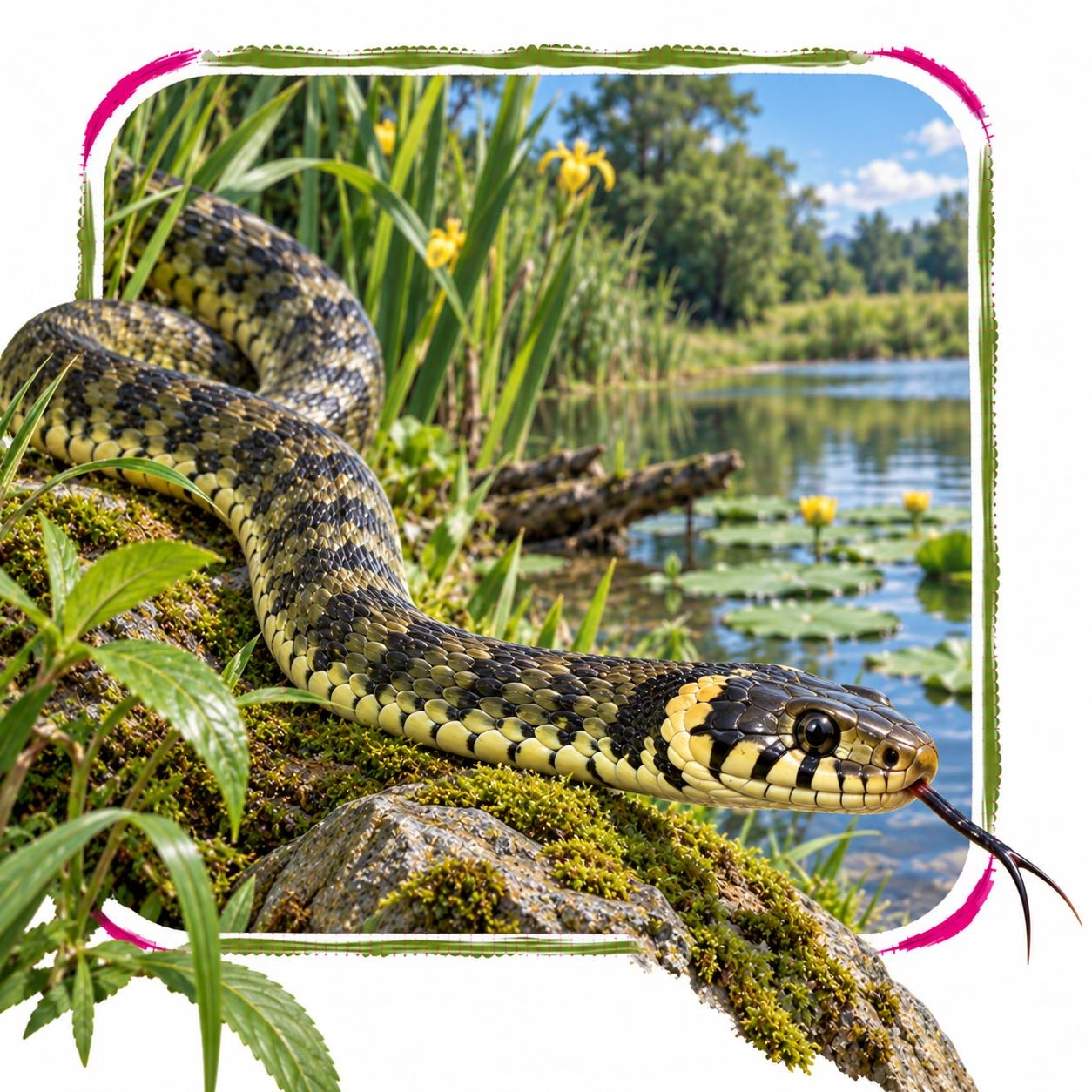
Grass Snake in its natural Ponds, rivers, streams, canals, marshes, lakes, wet meadows, woodland edges, hedgerows, farms, gardens, compost areas, and dry basking sites across Europe, western Asia, and northwestern Africa habitat