
Gray Whale Facts for Kids
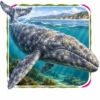
The Gray Whale, Eschrichtius robustus, is a large baleen whale found regularly only in the North Pacific Ocean. It is the sole living species in the family Eschrichtiidae. Gray Whales have mottled gray skin, broad paddle-shaped flippers, no true dorsal fin, and a row of small back bumps called knuckles. They are famous for feeding along the seafloor, migrating close to shore, and raising calves in warm shallow lagoons. Two main populations remain: the much larger eastern North Pacific population and the far smaller western North Pacific population.
Quick Gray Whale Facts
- Animal Type: Mammal
- Group: Baleen whale and sole living member of the family Eschrichtiidae
- Known For: Mottled skin, barnacles and whale lice, no dorsal fin, mud-plume feeding, coarse baleen, coastal migration, and Mexican calving lagoons
- Habitat: Shallow coastal seas, Arctic feeding grounds, migration corridors, lagoons, bays, and continental shelf waters
- Diet: Amphipods, ghost shrimp, worms, crab larvae, mysids, herring eggs, and other small bottom or near-bottom animals
What You’ll Learn
Discover 10 enormous gray whale facts for kids about long migrations, baleen feeding, coastal journeys, calves, and ocean life, with a quiz, glossary, and activity
These facts are explained simply for kids, parents, teachers, and curious little fact-finders.
10 Fun Gray Whale Facts for Kids
1. It Is the Last Living Member of Its Family
Gray Whales form the only living species in Eschrichtiidae. Fossils show that other relatives once existed, but Eschrichtius robustus is the final surviving branch.
Kid Decode: One whale carries an entire living family tree on its broad mottled back.
2. The Skin Becomes a Living Patchwork
Newborns are dark gray, while older whales collect pale scars, barnacles, and whale lice. These passengers and old skin marks create the speckled appearance behind the name.
Kid Decode: The whale’s body becomes an ocean scrapbook written in scars, shells, and tiny crustaceans.
3. There Is No Tall Dorsal Fin
A low hump rises about two-thirds of the way along the back, followed by 6 to 12 small knuckles. This profile distinguishes the species from whales with sickle-shaped fins.
Kid Decode: The back carries a speed-bump trail instead of one shark-like sail.
4. Many Meals Begin in the Mud
Gray Whales often roll onto a side and use the tongue and mouth to create suction over the seafloor. Sediment and prey enter together before water and mud are pushed through the baleen.
Kid Decode: The giant vacuums the ocean carpet and sorts dinner from dirt inside its mouth.
5. Coarse Baleen Traps Bottom Animals
Short yellowish or cream baleen plates have thick fringes suited to catching amphipods and other seafloor prey. The whale may also feed on mysids, larvae, eggs, and schooling prey above the bottom.
Kid Decode: A rough keratin curtain sieves tiny crustaceans from a muddy mouthful.
6. The Migration Can Span an Ocean Coast
Many eastern Gray Whales travel from Arctic feeding grounds to Baja California and back each year. Typical round trips approach 10,000 miles, while some routes are even longer.
Kid Decode: One annual commute follows a continent for a distance that could cross countries again and again.
7. Mexican Lagoons Become Nurseries
Warm shallow bays shelter females giving birth and nursing calves during winter. The calm water helps newborns develop swimming strength before the long northward journey.
Kid Decode: A desert-fringed lagoon becomes a warm beginner pool for a one-ton baby.
8. A Calf Travels Beside Its Mother
After roughly 12 to 13 months of pregnancy, a female gives birth to one calf. The pair remains closely bonded for months, and mothers with calves often hug the coast during northward migration.
Kid Decode: The youngest traveler follows one enormous gray guide along the edge of a continent.
9. The Two Pacific Populations Are Unequal
The eastern population is much larger and was removed from the U.S. endangered list in 1994. The western population remains very small, although tagging shows that some western whales cross toward North America.
Kid Decode: Two groups share one species, but one recovered far more strongly than the other.
10. Recovery Can Rise and Fall
Eastern Gray Whale numbers rebounded after whaling, then fell during periods of poor body condition and unusual mortality. Recent counts suggest another increase, but low calf production and changing Arctic food webs require continued monitoring.
Kid Decode: A conservation success story still has chapters written by sea ice, prey, hunger, and climate.
The Weirdest Gray Whale Fact
A feeding Gray Whale may roll onto its side, suck a mouthful of seafloor mud, filter out tiny animals, and leave a crater and brown sediment cloud behind it.
Try This Gray Whale Activity
Gray Whale Migration-and-Mud Activity
Draw a Gray Whale traveling from Arctic feeding seas to Mexican calving lagoons. Add mottled skin, barnacles, orange whale lice, small eyes, two blowholes, broad flippers, no dorsal fin, a low hump and 6–12 knuckles, coarse cream baleen, side-rolling mud feeding, amphipods and ghost shrimp, a long migration map, a mother with one calf near shore, killer whales at a safe distance, and conservation panels for entanglement, vessel strikes, noise, and changing Arctic food.
Quick Gray Whale Quiz
- Where are Gray Whales found regularly today? Answer: In the North Pacific Ocean.
- Do they have a tall dorsal fin? Answer: No, they have a low hump and a row of knuckles.
- What do they use instead of teeth? Answer: Coarse baleen plates.
- Where do many eastern Gray Whales give birth? Answer: In shallow lagoons and bays of Baja California, Mexico.
- Which population remains endangered under U.S. law? Answer: The western North Pacific population.
Mini Glossary
- Baleen: Flexible keratin plates used to filter food from water.
- Benthic: Living on or in the seafloor.
- Knuckle: One of the small bumps along a Gray Whale’s back behind the dorsal hump.
- Migration: Regular seasonal movement between different regions.
- Distinct Population Segment: A separately managed population recognized under U.S. conservation law.
 Freshwater Eel Facts for Kids
 Praying Mantis Facts for Kids
 Giant Anteater Facts for Kids
 Thylacoleo Facts for Kids
More Animal Facts for Kids
Visit the full animal facts library or explore a focused animal group.
More Extinct Animal Facts for Kids
Discover dinosaurs, Ice Age giants, prehistoric sea creatures, recently extinct species, and other animals from the past.
Fact check note: Fact checked with NOAA Fisheries’ Gray Whale species profile updated March 2026, NOAA’s 2025/2026 eastern North Pacific abundance estimate, the International Whaling Commission’s Gray Whale account, and research on seafloor suction feeding, baleen, epibionts, migration, calving lagoons, western-population movements, body condition, calf production, and fisheries interactions.

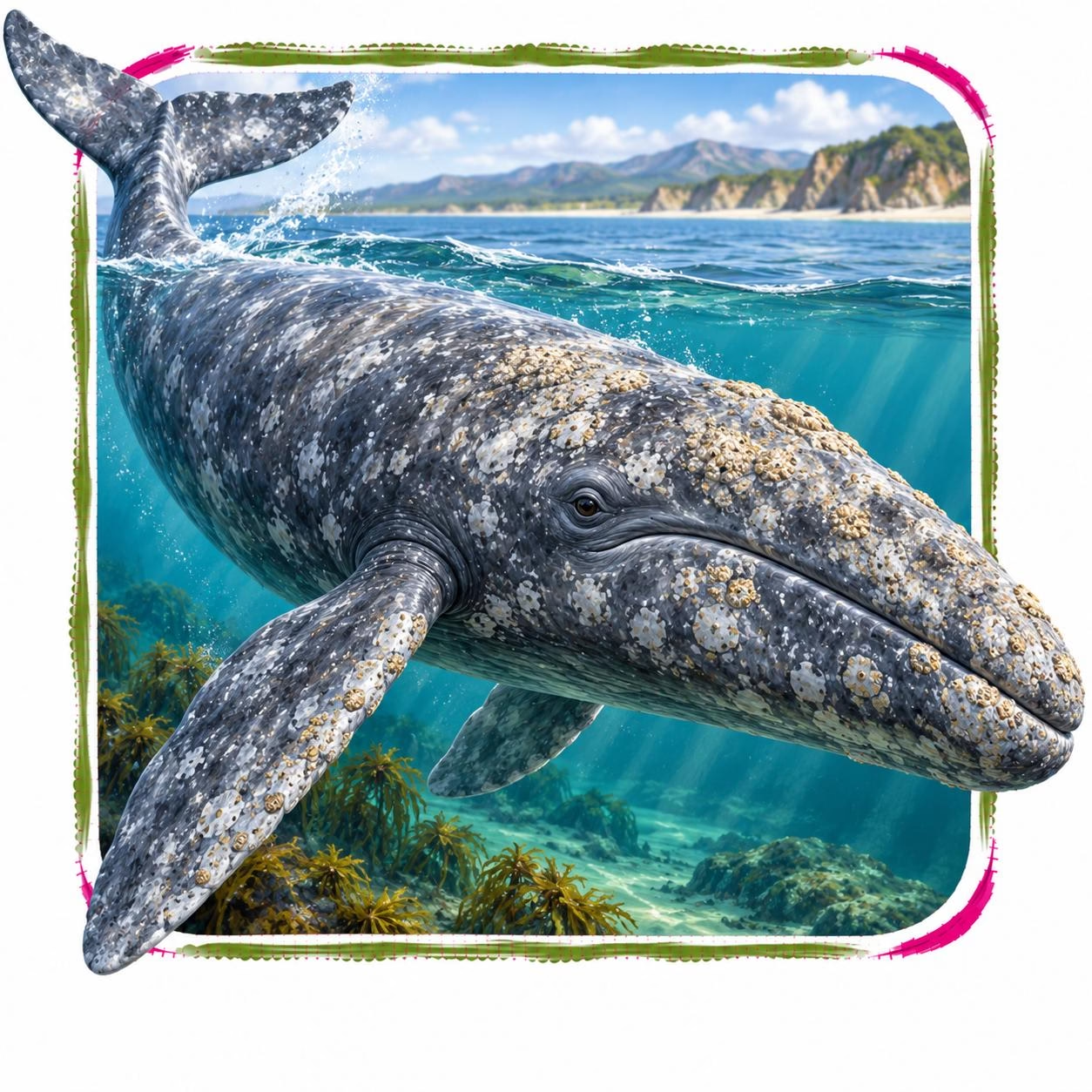
Gray Whale in its natural Shallow coastal waters, Arctic continental shelves, seafloor feeding areas, migration corridors, bays, and warm calving lagoons of the North Pacific habitat