
Gray Wolf Facts for Kids
The Gray Wolf, Canis lupus, is the largest living wild member of the dog family. It once occupied most of the Northern Hemisphere and still survives across wide parts of Europe, Asia, and North America. Gray Wolves inhabit tundra, taiga, mountains, forests, grasslands, deserts, and some human-shaped landscapes. Most live in family packs built around breeding parents and their offspring. Packs communicate through howls, scent marks, facial expressions, body posture, and touch while hunting, raising pups, and defending territories.
Quick Gray Wolf Facts
- Animal Type: Mammal
- Group: Large canid in the genus Canis and family Canidae
- Known For: Family packs, powerful howls, scent marking, cooperative hunting, long-distance travel, pup care, and enormous geographic variation
- Habitat: Tundra, taiga, forest, grassland, mountain, shrubland, desert, wetlands, and remote agricultural mosaics
- Diet: Deer, elk, moose, caribou, wild sheep, goats, bison, boar, beavers, hares, rodents, fish, livestock, carrion, and other foods depending on region
What You’ll Learn
Explore 10 fascinating gray wolf facts for kids about packs, howling, hunting, communication, and wide-ranging habitats, plus a quiz, glossary, and activity
Easy explanations make them fun for children, families, teachers, and young wildlife explorers.
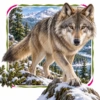
10 Fun Gray Wolf Facts for Kids
1. It Is the Largest Living Wild Canid
Gray Wolves are generally heavier and more powerfully built than coyotes, jackals, and foxes. Body size varies greatly, with northern wolves usually larger than populations from warm, dry regions.
Kid Decode: The dog family built its wild heavyweight in many regional sizes rather than one standard model.
2. Gray Is Only One Coat Color
Coats may be white, cream, tan, reddish, brown, gray, or black, often mixing several shades. Color comes from genetics and adaptation, not simply from age or dirt.
Kid Decode: A species named gray arrives wearing almost the entire winter-forest paint box.
3. A Pack Is Usually a Family
Most packs contain breeding parents, pups, yearlings, and older offspring that have not yet dispersed. The old idea of unrelated wolves constantly fighting for alpha rank came largely from artificial captive groups.
Kid Decode: The pack is closer to a busy household than a boardroom ruled by one permanent bully.
4. Howls Carry Several Messages
Wolves howl to gather separated members, advertise territory, strengthen social bonds, and answer distant packs. Individuals differ in pitch and style, helping familiar wolves recognize one another.
Kid Decode: A single note becomes a roll call, boundary sign, family greeting, and distant reply.
5. Scent Creates an Invisible Map
Urine, scat, gland odors, scratched ground, and body rubbing mark travel routes and territorial boundaries. Wolves combine smell with tail position, ears, eyes, posture, touch, growls, whines, and barks.
Kid Decode: The landscape contains a wolf map written in perfume, footprints, scratches, and posture.
6. Cooperative Hunts Often Fail
Packs may pursue deer, elk, moose, caribou, boar, or bison by testing and tiring vulnerable animals. Hunting remains dangerous and many attempts end without a kill.
Kid Decode: Even a skilled pack may finish a chase with empty stomachs and a valuable lesson.
7. The Menu Changes Across the Range
Large hoofed mammals dominate many diets, but wolves also eat beavers, hares, rodents, fish, seals, livestock, fruit, insects, and carrion where available. Coastal wolves can use marine foods heavily.
Kid Decode: One species can dine on elk in a valley and salmon or sea otter beside another coast.
8. Packs Raise Pups Together
Pups are born blind in spring dens and drink milk for the first weeks. Parents and older siblings guard, play with, babysit, and feed them, often carrying or regurgitating meat.
Kid Decode: The nursery staff includes nearly every available aunt, uncle, brother, and sister.
9. Young Wolves May Travel Enormous Distances
Dispersing wolves leave their birth packs to find mates and vacant habitat. Some travel hundreds or even more than a thousand kilometres across unfamiliar landscapes.
Kid Decode: A young wolf may turn one goodbye into a journey across states, countries, or mountain chains.
10. Global Security Hides Local Trouble
Gray Wolves remain widespread enough for a global Least Concern category, but people eliminated them from much of their former range. Hunting, conflict, roads, disease, prey loss, and fragmented habitat affect populations differently.
Kid Decode: The world map looks broad from far away but contains many holes, borders, and fragile islands.
The Weirdest Gray Wolf Fact
Wolves often walk in single file and place their paws in nearly the same prints, so a whole pack crossing snow can leave a trail that looks as though one animal made it.
Try This Gray Wolf Activity
Gray Wolf Family-Pack Activity
Draw a Gray Wolf pack in a northern forest or grassland. Add gray, black, white, brown, and reddish coats; long legs; large paws; a bushy lowered tail; a family tree showing two breeding parents and offspring of different ages; howling, scent marks, facial and tail signals, single-file travel, a cooperative elk hunt with failed attempts shown too, ravens and scavengers at a carcass, a den with pups, regurgitated food, and conservation panels for roads, persecution, livestock conflict, disease, and connected habitat.
Quick Gray Wolf Quiz
- What is the Gray Wolf’s scientific name? Answer: Canis lupus.
- What is a typical wolf pack? Answer: A family containing breeding parents and their offspring.
- Why do wolves howl? Answer: To locate pack members, gather, warn rivals, and communicate.
- Does every hunt succeed? Answer: No, many hunting attempts fail.
- What is the species’ global IUCN category? Answer: Least Concern, although many regional populations are threatened or protected.
Mini Glossary
- Canid: A member of the dog family, including wolves, foxes, coyotes, and jackals.
- Pack: A social group of wolves, usually an extended family.
- Territory: An area defended against neighboring groups.
- Dispersal: Leaving the birth group to search for a mate, territory, or new pack.
- Trophic Cascade: A chain of ecosystem effects caused by changes near the top of a food web.
 Tapir Facts for Kids
 Nautilus Facts for Kids
 Swordfish Facts for Kids
 Dakosaurus Facts for Kids
More Animal Facts for Kids
Visit the full animal facts library or explore a focused animal group.
More Extinct Animal Facts for Kids
Discover dinosaurs, Ice Age giants, prehistoric sea creatures, recently extinct species, and other animals from the past.
Fact check note: Fact checked with the Mammal Diversity Database’s current Canis lupus taxonomy and Least Concern listing, U.S. National Park Service wolf ecology resources, recent U.S. Fish and Wildlife Service species-status assessments, and research on family-pack structure, multiple breeders, howling, scent communication, hunting success, diet, dispersal, pup care, scavenger benefits, ecosystem effects, hybridization, and regional conservation.

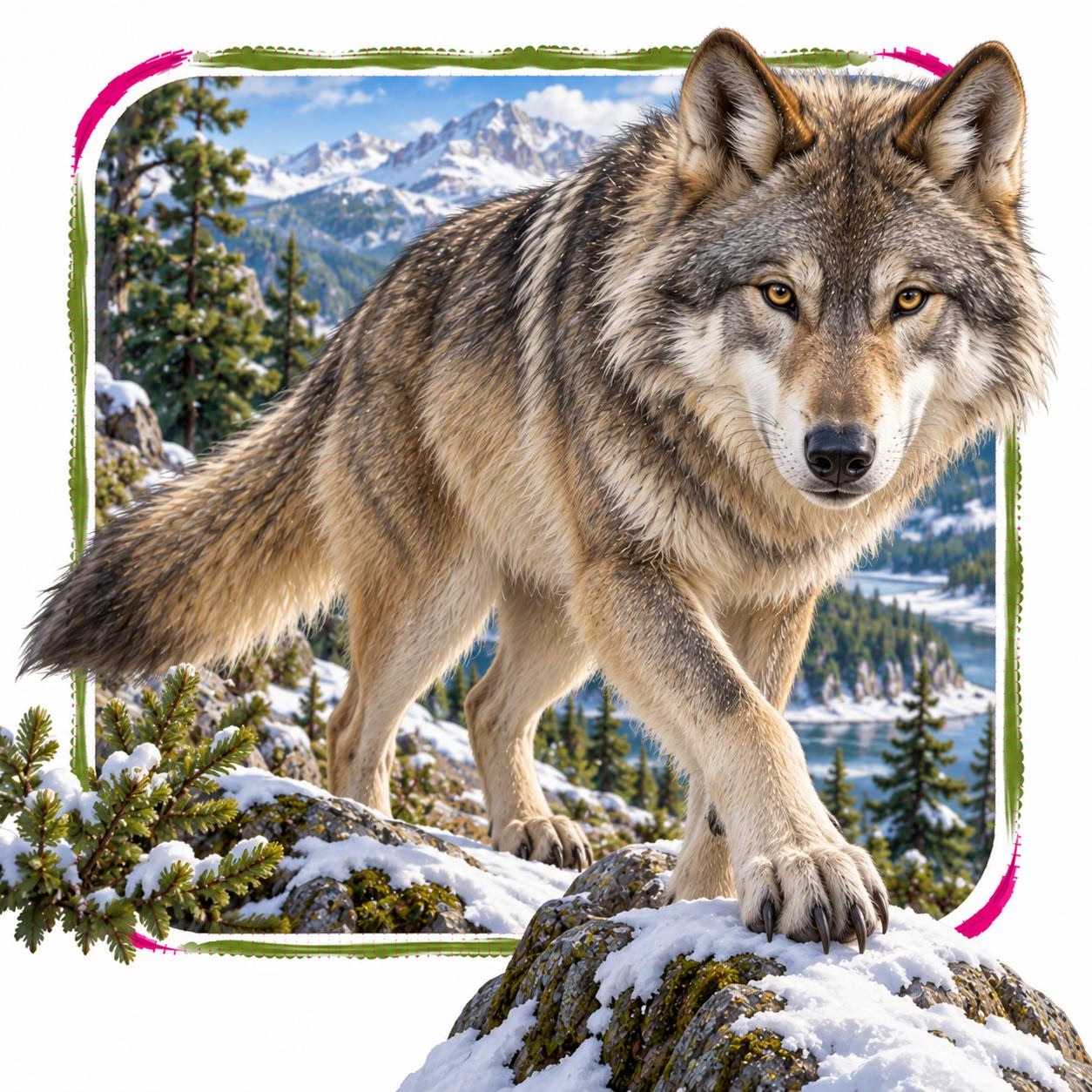
Gray Wolf in its natural Tundra, taiga, temperate forest, mountain, grassland, steppe, shrubland, desert, wetlands, and low-density agricultural landscapes across parts of Europe, Asia, and North America habitat