
Greater Glider Facts for Kids
Greater gliders are large nocturnal gliding marsupials from eastern Australia. They live high in eucalypt forests, eat mostly eucalyptus leaves, rest in tree hollows during the day, and glide between trees using a furry membrane.
Quick Greater Glider Facts
- Animal Type: Mammal
- Group: Marsupial and gliding possum relative
- Known For: Gliding membranes, fluffy tails, big night eyes, eucalyptus diet, tree hollows, joeys, and quiet forest life
- Habitat: Eucalypt forests, tall woodlands, hollow-bearing trees, eastern Australian forests, connected tree canopies, and mature forest areas
- Diet: Mostly eucalyptus leaves, plus buds, flowers, and other eucalypt plant parts depending on season and location
What You’ll Learn
Learn 10 fascinating servaline genet facts for kids about spotted fur, long tails, climbing, nighttime hunting, and African forests, with a quiz, glossary, and activity
These simple facts are written for kids, parents, teachers, and curious young minds.
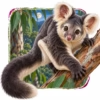
10 Fun Greater Glider Facts for Kids
1. Greater Gliders Are Mammals
Greater gliders are mammals, so they have fur, breathe air, and mothers feed babies with milk.
Kid Decode: A greater glider is a fluffy forest kite with eyes.
2. They Are Marsupials
Greater gliders are marsupials, like kangaroos, koalas, and possums.
Kid Decode: Their babies get a pouch-start to life.
3. Baby Greater Gliders Are Joeys
Baby greater gliders are called joeys and develop in the mother’s pouch.
Kid Decode: A joey begins life tiny, then grows into a tree-gliding fluffball.
4. Greater Gliders Glide, Not Fly
Greater gliders cannot flap like birds; they glide on a membrane between their limbs.
Kid Decode: They are not pilots with wings, more furry parachutes with steering.
5. They Use a Patagium
The gliding membrane is called a patagium and stretches along the body.
Kid Decode: The patagium turns a leap into a long floating slide.
6. They Eat Eucalyptus Leaves
Greater gliders mostly feed on eucalyptus leaves.
Kid Decode: Their menu is leafy, strong-smelling, and very Australian.
7. They Are Nocturnal
Greater gliders are most active at night and rest during the day.
Kid Decode: The forest night shift belongs to big-eyed gliders.
8. They Need Tree Hollows
Greater gliders shelter in hollows inside old trees.
Kid Decode: A hollow tree is their bedroom, nursery, and safety bunker.
9. They Have Fluffy Tails
Greater gliders have long fluffy tails that help with balance and steering.
Kid Decode: The tail is part blanket, part rudder.
10. They Need Connected Forests
Greater gliders need mature forests with food trees, hollows, and safe canopy paths.
Kid Decode: When forests stay connected, the gliders can keep sailing between trees.
The Weirdest Greater Glider Fact
A greater glider can launch from a tree and glide silently through the night on a furry body membrane.
Try This Greater Glider Activity
Greater Glider Drawing Activity
Draw a greater glider gliding between eucalyptus trees at night. Add big eyes, fluffy tail, patagium membrane, a joey in a pouch, eucalyptus leaves, tree hollows, moonlight, forest canopy paths, and conservation heart icons.
Quick Greater Glider Quiz
- What animal group are greater gliders in? Answer: Mammals.
- What kind of mammal is a greater glider? Answer: A marsupial.
- What are baby greater gliders called? Answer: Joeys.
- What do greater gliders mostly eat? Answer: Eucalyptus leaves.
- What tree feature do they use for daytime shelter? Answer: Tree hollows.
Mini Glossary
- Mammal: A warm-blooded animal with fur or hair whose mothers feed young with milk.
- Marsupial: A mammal whose young often develop in a pouch.
- Joey: A baby marsupial.
- Patagium: A skin membrane that helps some animals glide.
- Nocturnal: Active mostly at night.
 European Mink Facts for Kids
 Harpy Eagle Facts for Kids
 Squirrel Facts for Kids
 Nasutoceratops Facts for Kids
More Animal Facts for Kids
Visit the full animal facts library or explore a focused animal group.
More Extinct Animal Facts for Kids
Discover dinosaurs, Ice Age giants, prehistoric sea creatures, recently extinct species, and other animals from the past.
Fact check note: Fact checked with WWF Australia greater glider resources, Queensland Government greater glider resources, and trusted Australian marsupial education references.

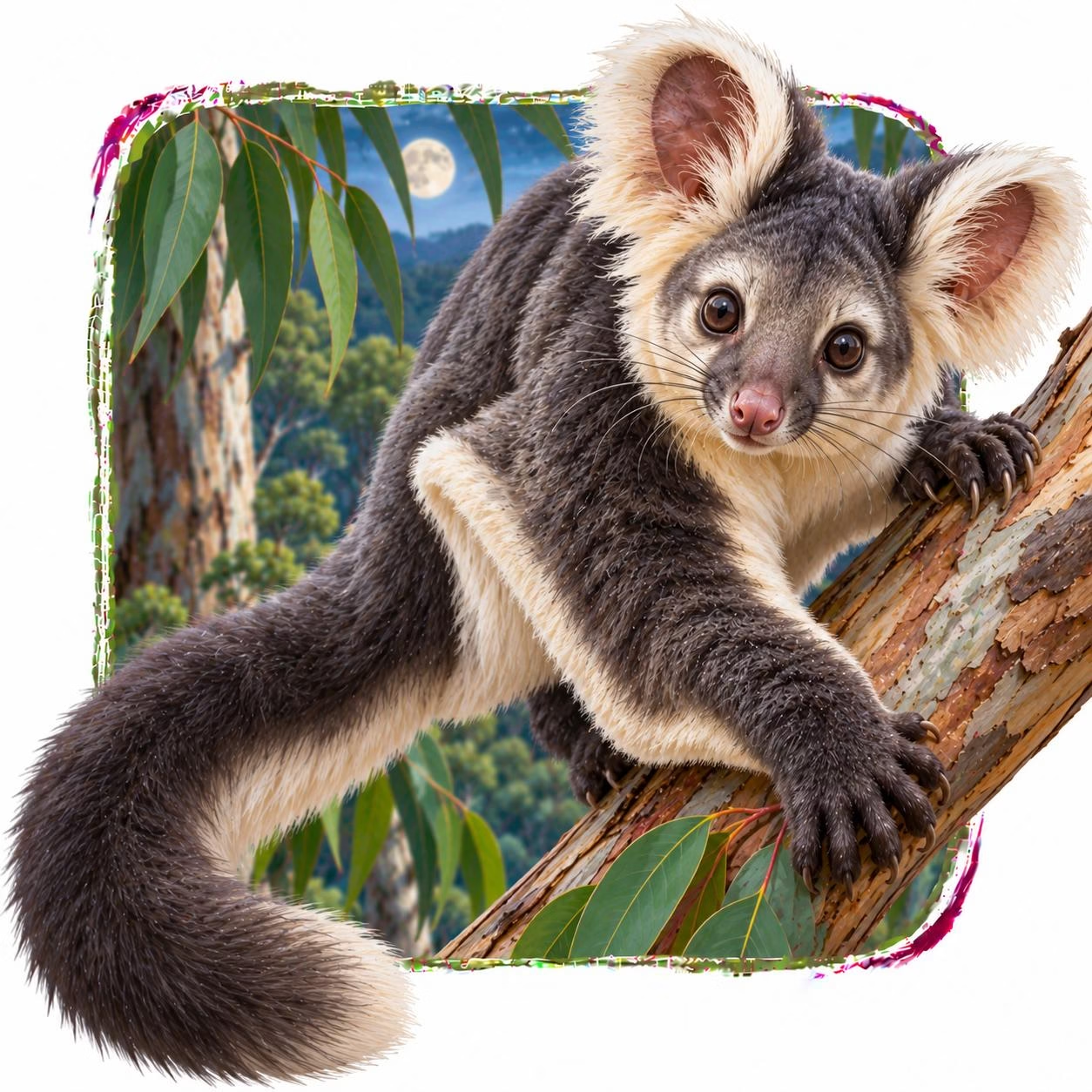
Greater Glider in its natural Forests habitat